Reflections from the 13th CEHURD National Inter-University Constitutional Law Moot Court Competition, 2026
By Nakibuuka Noor Musisi
A courtroom is more than a place where lawyers cite provisions of the law and judges pronounce decisions. It is a space where competing interpretations of rights are tested, facts acquire legal meaning, and the quality of advocacy can determine whether a constitutional promise becomes meaningful in people’s lives.
This was one of the central lessons from the 13th CEHURD Annual National Inter-University Constitutional Law Moot Court Competition, held from 24th to 25th September 2026 under the theme “Reproductive and Gender Justice in Uganda: Navigating Constitutional Rights, Public Interest and Social Values.”
At one level, the moot was a competition among university law students, at another, it was a practical exercise in understanding what it means to use the law as an instrument of justice.
The legal questions placed before the mooters were closely connected to realities that reproductive justice must confront: adolescent access to contraception and health services, emergency healthcare, maternal health, poverty, geographical barriers to healthcare, parental consent, government accountability, public resources, stigma and the consequences of delayed or inadequate care.
These are not merely questions of legal interpretation; they are questions about whether constitutional rights can be meaningfully enjoyed by people whose social and economic circumstances may make access to those rights difficult.
When constitutional rights meet lived realities
Reproductive justice requires us to look beyond whether a right exists on paper and ask whether people can actually enjoy it.
A constitutional provision may recognise equality, dignity, health, life, privacy or freedom from discrimination. Yet for a young person living far from a health facility, without the resources to travel, facing stigma or navigating requirements that may limit access to services, the existence of a constitutional right does not automatically translate into access.
This is where constitutional law becomes particularly important.
The law must grapple with the relationship between individual rights and broader questions of public interest, culture, social values and state responsibility. It must ask difficult questions about autonomy, parental responsibility, access to healthcare, equality and accountability.
The CEHURD moot competition provided students with an opportunity to confront these questions not simply as academic propositions, but as advocates before the bench.
And that is an important distinction. A constitutional rights framework is meaningful only when lawyers can connect legal principles to the realities of the people whose rights are before the court.
Advocacy is more than knowing the law
One of the clearest lessons from the preliminary rounds was that effective advocacy is not measured by the number of authorities a lawyer can cite. It is measured by whether the argument is clear, coherent, legally grounded and persuasive.
His Worship Ivan Busulwa reminded the mooters to ensure that an argument is firmly established before moving to another. His Worship Osauro John Pauls emphasised that “lawyering is about persuasion.” Statutory provisions may remain static, but it is the lawyer’s task to persuade the audience about how those provisions apply to the facts before the court.
Her Worship Kambedha Lydia emphasised that a strong mooter must organise arguments clearly, support each point with the right authorities, respond confidently to questions, concede where appropriate and acknowledge gaps honestly.
Her Worship Ariokot Esther Joyce reinforced the same message: lawyering is not about who cites the most laws, but about who is able to persuade the court and argue the case clearly.
These reflections extend well beyond mooting. They are a reminder that a lawyer may have an excellent legal proposition, but if that proposition is buried under unnecessary authorities, poorly structured submissions or an inability to respond to the court, its persuasive force may be lost.
This is particularly important in public interest litigation, where lawyers often must translate people’s lived experiences into constitutional arguments without losing the human reality behind the case.
The advocate therefore, one must not only know the law but must also know how to make the law speak to the facts.

The courtroom is not an examination hall
Perhaps one of the most important lessons from the competition was the distinction between demonstrating knowledge and practising law.
In an examination, a student may be rewarded for reproducing a well-developed legal argument. In court, the advocate must listen, respond and engage.
The lawyer must understand the question being asked, identify the real issue and take the court directly to it. The lawyer must also be prepared to adjust the argument when challenged.
The judges repeatedly encouraged the mooters to be direct, organised and confident; to present only the facts and authorities relevant to the issue; to respond to the opponent’s arguments; and to remain respectful and open minded.
This is an important lesson for legal education; knowing what the law says is necessary, but it is not enough. Future lawyers must also learn how to use the law.
From academic papers to courtroom advocacy
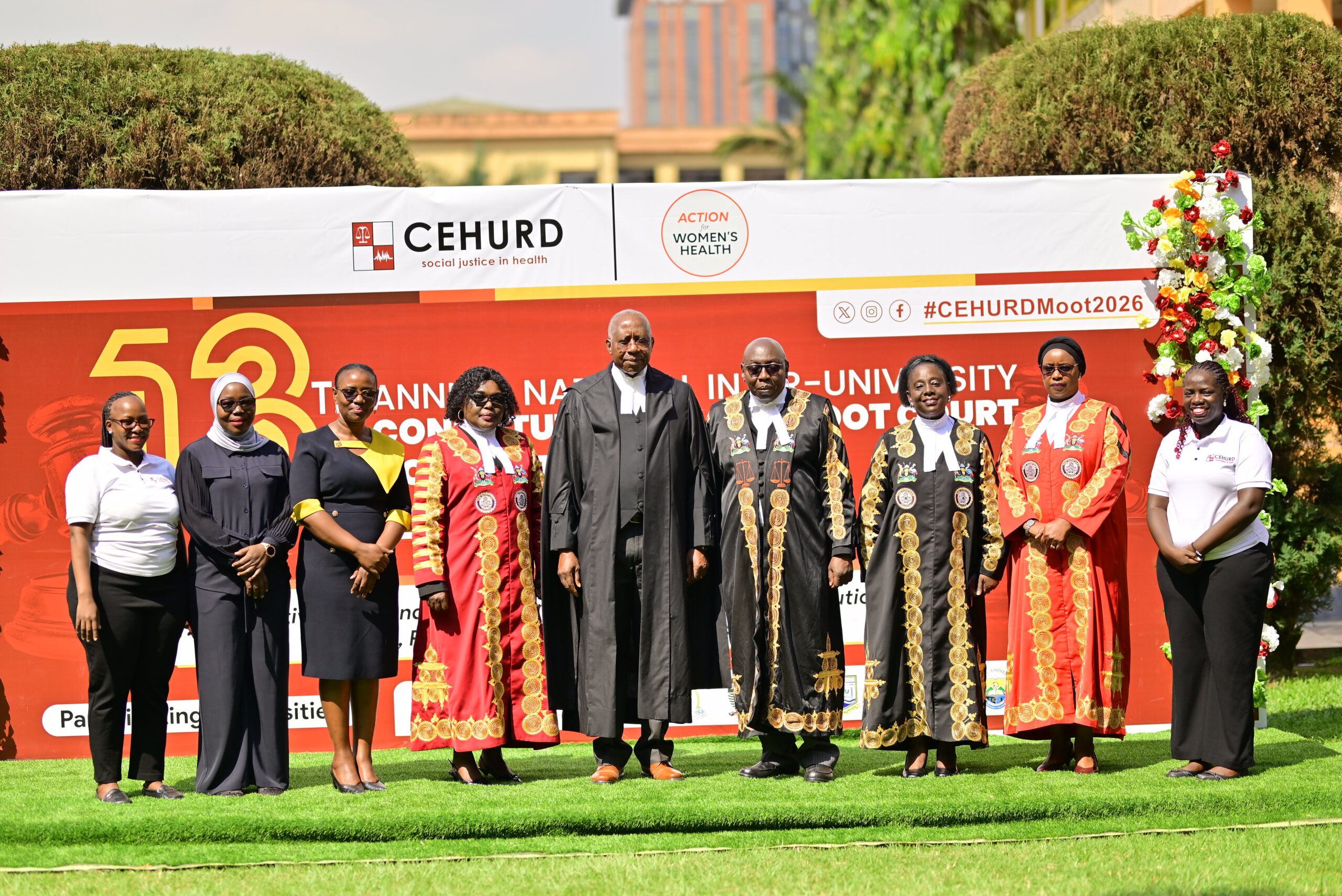
The final round brought these lessons into sharper focus. The final bench comprised Hon. Rtd. Justice Stephen Martin Egonda Ntende, Hon. Justice Catherine Bamugemereire, Hon. Justice Geoffrey Wilfred Kiryabwire, Hon. Justice Eva K. Luswata and Hon. Justice Aisha Naluzze Batala.
Their participation provided students with an opportunity to receive practical reflections from experienced members of the superior courts.
Justice Geoffrey Wilfred Kiryabwire offered a memorable analogy: “The only way you can win a game is by scoring more goals than the other side.” His message was that lawyers should not concentrate on “dribbling” through unnecessary complexity. They should focus on advancing their case.
He also cautioned that submissions should not sound like academic papers.
This distinction matters; academic writing allows space for extensive discussion and multiple authorities. Courtroom advocacy requires the lawyer to identify what matters to the determination of the case and present it with precision.
Justice Kiryabwire also highlighted the value of exposing law students to actual court proceedings. He noted that a university had, for the first time, requested to attend a criminal session at the Court of Appeal and that the students subsequently interacted with the judges. Such experiences help bridge the gap between the classroom and the justice system.
Justice Eva K. Luswata encouraged the mooters to break their submissions into clear points and avoid reading extensively from long prepared texts. The lawyer must engage with the court rather than simply read to it.
Lady Justice Aisha Naluzze Batala reminded the mooters that when stating a ground of appeal, the advocate should engage with it immediately. Her observation that access to contraceptives for minors should be considered alongside cultural and societal values also reflected the broader complexity of reproductive justice.
These are not simply techniques for winning a moot, they are habits that shape professional identity.
The human being behind the legal argument
This year’s moot accorded students with another lesson; effective advocacy requires listening.
A lawyer who listens to the court can understand the concern behind a question. A lawyer who listens to opposing counsel can identify the real point of disagreement. A lawyer who listens to the facts can appreciate the human consequences that the legal argument must address.
In reproductive justice litigation, this is particularly important because the law often intersects with experiences that cannot be reduced to legal provisions.
A constitutional question about access to contraception may involve age, autonomy, parental responsibility, culture, poverty and health-system capacity.
A case concerning maternal healthcare may involve not only the right to life or health, but also distance, referral systems, emergency response, staffing, financing and accountability.
A case concerning unsafe abortion may require an understanding of how stigma, poverty, limited access to services and the legal environment can interact in ways that affect people’s lives.
The lawyer must therefore see the whole picture while maintaining legal discipline.
This is also where the principle of public interest becomes important. The lawyer is not simply arguing for a legal proposition; the argument may have implications for people beyond the immediate parties. A constitutional decision can shape institutional practice, public policy and access to services.
Reproductive justice requires more than winning a case.
The moot also raises a broader question about the purpose of public interest litigation and whether the objective of such moots and litigations is just to win a case.
A judgment can resolve the dispute before the court, but reproductive justice asks a wider question: what happens after the judgment? Does the decision change institutional practice? Does it improve access to healthcare? Does it remove discriminatory barriers? Does it strengthen accountability? Does it reach the people whose experiences gave rise to the litigation? Does it change how institutions understand their constitutional obligations?
These questions remind us that litigation is one component of a broader justice process.
For organisations like CEHURD working at the intersection of law, health and human rights, the courtroom is one part of advocacy. Research, community engagement, strategic litigation, policy advocacy, public education and institutional accountability all contribute to transforming rights from constitutional promises into lived realities.
The moot’s focus on reproductive and gender justice reminds future lawyers that their work may extend beyond the courtroom. They may be called upon to understand the systems that produce inequality and to use the law to challenge those systems.
The moot therefore provides a useful reminder that the lawyer’s role is not simply to win an argument. It is to use the law responsibly in pursuit of justice.
The deeper lesson: law must remain connected to people
The most significant lesson of the CEHURD moot may therefore be found beyond the competition itself.
The theme of reproductive and gender justice required the mooters to navigate the relationship between constitutional rights, public interest and social values. But the advocacy lessons from the judges provided another layer: justice is not achieved simply by knowing the right provisions. It requires the ability to connect law to facts, clarity, courage to acknowledge weaknesses in an argument, discipline to distinguish what is relevant from what is merely interesting, respect for the court and the capacity to persuade without losing sight of the people whose rights are at stake.
For reproductive justice advocates, this is particularly significant. The people whose rights are litigated are not constitutional hypotheticals. They are adolescents seeking information and services, women seeking safe and timely maternal healthcare, families navigating poverty and health system barriers, and communities whose social and cultural realities shape how rights are experienced. Therefore, the law must remain connected to those realities.
The moment of truth
After two days of research, preparation and rigorous oral advocacy, the competition reached its conclusion.
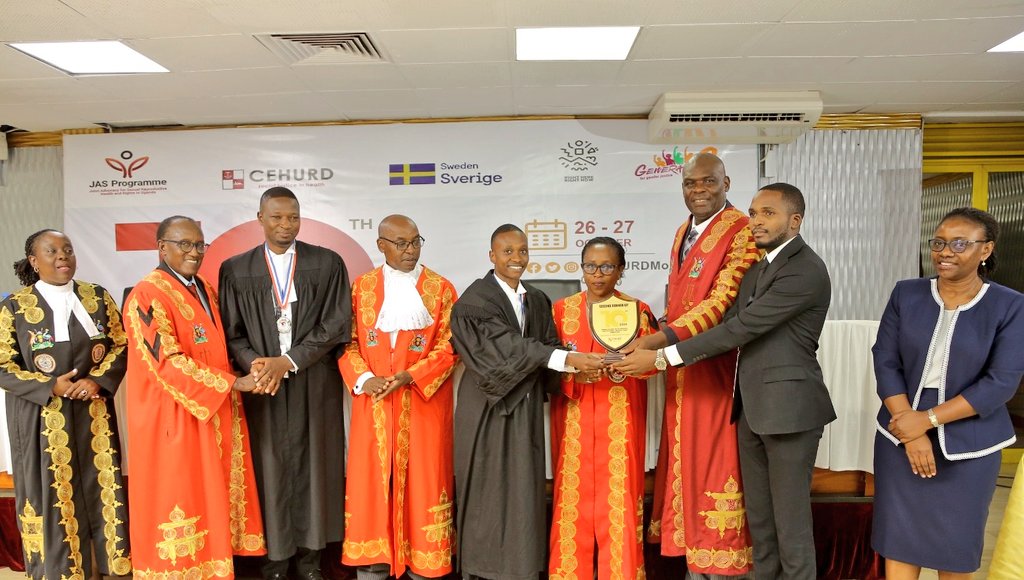
Islamic University in Uganda Females Campus emerged as the winner of the 13th Annual National Inter-University Constitutional Law Moot Court Competition, with Uganda Pentecostal University, Fort Portal Campus, as first runners-up.
Katimbo Alison Faith was recognised as Best Oralist.
Uganda Christian University, Mukono received the award for Best Memorial, while Islamic University in Uganda, Kampala received Second-Best Memorial.
These awards recognise different dimensions of legal advocacy.
Oral advocacy requires clarity, responsiveness, confidence and persuasion. Written advocacy requires research, analysis, structure and precision. Together, they represent important skills for any lawyer.
But the value of the moot cannot be measured only through the final results.
The participating law schools, students, coordinators, clerks and judges collectively created a learning environment in which students could test their knowledge, receive practical feedback and experience the demands of courtroom advocacy.
The competition therefore ended with winners, but the learning continues.
Beyond the moot
The 13th CEHURD National Inter-University Constitutional Law Moot Court Competition was, on the surface, a competition. But its deeper value lies in the professional formation it offers.
It teaches future lawyers that advocacy is not about demonstrating how much law they know. It is about identifying the real issue, understanding the facts, using the right authorities, responding to the court and persuading through a clear and lawful argument. It also demonstrates why spaces that bring together constitutional law, reproductive justice and practical advocacy matter.
The next generation of lawyers will inherit difficult questions about autonomy, equality, health, dignity, gender, culture, public resources and state accountability. Their effectiveness will depend not only on what they learned in law school, but on how they learned to use the law in service of people.
The lessons from the moot are therefore worth carrying beyond the competition and into the courtroom.
The Moot may have ended with a trophy, but its most important outcomes are likely to be seen much later- in the confidence of young advocates, the quality of their submissions, their ability to listen and respond, and their willingness to use the law to advance reproductive justice.
Know your facts. Get to the substance. Speak to the court. And make every submission count.
That is the art of advocacy.

The writer is the Deputy Executive Director at the Centre for Health, Human Rights and Development (CEHURD).