It is no coincidence that I begin this article by recalling the words of one of my lecturers during a conversation we had after his successful completion of a Post-Graduate Diploma at the Law Development Centre. My name is Tumwesige Jay, with “Ateenyi” as my “empaako,” for those unfamiliar, empaako is a cultural naming tradition, and mine is a clear indication of my roots in Tooro. However, for the past 15 years, I have been immersed in the vibrant, bustling life of Kampala. I am currently pursuing a Bachelor of Laws (LLB) at Uganda Pentecostal University in Kampala.
The concept of mooting is well-known within the legal community, familiar to lawyers, advocates, judges, and other professionals. However, as a first-year law student, I found the term entirely foreign. One of the most embarrassing moments of my life was when someone mentioned it and it was something i had never heard before. In retrospect, I do not blame myself; at least, I learnt about mooting and eventually participated, which helped me understand the concept of mooting. Unlike a lawyer or advocate who may have gone through law school without engaging in moots, I now consider myself fortunate to have that experience. According to Black’s Law Dictionary[1], a Moot Court is a fictitious court held usually in law schools to argue moot or hypothetical cases. As the definition suggests, students are presented with fictitious facts, which they research before drafting submissions that are later presented as their arguments in court. Through this process, students replicate what occurs in the Courts of Law as they go about their business of dispensing justice.
Guided by Court decorum and professional etiquette, students proceed to make out their case under the guidance of judicial officers before whom they appear. One may ask, but what is the import of all this? Well, I’ve got you covered! The learned author and lecturer from Deakin University – Mr. Christopher Kee in his guiding material on mooting[2] at page 4, lists a few reasons why it is important for law students to moot. At the top of his list is job opportunities. According to Mr. Kee, participating in international moots can be a significant boost to your resume. While his perspective is international, it is important not to overlook the impact of local competitions, which also play a crucial role in creating job opportunities. To dispel any doubt, I am a living example, my experience with CEHURD stands as a testament to how mooting has shaped my career.
Teamwork is another important skill highlighted by Mr. Kee. He emphasizes the importance of learning how to work effectively in a team that you did not choose. This is something that is not always easy but is invaluable for one’s future career because employers hold this kind of experience in high regard. Mooting also involves intensive training, as students prepare repeatedly, nurturing skills that will serve not only in law school but throughout their professional lives. Lastly, international travel is a perk that comes with some moot competitions, although it speaks for itself, all these opportunities are available to students who choose to engage in mooting.
Not far away from my senior’s submission, on my part, I hold the view that the most critical aspect of mooting is that it equips students with a practical understanding of court processes. My argument stems from the fact that, during law school, we often become deeply entrenched in the theoretical analysis of the law, without gaining a clear picture of its practical application. From the first year through to the fourth, we are constantly engaged in theoretical discussions even in essential subjects like Criminal Procedure and Civil Procedure. Schools are hesitant to help and/or introduce practical sessions where students can be taken through hands-on experience of the Law. This is a threat since we end up giving birth to theoretical lawyers and advocates whereas, the community would best appreciate lawyers and advocates that are well rooted in both. I should not be misunderstood to mean that we give up on theory, no, but rather if we could have a blend of both, it would be great. On top of what a student has learnt theoretically, spice them up with the practice as well. No wonder, there are times when stories of advocates make headlines in newspapers over litigation in Court. Moot court competitions condense years of academic study into practical, real-world experience within just one week, so to speak. Moot competitions enhance one’s drafting skills which skills like drafting are reserved for the Post Graduate Diploma in Legal Practice offered at the Law Development Centre. This presents an opportunity for students to embrace and better their drafting skills.
Oratory skills is another invaluable benefit gained from participating in mooting. How about composure while in Court? Have you ever wondered why those impeccably dressed men and women in suits and robes seem to panic when it’s their first time to moot? I speak from personal experience; during your first moot, the moment their Lordships instruct the clerk to call out the case file especially in a criminal law moot, is the moment you suddenly remember all the cases you did not read! A rush of thoughts floods your mind, and before you know it, you hear the judge’s voice asking, “State, why are we here?” It’s a nerve-wracking experience at first, but as time passes, the old adage rings true, practice makes perfect. Eventually, even if you’re ambushed, you can step up confidently and argue your case.
While the beginning is always intimidating, the results of consistent mooting are worth the effort. You gain practical experience in drafting documents, making oral arguments and developing persuasive skills. Additionally, mooting teaches you courtroom decorum, builds your composure under pressure and helps you expand your network because, in today’s world, your network is indeed your net worth. The lack of these essential skills has deprived many senior counsel of true satisfaction in their practice and on tough days, some have even left the courtroom embarrassed. Mooting provides a strong foundation that helps avoid such pitfalls and equips you for a successful career in law.
The purpose of this article is to share my journey and experiences from last year’s CEHURD 10th Annual Constitutional Law Moot Court Competition and I hope that it inspires my colleagues who are still striving in the legal field, as well as those considering law as their career path.
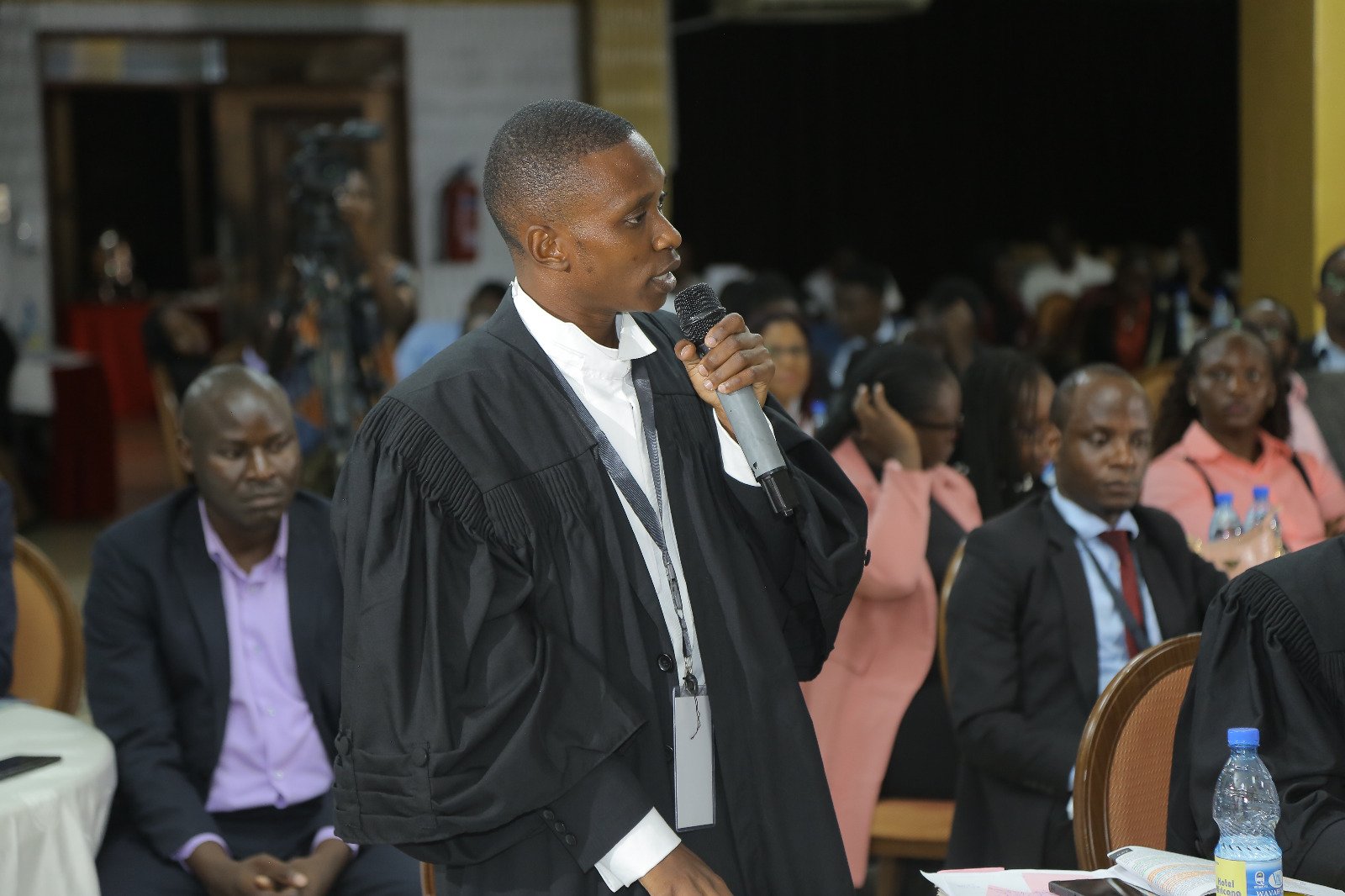
In October 2023, I, along with my colleague Mr. Kigozi Herbert, had the honour of representing our university in the 10th Annual Constitutional Law Moot Court Competition organized by the Center for Health, Human Rights and Development (CEHURD).
Center for Health, Human Rights and Development is a renowned non-profit research and advocacy organization which is pioneering the justiciability of the right to health. CEHURD’s constitutional law moot competitions are anchored on creating awareness to the general public that Article 45 of Uganda’s Constitution[3] is an extensional provision of other rights that aren’t explicitly catered for under Chapter 4. The constitutional provision is couched in a language that guarantees full realization of other rights not explicitly mentioned under the Constitution which buttresses the fact that their realization is not moot in Uganda’s legal landscape. Some of these rights include the right to health attendant thereto is Sexual and Reproductive Health and Rights, Comprehensive Sexuality Education among other rights. CEHURD has had to institute suits against the Attorney General of Uganda pursuant to Article 250[4] in a bid to hold the government accountable over allegations of gross violation of these rights. In effect, the realization, promotion and full enjoyment of these rights has been through a tunnel of court decisions that CEHURD has won. It is through its commitment that we can now mount platforms and discuss these rights. Moot court cases have been one of its strategies through which though hypothetical in nature, brilliant students of law have shown potential in articulating legal principles to bring out the gist of the point that there’s a gap in Uganda’s systems towards the full enjoyment of these rights.
As CEHURD marked 10 years of organizing the Annual National Inter-University Constitutional Law Moot competition, Uganda Pentecostal University – Kampala campus went bare knuckles with Cavendish University in the final rounds at Hotel Africana. These rounds were presided over by distinguished justices of the Supreme Court of Uganda who amongst others included His Lordship the Hon. Justice Mike Chibita, Hon. Justice Flavian Zeija, the Principal Judge among others. Being a competition, Cavendish University emerged the winner and walked away as the champions of the 10th Annual Inter-University Constitutional Law Moot Court Competition while my university emerged as the 1st Runner’s up.
I cannot help but proudly reflect on my own success, how could I not? After careful individual assessment, the Lordships of the Supreme Court announced me as the Overall Best Oralist of the competition. Now, let me explain what that means. CEHURD has a standing offer for internship placement for the overall best oralist at the moot competition. I emerged as the Best Oralist and I was awarded an internship placement at CEHURD. Since I was in my third year and about to embark on a three-months holiday, I eagerly anticipated joining the organization to claim what I believed was rightfully mine. The Human Resource Manager kept me updated throughout the whole process, confirming that my internship placement was secured.
As the saying goes, “If you hang around the barbershop long enough, you will eventually get a haircut.” On the morning of 28th June 2024, at around 9:15 AM, I received a phone call from CEHURD asking me if I was ready to start my internship the next day. I excitedly responded that I could even begin immediately!
Well, I joined the organization and started on my assignments as handed over to me by my supervisor. My greatest experience while at the organization was my engagement in community work. During our community engagements, we travelled to distant districts of the country to conduct mobile legal aid clinics. I alongside other CEHURD staff were constantly in the field sensitizing community members on their rights in areas such as Health and the Law, Health and Human Rights, the Law of Succession, Sexual and Reproductive Health and Rights, referral pathway for cases of Gender Based Violence. We received and documented several cases of human rights violations both criminal and civil in nature. We supported clients to access justice through the referral pathways, mediating and settling some of the civil complaints and enhancing harmony in families and communities. This was done in partnership with officers from Uganda Police, area Courts of Law, Office of the Director of Public Prosecutions (ODPP) and other duty bearers in the districts where we carried out interventions.
Having spent ample time with CEHURD, I did not remain the same. Here are the key pointers that I can share with you.
- I can boldly state and maintain that at the moment, I have an idea and knowledge on how legal aid clinics are conducted in communities. This is because I was given an opportunity to engage in a number of them and through these engagements, I enhanced my knowledge in this area. Participating in legal aid clinics did not leave me the same and you can trust my word when I say that I was renewed each time I participated in a legal aid clinic because of the diversity in culture, cases registered and interactions with different community members.
- Entry points in a district; through these engagements, I was able to learn which offices and duty bearers are key for engagements in each district. These key entry points largely determine the success of an organization’s implementation in each district. The organization’s community-based work taught me this and I am very grateful that CEHURD kept engaging me in these outreaches.
- I cannot keep this to myself; it takes boldness to admit, but I will share it because it may encourage someone out there. Perhaps, when your time comes, you’ll remember this moment. When I joined CEHURD, I had little to no knowledge of how to compose a professional email. Yes, you read that right! I did not know to write a professional email. Now, before you laugh, ask yourself honestly: do you know how to write even one professional email sentence? Well, here is what happened on one of my early days of internship. My Manager and Supervisor asked me, “Ateenyi, kindly draft an email.” I don’t recall the exact subject, but she specifically requested that I generate at least two emails. Naturally, I summoned all my courage, drafted two possibly three emails, and sent them to her.
She took time to consider them but finally did and one afternoon after lunch she walked into office, came to my desk and told me “But Ateenyi, when I told you to generate emails on the subject matter, I did not tell you to send me an email similar to the ones you send to your classmates at the university.” I hastily inquired how those looked like, and she requested me to open my email on my computer and refer to the emails I had sent her. I did this and she requested me to generate an email and that she was going to compose with me for learning purposes. I initiated an email, writing about 3 sentences as she watched and got it wrong because she requested me to erase what I had written saying; “Ateenyi, kindly erase what you have written and let us re-write this email together’. She then humbly led me through the process of writing a professional email right from the email subject, body of the email, spacing to the conclusion. After coming up with that email together, she asked me to send it to myself to act as a benchmark for future emails to be written. She then asked me to look at the email and comment on how it looked, and I confirmed that it looked good and was well organized. She then requested me to re-do all the emails I had sent being mindful of the professional look that they ought to bear. As I speak and write now, I can efficiently and effectively communicate through email because of my supervisor’s professional guidance and support. Perhaps, it has become my main medium of communication because I can confidently generate a professional email, something I was not able to do before I joined CEHURD.
CEHURD is a grooming place, and it is the right place for people that are receptive, accommodative and ready to learn. Are you passionate about getting professional with your life and career, while at your place of work? CEHURD is the right place to be.
- One of the most valuable lessons I walked away with from my time at CEHURD is the importance of timeliness. Keeping time and executing tasks within given timelines fosters organization, and I quickly learned that being organized is the key to success. I saw firsthand how requisitions that did not comply with the set procedure and guidelines were dismissed and had to be redone before approval. CEHURD gave me a real taste of how life operates beyond university, and because of that, I can confidently say I am ready to face whatever comes my way. Having experienced a professional and efficient working environment, I feel prepared to do the same when my turn comes.
- Another crucial takeaway was the significance of feedback. At CEHURD, communication was highly valued, and I came to understand just how essential feedback is in today’s world. It can be the deciding factor between staying in business or closing shop. I used to overlook the importance of feedback, but my time at CEHURD shifted my perspective. Now, I see its relevance not only in business but in life too.
- One of the most rewarding lessons was learning how to take instructions from clients. Although my time at CEHURD was brief, I quickly realized that as law students, we are already considered part of the legal profession, and we must take things seriously. Working in the Strategic Litigation Programme at CEHURD, I had the opportunity to sit in on client interviews, listen to narrations from the clients and help shape those narratives into legal actions we could file in court. This experience allowed me to grasp a process I had long desired to understand; how lawyers listen to clients, unravel the details of their stories/complaints, and find the legal issues that form the basis of their cases. Thanks to CEHURD, I learned in just a few months what might have taken me years to experience. I also discovered the art of asking the right questions to help clients clearly articulate their legal problems, a skill I now hold dear.
As I conclude, I would like to express my heartfelt gratitude to the entire CEHURD team for welcoming me so warmly during my internship. Every department and programme was, and continues to be, incredibly receptive, making me feel at home. A special thank you to the Strategic Litigation Programme that taught me, gave me platforms and allowed me to learn by engaging me in the various programme and institutional activities. Thank you to the Senior Management Team at CEHURD for the internship placement offer that is given to the best moot oralist because it is indeed a life changing experience. To the friends I made at CEHURD, I will always cherish you and you will always remain part of my life.
I look forward to meeting you all again soon.
[1] 8th edition at 3192 by Bryan A. Garner as the Editor in- Chief
[2] The art of Argument, a guide to mooting Cambridge University Press
[3] 1995 (as amended)
[4] Ibid