Understanding the Right to Health in Uganda

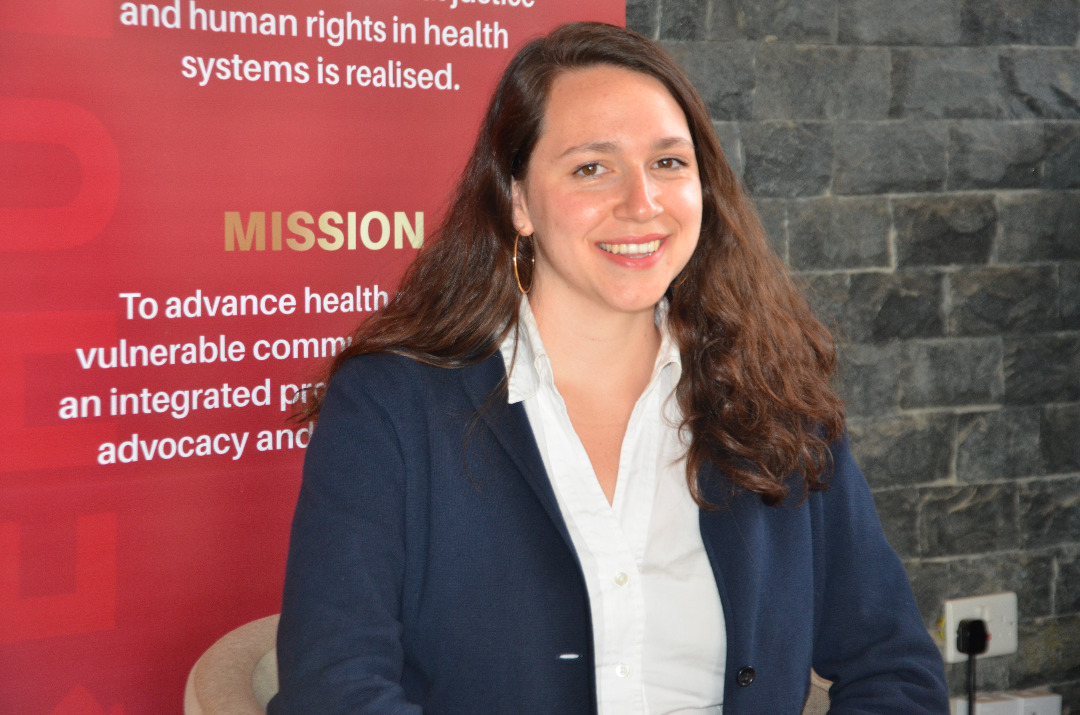
I have been in Uganda for a little over a month now and have already learned so much, both from my work as an intern at the Center for Health, Human Rights and Development (CEHURD) and from my daily life in Uganda. I have visited Ugandan courts, taken countless boda rides and visited the source of the Nile. My first challenges were mostly activities that usually seemed simple to me, such as getting to work. My colleague’s kindness and patience in showing me the way around allowed me to feel much more comfortable in Kampala and to focus on my work as a legal intern.

CEHURD was created to advance the right to health for vulnerable populations such as people living with HIV/AIDS, women, and children. It is divided in three complementary programs (1) the Research, Documentation and Advocacy (2) Community Empowerment and (3) Strategic Litigation. As a second year law student, I was assigned to the Strategic Litigation program. Their objective is to provide legal support to persons whose rights have been infringed upon in Uganda and to litigate issues with the potential to redress systematic problems in the country’s health system. I have supported their work by drafting legal opinions on incoming cases and federal bills, completing research papers, and putting together grant proposals. This experience has allowed me to witness the use of the law as not only a tool to solve a single fact pattern but as a tool with the potential to create population shifts and improve health conditions on a national scale.

Most of the cases move for the implementation of the right to health. However, the Constitution of Uganda lacks an express provision on the right to health, which makes the conceptualization of each case particularly demanding. The right is implied from other constitutional clauses, the national objectives and the directive principles of state policy, each with health-related facets such as the right to life, human dignity and women’s rights. Furthermore, the implicit nature of the right to health in Uganda makes it so that its realization largely depends on political goodwill, judicial interpretation and the treatment of the other rights from which it derives. This particular situation highlights the importance of advocacy and community engagement in the respect of human rights and the delivery of safe and acceptable health services.

As much as one may put together a case supported by persuasive evidence demonstrating a human rights violation in the delivery or lack of health services, the societal attitudes towards specific issues and vulnerable populations are often the last and most difficult barriers to overcome in obtaining justice. For example, CEHURD & Kabale Benon v Attorney General is a recent case that demonstrates the prevailing stigma surrounding claims made by individuals who have suffered from periods of mental distress. In addition to silencing the plaintiff based on his identity as an individual with a mental health disorder, the court also disturbingly put all medical decisions above the scrutiny of the law.

This message discourages Ugandans from taking initiatives towards ensuring the respect of their rights and towards keeping the government accountable in its actions. CEHURD has recently filed an appeal for this case.

Overall, I am very motivated by CEHURD’s work as they put forward that the right to health extends itself to the causal determinants of health such as adequate sanitation facilities, health infrastructure, trained workers and essential drugs. I hope to contribute to my team’s work as much as I can in the following weeks and am excited to learn more about the right to health in Uganda.

Catherine Labasi-Sammartino
Summer Intern – McGill University Ontario Canada
Tune in today (22/July) at 7pm CET (1pm ET): Global gag rule threatening the AIDS response

Grabbing by the purse strings: Global gag rule and International Funding
19:00-19:30 CET

Follow the link to watch the live broadcast: http://www.aids2018.org/Live

Panelists:

  • Latanya Mapp Frett
    Planned Parenthood Global
    @ppglobe
  • Joy Asasira @jasasira
    Center for Health, Human Rights and Development
    @CEHURDUganda
  • Chloe Cooney
    Planned Parenthood Federation of America
    @PPFA


Tracking progress towards realization of Health and Reproductive Rights under Maputo protocol

Health has been defined as the complete state of physical, mental and social wellbeing and not merely the absence of disease or infirmity.[1] Health as a Human Right gained significance in 1946 when the WHO constitution espoused the fact that the highest attainable standard of health as a human right. Following this bold position by WHO a number of instruments and global convening have gone ahead to including the International Covenent on Economic and Social Cultural Right (1976), International Conference on Population and Development (1994) and the Beijing Declaration and Platform for Action (1995). Understanding Health as a Human Right creates a legal obligation on states to ensure access to access to timely, acceptable and affordable health acre of an appropriate quality as well as providing for the underlying determinants of health, such as safe portable water, sanitation, food, housing, health-related information and education, and gender equality.[2] The right to health was also defined in General Comment NO. 14 of the Committee on Economic and Social Cultural Rights, a committee of Independent Experts to include the following core components; availability, accessibility, acceptability, and quality.[3]

The concept of Reproductive health as a component of the right to health promises to play a crucial role in improving health care provision and legal protection for women around the world, it was internationally endorsed by a United Nations Conference in 1994.[4] It is therefore no surprise that the drafters of Maputo Protocol[5] taking cognizance of women’s status and the systemic and structural discrimination especially in the context of their health put in place Article 14 of the Maputo protocol that implores States Parties to respect and promote the right to health of women including their sexual reproductive health. The protocol recognized that women’s rights cannot be fully realized if their rights to health continue to be violated.

The World health Organization Estimates that poor reproductive health accounts for 18% of the global disease burden, and 32%of the total burden of disease for women of reproductive age. It is therefore no surprise that the indicators on sexual reproductive health and right in Africa continue to paint a gleam picture. The indicators particularly remain poor with nearly half of the mothers who die during pregnancy and child birth being from the African Region. African women, have a 1 in 16 chance of dying while giving birth.25 million Africans are infected with HIV with women being increasingly affected with the feminization of the epidemic. Africa is also plagued by a high unmet need for family planning with a rapid population growth often outstripping economic growth and growth of social services thus contributing to a vicious cycle of poverty and ill health. Today by any measure, less than one third of Africans have access to contraceptives. This makes unplanned pregnancies and a resort to unsafe abortions inevitable owing to unplanned and unwanted pregnancies, thus the annual abortion rate for the region is an estimated 34/100 women of reproductive age aged (15-44) and has remained more or less constant between 1990-1994 and 22010-2014[6].

Whereas Article 14 of Maputo Protocol is a key mile stone for Africa women and the realization of their health and reproductive rights, there still exist a number of hindrances preventing women form realizing these rights. These hindrances include the non-ratification of the Protocol by some states, and other states like Uganda and Kenya that have ratified the protocol placed reservations on Article 14. Furthermore retrogressive cultural and religious practices continue to block access by women and girls in Africa to critical SRHR services and information that they require including access to family planning, comprehensive sexuality education and protection from sexual and gender based violence that is driving up STI and HIV infections amongst Africa’s women and girls.

In order to fully reap the benefits of the rights espoused in Article 14 of Maputo protocol, there is need for African States to first of all ratify and then domesticate the protocol unreservedly. Where reservations are put in place, this serves not only a hindrance to access to services but also a gag to policy and programmatic discussions aimed at putting in place interventions aimed at realizing the right to health and reproductive rights of women in Africa. States have to proactively protect the health of women and this will have a positive effect for the development of the state owing to the critical role that women play in the productive sector. As Dr. Mahmoud Fathalla a leading scholar and advocate for women’s health rights stated, β€œWomen are not dying because of diseases we cannot treat, they are dying because societies have yet to make the decision that their lives are worth saving.”


[1] World Health Organization, Factsheet on Frequently Asked Questions, 2018 found at https://who/int/suggestions/faq/en/ accessed on 11th July, 2018

[2] World Health Organization, Fact Sheet on Health and Human Rights 2017, found at http://www.who.int/news-room//fact-sheets/detail/human-rights- and-health accessed on 11th July, 2018

[3]Supra

[4] Rebecca J. Cook.,et al, Reproductive Health and Human Rights: Integrating Medicine, ethics and Law, Oxford University press, 2003, Great Clarendon Street, Oxford, United Kingdom

[5] Protocol to the African Charter on Human and People’s Rights on the Rights of Women in Africa, 2003, 2nd Ordinary session of the Assembly of the African Union, 11th July, 2003

[6] Guttmacher Institute, Abortion in Africa factsheet, 2018. https://www.guttmacher.org/sites/default/files//factsheet/ib_aww-africa.pdf accessed on 11th July, 2018