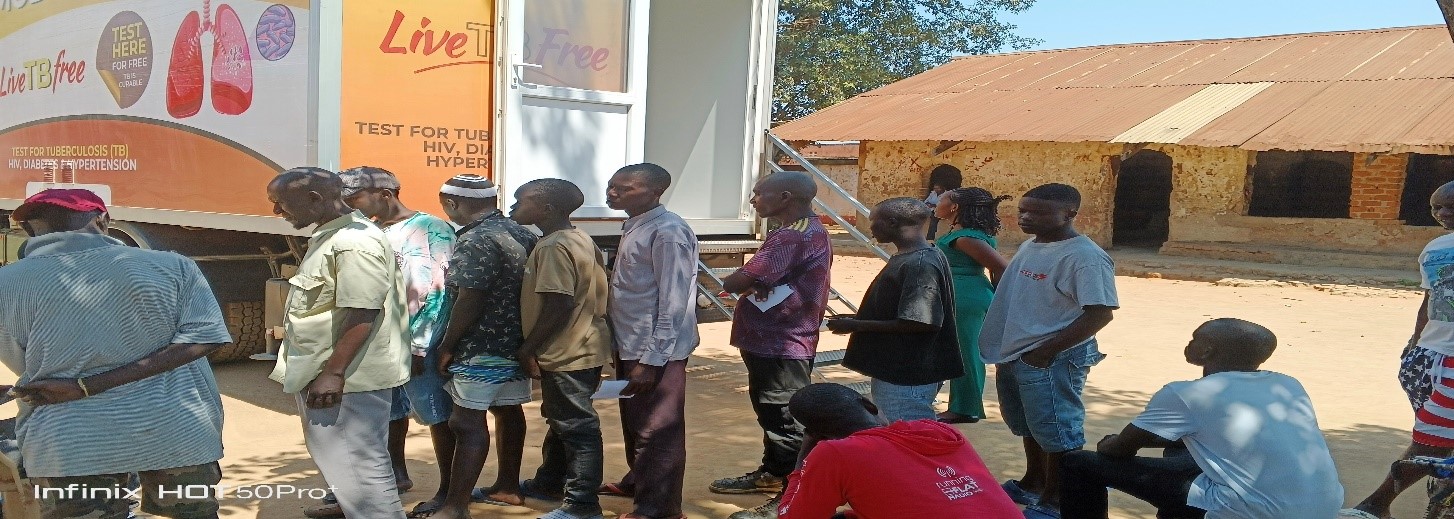
Men continue to experience lower uptake of HIV and TB services due to barriers such as limited health-seeking behaviour, competing work commitments, and restricted access to health facilities. To address this challenge, the Centre for Health, Human Rights and Development (CEHURD) introduced the Male Action Groups (MAGs) strategy an innovative community-led model designed to bring integrated HIV and TB services directly to men in Gulu, Lira, and Arua Cities.
With support from TASO and MOH the initiative began with district microplanning meetings involving City Health Teams, health facilities, and implementing partners to identify priority hotspots and coordinate implementation. Community dialogue meetings followed, engaging local leaders, employers, and community members to discuss barriers to men’s health-seeking behaviour and build local ownership of the intervention. To strengthen community mobilization, 69 Male Champions were identified, trained, and equipped to provide peer education, mobilize men for services, and facilitate referrals within their communities.
Working alongside health workers, the Male Champions led integrated outreach activities in locations where men spend most of their time, including boda boda stages, markets, construction and welding sites, workplaces, and fishing communities. Services were delivered using a Mobile TB Van Clinic equipped with Digital Chest X-ray technology alongside HIV counselling and testing services, making screening and diagnosis more accessible.
Since the rollout of the strategy in February 2026, the intervention has reached 2,548 men with integrated HIV and TB prevention, screening, and referral services across the three cities. Of these, 370 men accepted HIV testing, leading to the identification of 16 previously undiagnosed HIV-positive men, all of whom were successfully linked to HIV care and treatment. The intervention achieved an HIV positivity yield of 4.3%, exceeding the national community HIV testing yield of 2–3%, demonstrating the value of targeted, male-focused outreach.
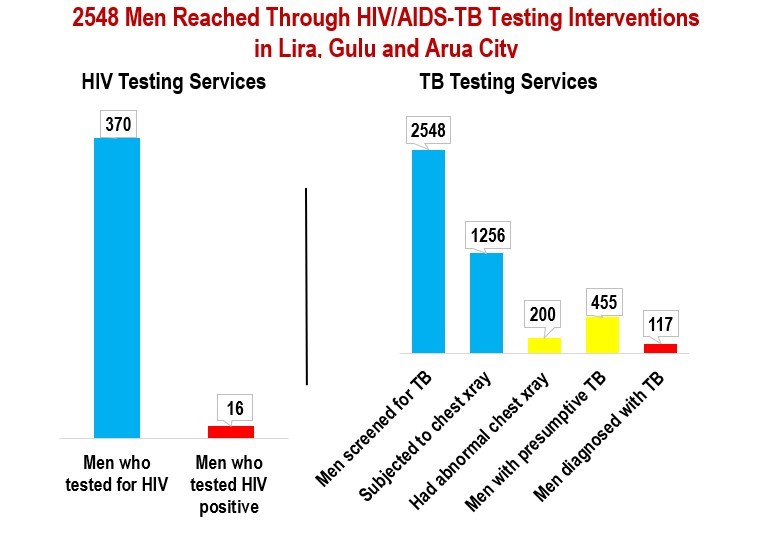
The strategy has also delivered impressive TB outcomes. All 2,548 men were screened for TB symptoms, while 1,256 underwent Digital Chest X-ray screening. This resulted in the identification of 455 presumptive TB cases, with 117 men diagnosed with TB (115 drug-susceptible and 2 drug-resistant TB). Of those diagnosed, 115 (98%) were initiated on treatment. The 25.7% TB positivity rate among presumptive cases investigated significantly exceeds the national average for routine TB investigations, highlighting the effectiveness of targeted screening in high-risk male populations.
The early success of the Male Action Groups strategy demonstrates that combining district-led planning, community engagement, trained Male Champions, and mobile diagnostic technologies can effectively overcome barriers that prevent men from accessing essential health services. By strengthening community ownership, improving early HIV and TB case detection, and ensuring timely linkage to treatment, the model offers a promising and scalable approach for reaching underserved men and accelerating Uganda’s HIV and TB response.
– Compiled by Community Empowerment Programme