
By Ndungu Robert, TB Contact Tracing Officer, CEHURD
Men continue to experience lower uptake of HIV and tuberculosis (TB) services, partly due to delayed health-seeking, competing work commitments, and limited access to health facilities. To address these barriers, the Centre for Health, Human Rights and Development (CEHURD), in partnership with The AIDS Support Organization (TASO) through the Global Fund initiative, introduced the Male Action Groups (MAGs) strategy, a community-led approach designed to bring integrated HIV and TB services closer to men.
The strategy is currently being piloted in three cities: Gulu, Lira, and Arua.
CEHURD began implementation with district microplanning meetings involving City Health Teams, including the City Health Officer, City TB and Leprosy Supervisor, city laboratory personnel and biostatisticians, as well as health facilities and implementing partners. These meetings helped identify priority hotspots, map available resources, and coordinate implementation across the three cities.
Community dialogue meetings followed, bringing together local leaders, employers, and community members to discuss the barriers that prevent men from seeking health services and identify practical solutions. These engagements also helped strengthen local ownership of the intervention.
To strengthen community mobilisation, 69 Male Champions were identified, trained, and equipped with knowledge and skills to provide peer education, mobilise fellow men to seek health services, and facilitate referrals.
“Before I was trained as a Male Champion, many men in my community were reluctant to visit a health facility or even talk about HIV and TB. After the training, I began visiting ghettos, washing bays, and other places where men gather to provide accurate information, encourage men to get screened, and link those who needed further care. During our first outreach, men felt free to come and access services, making this initiative more community-owned.”
Robert Ricky Oyoo, Male Champion, Aywe HC III, Gulu City
Working alongside health workers, Male Champions led integrated outreach activities in places where men spend much of their time, including boda boda stages, markets, construction and welding sites, workplaces, and landing sites.
The outreach services were supported by Mobile TB Van Clinics provided by regional referral hospitals. Equipped with digital chest X-ray technology and HIV counselling and testing services, the mobile clinics brought screening and diagnostic services closer to communities, making it easier for men to access services without having to leave their workplaces or daily activities for extended periods.
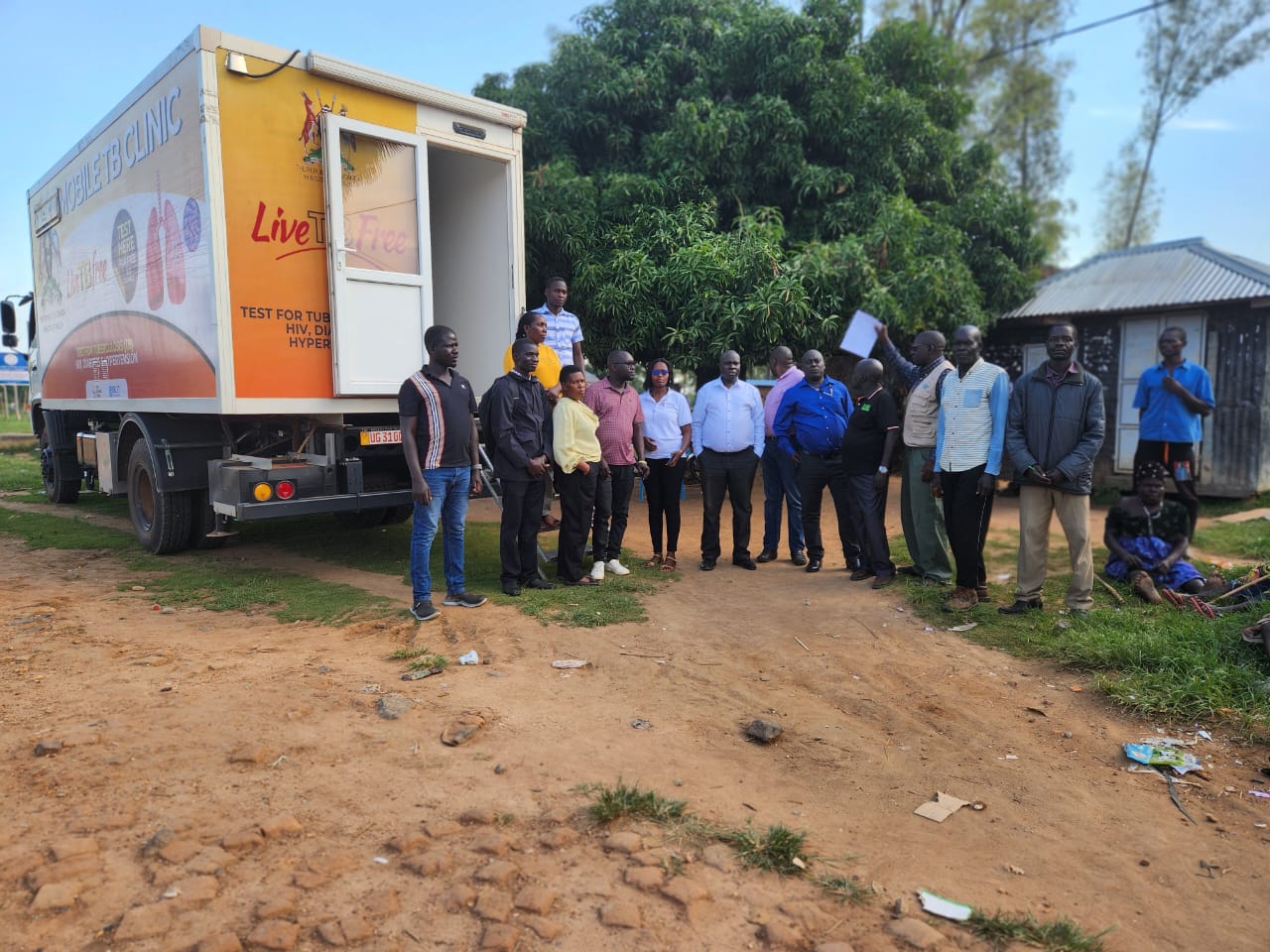
One of the beneficiaries diagnosed with TB during an outreach in Lira shared:
“I never thought I had TB because I only had a mild cough, which I treated with local remedies for some time, but it did not go away. When the Male Action Groups and health workers came to our community, they encouraged me to get screened. The X-ray showed that I might have TB, so I was asked to produce sputum for confirmation. The test confirmed that I had TB. I am thankful that they brought the services closer to us because I would not have gone to the facility on my own.”
Early results
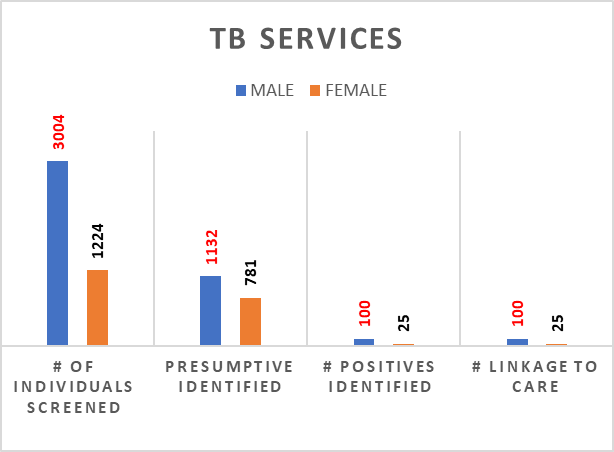
Since the rollout of the strategy in February 2026, the intervention has reached 4,228 individuals with integrated HIV, TB, and malaria prevention, screening, and referral services across the three cities. Of these, 3,004 (71.0%) were male and 1,224 (29.0%) were female, demonstrating strong engagement of men through the community-based approach.
TB screening through symptom assessment and digital chest X-ray identified 1,429 (33.8%) individuals as presumptive TB cases, comprising 1,132 males and 297 females. Samples were obtained and delivered for testing from 1,333 (93.3%) of the presumptive cases, while 1,326 (99.5%) of the samples were analysed.
Of the samples analysed, 125 (9.4%) tested positive for TB, including 100 males and 25 females. All 125 confirmed TB cases were successfully linked to care.
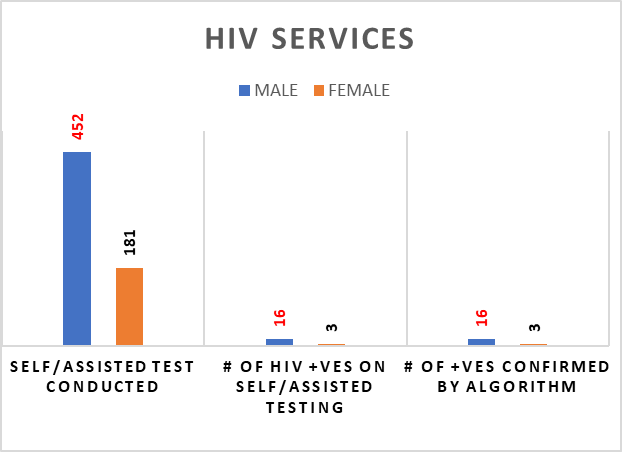
For HIV, 19 clients tested positive, including 16 males and three females, using the national HIV testing algorithm. All were linked to HIV care and treatment.
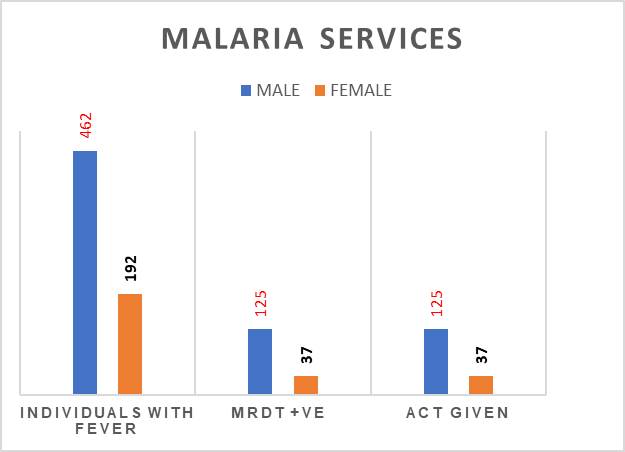
For malaria, 452 individuals presenting with fever were tested, of whom 125 (27.7%) tested positive using malaria rapid diagnostic tests (mRDTs). All 125 clients received artemisinin-based combination therapy (ACT).
These early results point to strong male engagement and effective linkage to care across the integrated HIV, TB, and malaria services.
Taking services to where men are
The experience of the Male Action Groups shows that reaching men requires more than making services available at health facilities. It requires taking services to the places where men live, work, and socialise, while using trusted community members to encourage them to seek care.
The combination of district-led planning, community dialogue, Male Champions, mobile outreach, and digital diagnostic technologies has helped address some of the practical and social barriers that limit men’s access to HIV and TB services.
The early results are encouraging. By supporting earlier case detection, increasing access to screening, strengthening referrals, and linking clients to treatment, the MAG model offers a promising approach for reaching underserved men and strengthening Uganda’s HIV and TB response.
Looking ahead
The potential for scaling up the Male Action Groups model will depend on sustained community engagement, reliable referral and treatment systems, continued access to mobile diagnostic equipment, and regular monitoring of outcomes across different settings.
As implementation continues, documenting lessons from Gulu, Lira, and Arua will be important in understanding what works, what needs to change, and how the model can be adapted to reach more men with timely HIV, TB, and other essential health services.