TWN Info Service on Intellectual Property Issues (Nov11/03)
10 November 2011
Third World Network
WHO: “Member State” mechanism on compromised medical products
Published in SUNS #7256 dated 9 November 2011
Geneva, 8 Nov (Sangeeta Shashikant) — A new intergovernmental mechanism will be set up at the World Health Organisation (WHO) to deal with medical products of compromised quality, safety and efficacy.
As a compromise over continuing differences on WHO’s operations in dealing with these products, governments that met from 25-28 October 2011 agreed to establish a “Member State (MS) mechanism” with a broad mandate on the prevention and control of compromised medical products, that includes addressing access to affordable medical products, including the supply and use of generic medical products.
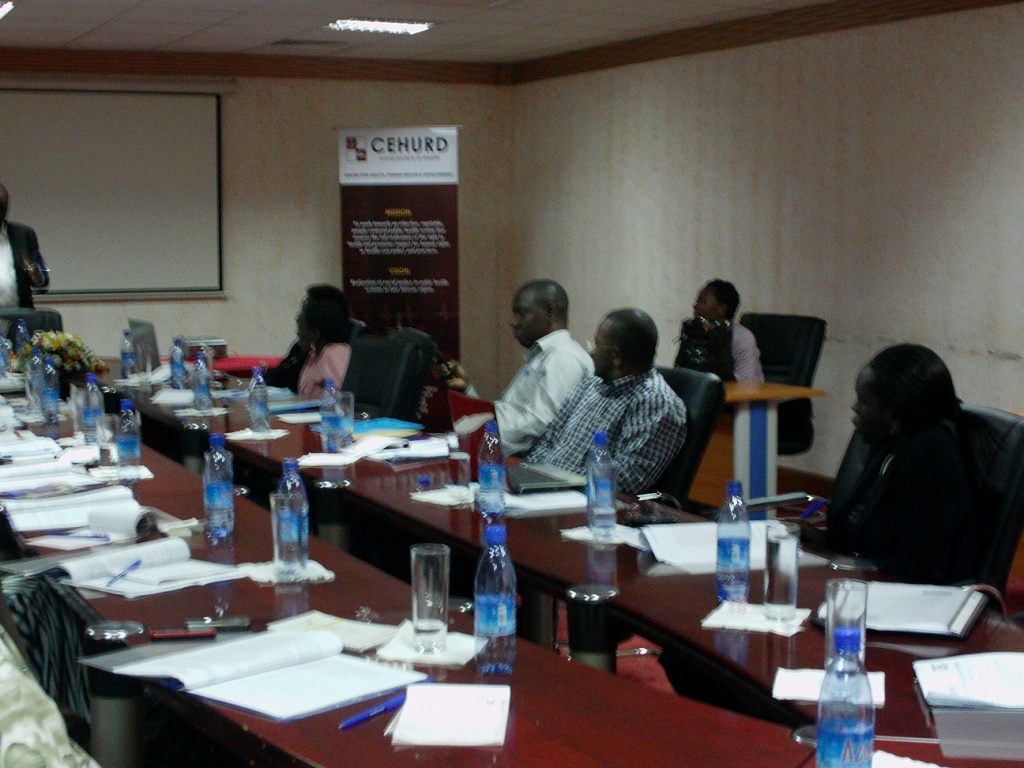
This agreement was achieved late night on the last day of the closed-door session of the open-ended working group (OEWG) on Substandard/Spurious/Falsely-Labelled/Falsified/Counterfeit Medical Products (SSFFC) that met in Geneva.
The outcomes of the OEWG are an agreed draft resolution, an annex containing the agreed goals, objectives and terms of reference of the MS mechanism and a report on the outcome of the OEWG. These documents will be considered by the Executive Board meeting in January 2012 before being transmitted to the 2012 World Health Assembly (WHA) for adoption.
The OEWG was established in 2010 to bridge the deep divisions among WHO Member States over the Organisation’s approach to compromised medical products, particularly its association with the International Medical Product Anti-Counterfeit Taskforce (IMPACT), an initiative linked with intellectual property enforcement. There were also divisions over the continued use of the term “Counterfeit” (defined in the WTO TRIPS Agreement as referring to a special category of trademark violations) to refer to poor quality, unsafe medicines. The first meeting of the OEWG took place in February 2011 (see SUNS #7103 dated 8 March 2011).
While these issues remain unresolved, the setting up of an intergovernmental mechanism by the OEWG to determine actions that should be taken to address the availability of quality, safe and efficacious medical products from a public health perspective suggests that WHO’s approach to compromised medical products and in this regard “business as usual” in WHO is simply unacceptable to Member States.
[While the establishment of a MS mechanism was agreed to by the OEWG, the Report of the OEWG notes that divergent views were expressed with regard to WHO’s involvement with IMPACT. It further notes that, “A way forward on this specific issue could emerge when the new mechanism is considered at the 65th session of the WHA”].
According to the final agreed outcome, the MS mechanism, open to all WHO members, will be for an initial period of three years, for “international collaboration among Member States, from a public health perspective, excluding trade and intellectual property considerations, regarding ‘SSFFC medical products'”.
[The language of “excluding trade and intellectual property considerations” is derived from the mandate of the OEWG. At the 2010 World Health Assembly, there were concerns that WHO was being drawn into IP enforcement initiatives and was using terminology such as “counterfeit” associated with IP as it dealt with compromised medical products. This led Member States to expressly exclude IP considerations from the mandate of the OEWG.]
The MS mechanism has a broad mandate to deal with the prevention and control of SSFFC medical products that includes to collaborate and contribute to WHO’s work that addresses access to affordable medical products, including the supply and use of generic medical products. The mandate to address “affordability” was particularly controversial, as some countries argued against its inclusion. The Africa Group submitted a proposal on the last day of the meeting that did not include issues related to access to medicines.
The MS mechanism is also mandated to facilitate consultation, cooperation and collaboration with relevant stakeholders but in a “transparent and coordinated manner”, and from a public health perspective. The terms of reference of the MS mechanism also clearly notes that, “Possible conflicts of interests shall be disclosed and managed in accordance with the polices and practice of WHO”.
The issue of definitions of SSFFC medical products that was unresolved by the OEWG will also be taken up by the MS mechanism.
The establishment of the MS mechanism follows intense discussions behind closed doors on mechanisms best suited to deal with the problem of compromised medical products.
An initial Chair’s draft text of 14 October circulated prior to the OEWG meeting proposed three separate mechanisms. It proposed the establishment of: (i) a subcommittee of the Expert Committee on Specification for Pharmaceutical Preparations to develop a revised definition of SSFFC medical products and to develop other guidance on the matter; (ii) a multi-stakeholder mechanism to address the issue of SSFFC from a policy and operational perspective and to promote formal and/or informal collaboration in a coordinated manner among various stakeholders involved in addressing the issue including providing assistance to MS; and (iii) a standing high level coordinating mechanism, comprised of relevant UN agencies and programmes and other inter-governmental international and regional organizations, in order to exchange experiences and inform each other about ongoing activities as well as coordinate the respective actions in the field of SSFFC.
The proposal contained in this text was unacceptable to many Member States during informal consultations held on the text on 17 and 19 October. Subsequent versions of the text were also not accepted. According to sources, objections were expressed by several Member States against the establishment of any form of multi-stakeholder mechanism or a coordination mechanism among Secretariats of international or regional organizations that bypasses Member States.
Civil society groups also objected to such mechanisms in a letter signed by more than 50 NGOs addressed to Ambassador Darlington Mwape from Zambia. The letter cautioned against such mechanisms and noted that, “WHO’s work on QSE (quality, safety and efficacy) must be driven by its Member States and not by other organizations or entities”.
It also expressed concern over “WHO’s cooperation with other organizations such as Interpol and the World Customs Organization particularly as these organizations are known to continue using ‘counterfeit’ to refer to medical products of compromised QSE and promote IP enforcement”.
It also stressed that “any mechanism that is developed should be intergovernmental in nature, open to all Member States with decision-making powers remaining with WHO Member States”. The letter also urged WHO Member States to discontinue using the term “counterfeit” to refer to medical products of compromised QSE, and to disengage WHO from IMPACT, as the latter lacks credibility and legitimacy.
The “Agreed Elements of the MS mechanism” contained in an Annex to the draft resolution agreed at the OEWG are as follows:
General goal: “In order to protect public health and promote access to affordable, safe, efficacious and quality medical products, promote, through effective collaboration among Member States and WHO, the prevention and control of SSFFC medical products and associated activities”.
Objectives:
“1) To identify major needs and challenges and make policy recommendations, and develop tools in the area of prevention, detection methodologies and control of SSFFC medical products in order to strengthen national and regional capacities.
“2) To strengthen national and regional capacities in order to ensure the integrity of the supply chain.
“3) To exchange experiences, lessons learnt, best practices, and information on ongoing activities at national, regional and global levels.
“4) To identify actions, activities and behaviour that result in SSFFC medical products and make recommendations, including for improving the quality, safety and efficacy of medical products.
“5) To strengthen regulatory capacity and quality control laboratories at national and regional levels, in particular for developing countries and LDCs.
“6) To collaborate with and contribute to the work of other areas of WHO that address access to quality, safe, efficacious and affordable medical products, including, but not limited to the supply and use of generic medical products, which should complement measures for the prevention and control of SSFFC.
“7) To facilitate consultation, cooperation and collaboration with relevant stakeholders in a transparent and coordinated manner, including regional and other global efforts from a public health perspective.
“8) To promote cooperation and collaboration on surveillance and monitoring of SSFFC medical products.
“9) To further develop definitions of SSFFC medical products that focus on the protection of public health.”
Structure: “1) The Member State mechanism will be open to all Member States. The Member State mechanism should include expertise in national health and medical products regulatory matters. 2) The Member State mechanism may establish subsidiary working groups from among its members to consider and make recommendations on specific issues. 3) Regional groups will provide input into the Member State mechanism as appropriate. 4) The mechanism shall make use of existing WHO structures.”
Meetings: “1) The Member State mechanism should meet not less than once a year and in additional sessions as needed. 2) The default venue for the Member State mechanism, and its subsidiary working groups, will be Geneva. Meetings may, however, be held from time to time outside of Geneva taking into account regional distribution, overall cost and cost-sharing, and relevance to the agenda”.
Relations with other stakeholders and experts: “1) As needed the Member State mechanism should seek expert advice on specific topics, following standard WHO procedures for expert groups. 2) As needed the Member State mechanism will invite other stakeholders to collaborate and consult with the group on specific topics.”
Reporting and review: “1) The functioning of the mechanism shall be reviewed by the WHA after three years of its operation. 2) Report to the WHA through the Executive Board on progress and any recommendations annually as a substantive item for the first 3 years and every 2 years thereafter.”
Transparency and conflict of interest: “1) The Member State mechanism, including all invited experts, should operate in a fully inclusive and transparent manner. 2) Possible conflicts of interest shall be disclosed and managed in accordance with the policies and practice of WHO.”
The key elements of the draft resolution include the Preambular paragraphs:
— reaffirms “the fundamental role of WHO in ensuring the availability of safe, quality and efficacious medical products”;
— recognizes “the need to promote access to affordable, safe, efficacious and quality medicines including through the full implementation of the WHO Global Strategy and Plan of Action on Public Health, Innovation and Intellectual Property”;
— recognizes “the importance of ensuring that combating SSFFC medical products does not result in hindering the availability of legitimate generic medicines”;
— acknowledges “the need for improving access to affordable, quality, safe and efficacious medicines as an important element in the effort to prevent and control medicines with compromised quality, safety and efficacy and in the decrease of SSFFC medical products”;
— takes “note of resolution 20/6 of the United Nations Commission on Crime Prevention and Criminal Justice entitled ‘Countering fraudulent medicines, in particular their trafficking'”;
— expresses “concern regarding the lack of sufficient financing of WHO’s work in the area of quality, safety and efficacy of medicines”;
— recognises “the need to enhance support to national and regional regulatory authorities to promote the availability of quality, safe and efficacious medical products”.
In addition to setting up the MS mechanism, the operative paragraphs of the draft resolution reaffirm the fundamental role of WHO in ensuring the safety, quality and efficacy of medical products, in promoting access to affordable, quality, safe and efficacious medicines, and in supporting national drug regulatory authorities in this area, in particular in developing countries and least developed countries.
It reiterates that WHO should continue to focus on and intensify its measures to make medical products more affordable, strengthening national regulatory authorities and health systems which includes national medicine policies, health risk management systems, sustainable financing, human resource development and reliable procurement and supply systems; and to enhance and support work on pre-qualification and promotion of generics, and efforts in rational selection and use of medical products.
In each of these areas, WHO’s function should be: information sharing and awareness creation; norms and standards and technical assistance to countries on country situation assessment; national policy development; and capacity building, supporting product development and domestic production.
It further reiterates that WHO should increase its efforts to support Member States in strengthening national and regional regulatory infrastructure and capacity. It is decided that the MS mechanism will be reviewed after three years of operation, and urges Member States to: (1) participate and collaborate with the Member State mechanism; and (2) provide sufficient financial resources to strengthen the work of WHO in this area.
The WHO Director-General is requested to support the MS mechanism and to assist Member States in building capacity to prevent and control “SSFFC medical products”.
source: http://www.twnside.org.sg/title2/intellectual_property/info.service/2011/ipr.info.111103.htm