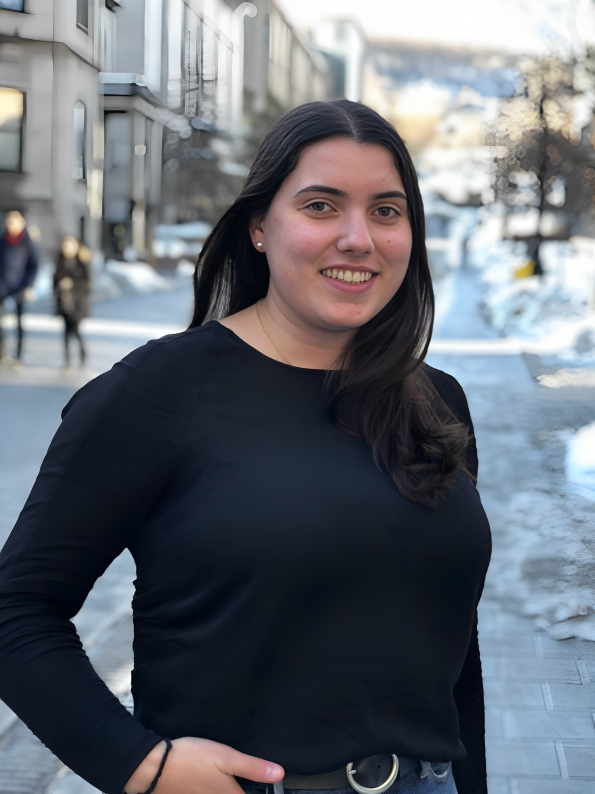
By Chlöe Shahinian
Within ten minutes of my arrival at the Center for Health, Human Rights and Development (CEHURD), I was partaking in the traditional Monday morning reflections and update meeting for all staff. I tried to keep up with the various staff updates and absorb all of the acronyms being used and the names of the projects being referenced. Later in the day, when the Strategic Litigation (SL) team met separately for a program meeting, I got to learn more about the ongoing work of the team with which I would be interning for the next two months,I knew that the Summer was guaranteed to be filled with new and exciting opportunities.
I found out on my second day that a supervising lawyer would be taking me to the Magistrate’s Court in Entebbe the following day. Having never been to court in Uganda, or Canada for that matter, I was grateful to have such an interesting learning experience so early in my internship. CEHURD, as part of its legal aid clinic services, was attending court to watch brief on a criminal case where a woman had been raped by a healthcare worker while seeking emergency medical care at a hospital. CEHURD’s mandate to attend court in the case was derived from instructions given to them by the survivor. Upon arrival at court, my supervising lawyer guided me to the Registry Office where we handed over various photocopies of the prepared Notice to Watch Brief. These were then each stamped and quickly slipped back into our case file. Next, we exited the grounds of the Court to visit the Office of the Resident State Attorney, where our documents needed to be stamped once again. I sat precisely where my supervising lawyer pointed to and watched in rapt interest as discussions in Luganda (a local language spoken in central Buganda, Kampala) took place around me.
Upon the arrival of the State Attorney, our documents received their final necessary stamp, and we were off to the courthouse again, this time walking and talking with the State Attorney as we made our way. Once we arrived in the courtroom, my supervising lawyer and I slotted into two available spots in the front row of the public seating, and we waited as the accused in the day’s cases were guided into the room by prison warders. When our case name was called, we rushed to leave the courtroom and enter the Magistrate’s chambers, where sexual offense cases are typically heard for reasons relating to the privacy of survivors, and where we finally submitted our paperwork. What seemed like two minutes later, before I could even process what had happened, my supervising lawyer gestured for me to exit, and I realized that we were done at court for the day. “What happened?” I asked my supervising lawyer, “are we done?” I was told that we had adjourned, on the request of the State Prosecutor, to another day as the necessary Committal paperwork had not yet been completed for referral to the High Court which is clothed with the jurisdiction to try offenses of that magnitude. In the moment, it felt like we had spent half a day of work driving to and attending court, only to be returning to the office empty-handed. However, this experience early in my internship has become an example of a quality I have come to see defines CEHURD as an organization: resilience.
In full transparency, I can’t take credit for the word resilience. I first thought about it as a potential guiding theme for this blog post during CEHURD’s whole-organization Project Review Meeting, which took place in the second week of my internship. At the conclusion of the meeting, CEHURD’s Executive Director, Fatia Kiyange, speaking about the implementation of one of the organization’s largest projects, highlighted the resilience of the project’s implementers in the face of various challenges. It occurred to me that resilience was a fruitful lens through which to consider much of the organization’s work, especially in my position as an intern with the Strategic litigation team (SL). The importance of resilience in human rights work became especially apparent to me in the first weeks of my internship when I was tasked with working on an organizational report that would analyze cases in which CEHURD had received a negative judgment and lessons learned from the litigation strategies adopted in those cases. Working on the report allowed me to familiarize myself with CEHURD’s past litigation and helped me to better understand how the SL team has modified its litigation strategy, specifically in cases on appeal, when faced with a negative judgment at a lower court. The report, I realized, was in effect an analysis of CEHURD’s resilience.
As time went by, I had the privilege to go into the field and see how the SL team manages its ongoing litigation. I learned that working as a member of the team is a lesson in resilience. For instance, at the High Court in Mukono, a case in which CEHURD is a co-applicant was adjourned because two Respondents had not yet submitted their written submissions despite having previously been ordered by the Court to do so. This case relates to a clean and healthy environment which was filed by CEHURD and Others, National Environment Management Authority (NEMA) and Mukono District Local Government, Civil Application No.1 of 2023. As an intern being newly introduced to this system, it was easy for my first reaction to be frustration. However, in observing my colleagues, I came to see how their experiences navigating Uganda’s justice system have made them incredibly resilient. Each appearance at Court, even if it is only to be informed of an adjournment, is an opportunity to speak with relevant State actors to learn more information, to organize possible mobilization efforts with co-applicants, or even to demonstrate CEHURD’s commitment to the case. Importantly, one of the SL team’s lawyers emphasized to me the impact of showing persistence in always showing up. She highlighted that when State actors, such as the Chief Magistrate, see CEHURD appearing time after time in the interest of their clients, it signals that CEHURD is dedicated to following the case through no matter the difficulty of navigating the obstacles posed. The significance of this follow-through for CEHURD’s vulnerable clients cannot be overstated.
Human rights work is incredibly hard, and as a newcomer in the space, it was easy to lean into instinctual feelings of frustration, impatience, or even resignation when it felt as if we were not progressing quickly enough towards the justice the client rightly deserves. This is an impulse which I fought since the beginning of my internship with CEHURD. However, watching the SL team, and seeing their perseverance in the face of adverse outcomes as well as their unrelenting efforts in defending the rights of their clients, helped me to develop a new instinct: trying to always ask “what can I do next?” as a first reaction, instead of lingering on factors beyond my control. Having completed my internship with CEHURD, I feel that I have strengthened this new instinct in such a way that will assist me in human rights work moving forward.
The writer was a CEHURD intern from McGill University Canada.