Advancing access to SRH services – The Legal Support Network

By Rose Wakikona

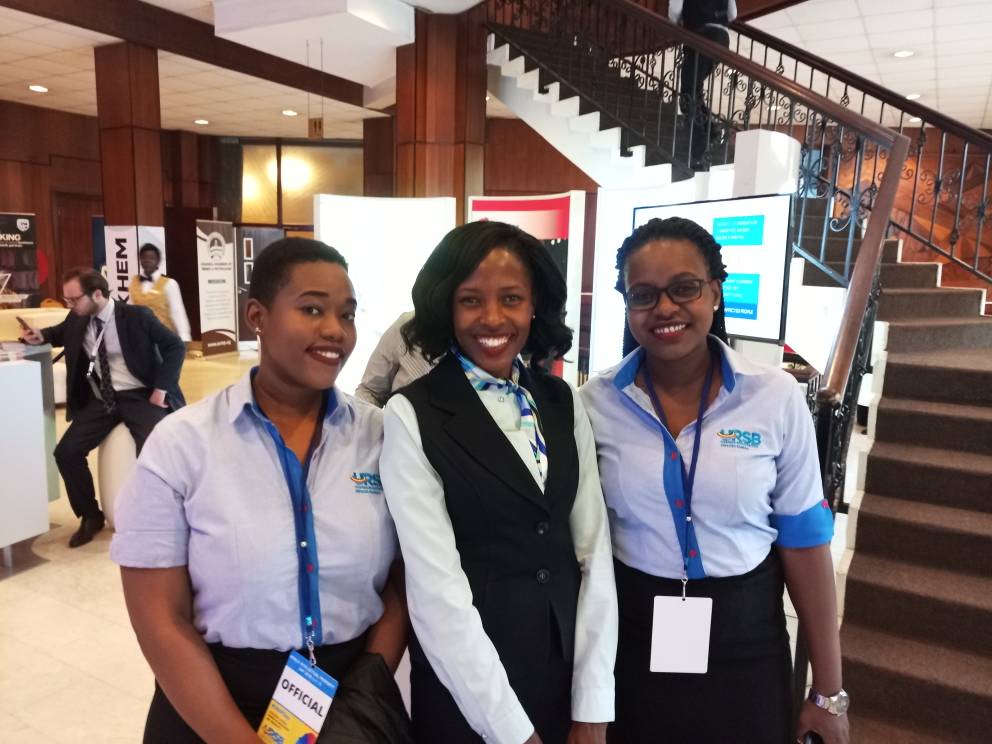
Planned Parenthood Global (PPG) organized a regional multi-stakeholder meeting between 5th to 9th March 2018 held at Royal Tulip Hotel, Nairobi Kenya for the LSN and the Health Workers that they represent. The meeting was attended by partners from South America, Kenya, Uganda and Tanzania who are implementing the LSN model. The purpose of the meeting was to generate an understanding of the PPG LSN model among the LSN implementing partners and the health workers they represent. The parties met to discuss how the LSN model has evolved in each country and how best to tweak it to suit the individual needs of each country.

CEHURD has coordinated the LSN since 2014, since its establishment the LSN has a membership of over 24 lawyers with a specially trained in Sexual Reproductive Health Rights. The goal of the LSN is to create a safe environment for health workers to provide reproductive health services to those who need them and the LSN does this by providing legal support to Health Workers caught up in the justice system for providing reproductive health services thus increasing their confidence to provide these services. This is done using a 3 pronged approach of preventative, reactionary and advocacy;

The preventative approach is the core of the model with the LSN looking to reduce the legal risk of the health workers as much as possible to ensure that they do not end up in conflict with the law in the first place, this they do by making a thorough analysis of the laws in their respective countries and informing the health workers of the dos and don’ts as prescribed by the law, they also conduct site visits to assess the compliance of the different health facilities and ensure that the health workers are working within the ambit of the law. Under this approach the LSN also develops guides for the health workers to use as a point of reference when faced with a potentially combustible situation.

The reactionary approach comes in play when the preventative does not work and someone slips through the cracks. With this the LSN comes on board to provide legal representation for health workers at police and in court when they are in conflict with the law. The advocacy approach sees the LSN work to and participate in activities that see the furtherance of Sexual Reproductive Health Rights this is done by undertaking public interest litigation to challenge archaic laws and provide legal support to organizations doing advocacy around Sexual Reproductive Health Rights.

The LSN in Uganda has used all 3 approaches and conducted compliance visits to over 60 health facilities under Reproductive Health Uganda (RHU) and Family Life Education Program (FLEP), development of reference materials for the health workers, training of health workers and lawyers to build capacity in Sexual Reproductive Health Rights, installation of the toll free line and litigation of strategic cases. The network is also governed by a management committee of 5 members and guided by operational guidelines. The LSN in Kenya is the oldest having started in 2012 with 4 lawyers on board. The LSN in Tanzania is the youngest having started in 2017 with 20 lawyers on board.

During the meeting the health workers expressed excitement for the LSN and undertook to work with the lawyers. They complained of continued police harassment, stigma of service providers, banned standards and guidelines on Sexual Reproductive Health Rights leaving an information gap, fear of imprisonment, untrained health professionals, ignorance of the law, individuals accessing the LSN, referrals to friendly hospitals and lack of representation for pharmacists.

The parties agreed to engage by the LSN disseminating guides on the legal context of reproductive health rights, bringing on board new individual service providers, developing a list of friendly providers who can handle referrals, extending the scope of representation to pharmacists and developing a strategy to manage police harassment of health workers.

Staff reflection of retreats, an approach to CEHURD’s planning.

By Nakibuuka Noor Musisi

Over the years, CEHURD has mastered the art of institutional development, planning and assessment. Slowly, the institution has zeroed to holding annual staff retreats to reflect on not just its strategic plan progress but also plan ahead annually. It’s also a time of the year when the institution builds staff capacities in various issues that surround its areas of engagement. This is not something done by every institution, yet in fact it’s a guiding tool to planning.

While the Institution may treasure this approach, some staff have a divergent view. I took a reflection of what staff thinks about this strategy. I must state that out of the about 28 staff, a few were spoken to (with program representation as key factor to this), not because I wanted to discriminate others but because they were out of office at the time of writing this article. The same questions were asked to the administration of CEHURD and the findings are startling. I had in mind that the newsletter quarter was up and writing about the staff retreat would be great especially that in about a few months, we will be in another retreat to review progress of the first half of the year.

The big deal about this year’s retreat is three fold. The capacity building sessions in various areas, Comprehensive sexuality education, Harm Reduction Model, leadership, team work etc.; team work and planning and most importantly the co- curricular activities that were wound up with a boat ride on the Nile waters. This seemed a very interesting moment for staff with all the music and refreshments that came with it. This is my opinion, but staff had moment’s to share about not just this year’s retreat but various others that the institution has held. My questions to them were; what do you like about the staff retreats and what don’t you like about them? I will verbatim write down the responses here

β€œTeam building is usually strong in the retreats and also I get to know people’s personalities. I use his time to reflect on personal objectives and the organization” It however used to be tense, and I used to join it with fear, I hated this part of it, but of late I like it” Ms Nalukwago Assumpta.
Mr Serunjogi Francis noted that β€œWhile it’s meant for planning and reviewing progress on organizational side, the biggest component to me is team building. We never get time to sit and talk and laugh as staff, at office its work, and work and work. I do not like the fact however, that there is a lot of information shared within a short time. Our facilitators are cut short, they usually have a lot to share which we would consume in about two weeks and is provided in a short time”

Ms. Aguti Lillian noted that she likes the fact that β€œwe plan together but is a hectic process.” While Mulindwa Dan Joseph gets be β€œnotified of our weaknesses, learn things we do not know, strengthen relationships as employees, when you have grudge it’s time to reflect and forgive each other. It’s also a time to enjoy life outside of work. I do not like it’s part of working for long hours and sometimes somehow hectic.”

From the strategic Litigation program, Ms Rose Wakikona liked the fact the β€œWe go to nice places, eat good food, have nice discussions that gave me a platform to learn more about CEHURD and how to implement work. It was however too long, with so many days away from home and was tired of the place by the time we left.”
Ms Primah Kwagala emphasized that β€œI like the planning in the retreat. I like the fact that we go to be together, run together, and have co- curricular activities other than work. We get to reflect on our lives, aspirations, we learn from what people are doing way beyond work. You get to plan and do things better at the end of the retreat. I hate it when sometimes you become the subject of the retreat. Its demoralizing because a person thinks they have no value they add to the team and come back determined to leave?”

Asking the same question to the grants and research officer, Ms Nassimbwa noted that, β€œI like the recreation, doing work but also relaxing and work planning. I decided never to say what I do not like”
Ms Kizito Claire stressed that β€œone get to know in-depth of programs and how projects relate to programs” and disliked nothing. While Ms Nakiyingi Vivienne highlighted that she likes the β€œfact that it’s a reflection moment, people get to know more about each other besides work and it eases minds when we play in evenings. I however do not like the fact that we never get to contribute to ideas as staff on where the retreat will take place, its ideal that our voices are heard on venues of choice as part of our contribution to the planning of the retreats right away.”

From the communications department, Ms. Nabunya Faith who is fairly new and has attended to just one retreat noted that β€œI loved the tea, work and sociability of everyone, I loved the sun and disliked nothing”
While from a different program, but fairly new- just like Faith, Mr Wasswa Paul elucidated β€œI liked the fact that we had excellent facilitators to build our capacities in various fields, loved the lake side engagements in the evenings, and daily work out for staff.”

Asked the same question, Mr Muhumuza Abdul Kharim likes the fact that retreats are β€œa time of reflection about self and organizational and also have an opportunity to build capacity in various fields. What I do not like is tricky o mention.”

These views, as you read, are divergent some with stronger expressions that makes you feel like we should have these retreats always or never again. You may be asking yourself he views of the administration of the institution. I did not hesitate to pause similar questions to them, Ms Nakanwagi Gertrude, Mr Kabanda David and Mr Mulumba Moses also have both good and bad sides of these retreats.

The retreats are an β€œopportunity to be together with staff unlike at work, but sometimes there used to be tension that came with them yet they should be a time for relaxing but this has changed” Ms. Nakanwagi Gertrude noted.
Mr Kabanda David highlighted that he likes them because β€œthey happen twice a year and it’s that time when we genuinely dig deep into strategizing on how best work should be done. This helps me and every one to reflect on the career path but also work that has to be done in the year. It’s the time when someone sets targets which can be personal or work related. Is the time to sit and talk to people, we eat together and have fun. I also like the co- curricular activities that come with it. Sometimes however, you want people to do things and rework plans but they show you they are tired or even fade up of being tasked to refines work plans”

Wounding it up with a response from the Executive Director, Mr Mulumba Moses notified to me that β€œI like them because they are the only points in life when I usually connect with people that we work with. They give me a social life to understand people. The retreats have a component on mentor-ship which I find valuable and I think it’s important that it’s maintained. It’s also an opportunity for me as the head of the institution to move away from work and having to answer all questions, to rather a more relaxing moment. I love it for its not being a very serious but relaxing moment to connect with people. It however puts pressure on me to think, prepare, and make them relevant.

In most cases it takes me a lot of thinking such that am able to provide staff with more meaningful comments as they prepare their work plans. It takes me days of looking for best facilitators and it leaves me in a most pressurized and difficult situation. Sometimes these retreats are tense and one has to make had points for people to do more which sometimes is a problem and this makes me think twice about the retreat.”

I do not want to agree any better, these are just views that any institution would want, to make itself better. I want to thank staff that gave their responses and administration too. I hope these will help CEHURD plan better and or change approach to things.

Protecting Uganda’s newborns

By: Primah Kwagala

A pregnant woman went to Uganda’s largest hospital to deliver her baby. After her labor stalled, she was wheeled to the operating room, where her newborn was delivered by caesarean section. When the woman awoke from surgery, her baby was gone. No one at the hospital would tell her what happened to her child.

Another woman went to the same hospital to deliver twins. When she woke from surgery, she was handed one baby instead of two. The hospital said the twin had died, but there was no explanation of what went wrong and no body to bury. Months later, the hospital turned over a body, but DNA testing proved it did not belong to the grieving parents.

No mother should have to experience the pain of losing a child. When the hospital cannot explain what happened or even hand over a body for burial, it is a clear violation of the constitutional right to health. Uganda’s High Court agreed in a January 2017 ruling. So why hasn’t the hospital fully complied with the court’s order that it change its policies to ensure this doesn’t happen again?

As a human rights lawyer, I hear heartbreaking cases like this all too often. Our clients deserve justice. It is not enough for us to win these cases in court. We want proof that the hospital is taking steps to protect these precious lives.

We rejoiced last year when Lady Justice Lydia Mugambe ruled that Mulago National Referral Hospital had violated the parents’ right to health and freedom from torture when it failed to produce their baby’s body.

β€œThe plaintiffs were denied an opportunity to carry out burial rituals for their child, which in my view would have constituted a fundamental part of their healing process,” Justice Mugambe said in her decision. β€œBy denying them the opportunity to bury their baby, the defendants compounded their pain and subjected them to more psychological torture.”

It has been more than a year since the court handed down its ruling, which included financial damages to the bereaved couple and required that the hospital take steps to safeguard babies. We have received no report from the police, hospital or government on any progress toward improving hospital procedures.

We are seeking some simple, inexpensive fixes. Place surveillance cameras in the maternity wing to monitor the movement of babies. Hold midwives accountable when babies in their care disappear. Develop protocols for moving babies around the hospital to ensure they are always accounted for.

Some may say that the government cannot afford to install such safety measures in a public hospital. Yet in the financial year 2016-17, the public hospitals returned billions of Ugandan shillings to the government treasury.

Rather than spending money on paying legal fees and damages for rights violations, I am urging the executive director of Mulago National Referral Hospital to invest in making systems that work for the people who use them. That means establishing policies at Mulago Hospital to respect the movement and safety of babies, dead or alive. The Uganda Nurses and Midwives council should hold its members to account when babies in their care vanish.

Every life in this country matters. We must ensure our public hospitals are doing all they can to protect our newborns.

Using Moots to Improve on the Quality of Strategic Litigation

By: Wasswa Paul

Many cases filed by the Center for Health, Human Rights and Development [CEHURD] seek to challenge violations and omissions that infringe on the realization of the Right to Health in Uganda. Classical examples of these cases include Constitutional Petition No. 16 of 2011 [CEHURD and others vs. Attorney General that sought to challenge the lack of access to essential maternal health care services that killed pregnant women and babies and Civil Suit No. 111 of 2012 [CEHURD and others vs. Nakaseke District Local Government and others] that was filed by CEHURD on behalf of a pregnant woman who died in a hospital while awaiting obstetric care.

Whereas these cases are precedent setting in Uganda, achieving a successful outcome in litigation often requires a great deal of preparation. One of the tools CEHURD has continuously used to achieve a successful outcome in Litigation through preparation is engaging in Internal Moots.

Internal Moots are held to assist the Advocates to further conceptualize and appreciate the facts of the cases pending in Uganda’s Courts of Law while connecting the facts to the Law and Evidence on record.

They also assist the Advocates to buttress on the arguments raised in the pleadings and to identify the gaps in the pleadings and evaluate the evidence raised in support of the pleadings.

It is through such Internal Moots that CEHURD continues to win its cases as it Advocates for Social Justice in Health

CEHURD Mobilizes the Community to Donate Blood

By: Dennis Jjuuko

Uganda continues to grapple with a critical shortage of blood that is affecting services and putting patients’ lives at risk. The Health Ministry’s blood bank facility in Kampala, has only 150 units of blood remaining, not enough to meet requirements on an average day in the city. Nationally, Uganda needs at least 340,000 units of safe blood annually as recommended by the World Health Organisation, but usually only collects 200,000 a year according to the Director of Uganda Blood Transfusion Services. The country then faces a deficit of 140,000 blood units.

The shortage was recently β€œalmost at crisis level”, which prompted a cancellation of hospital operations and prioritization of cases, and an extra 7 billion shillings (Β£1.4m) needed to procure donor and testing kits, and to fund blood donation drives, to get the service back on track for the next six months. The crisis came at a time of a proposed reduction of the health budget from 1,850tn shillings in the current financial year to 1,714tn in 2018-19. But, according to the just released National Budget Framework Paper that gives a picture of how much money each sector is likely to receive in a financial year, UBTS is proposed to get just Shs8.8 billion – a further reduction. The blood bank, as a result launched, an appeal for blood donation in coordination with National Social Security Fund.

Accident victims, cancer patients, women in labour, and children requiring transfusion, are on the rise, yet Ministry of Health figures show that Uganda’s blood needs are increasing at 20% per year. Investing less in blood means losing lives, yet this is something government can have control over.

It is important to emphasise that blood donation is a voluntary activity motivated by the need to save lives. As a result, the Center for Health, Human Rights and Development (CEHURD), as a Health Rights organization that takes availability and access to services as among the central tenets of a functioning health system, therefore joined and contributed to this drive of ensuring adequate stock of blood needed for saving mothers and other patients in need. CEHURD partnered with local council chairpersons of Nakwero A and Ndazabazadde villages and mobilized staff and residents who donated units of blood that surpassed CEHURD’s target. 50 units were the target and 74 units were collected on 17th February 2018.

In Uganda, access to essential health services for pregnant women and others in need is a public health crisis that CEHURD, not only as a health rights organization that challenges the circumstances under which mothers lose their lives (Petition 16), but also as a party interested in the sanity of the health system can contribute to. More than 16 pregnant women die every day in Uganda, with hemorrhage being among the leading direct causes of preventable death, contributing 42%.

CEHURD therefore responded to the blood deficit in the country and continues to encourage Ugandans especially youth to at least do that benevolent act every quarter of the year since the shelve span of blood is only 35 days, yet Uganda is in dire need for sufficient stock of blood if the health system is to effectively respond to emergencies.