A Story harrowing story of our legal Aid Client
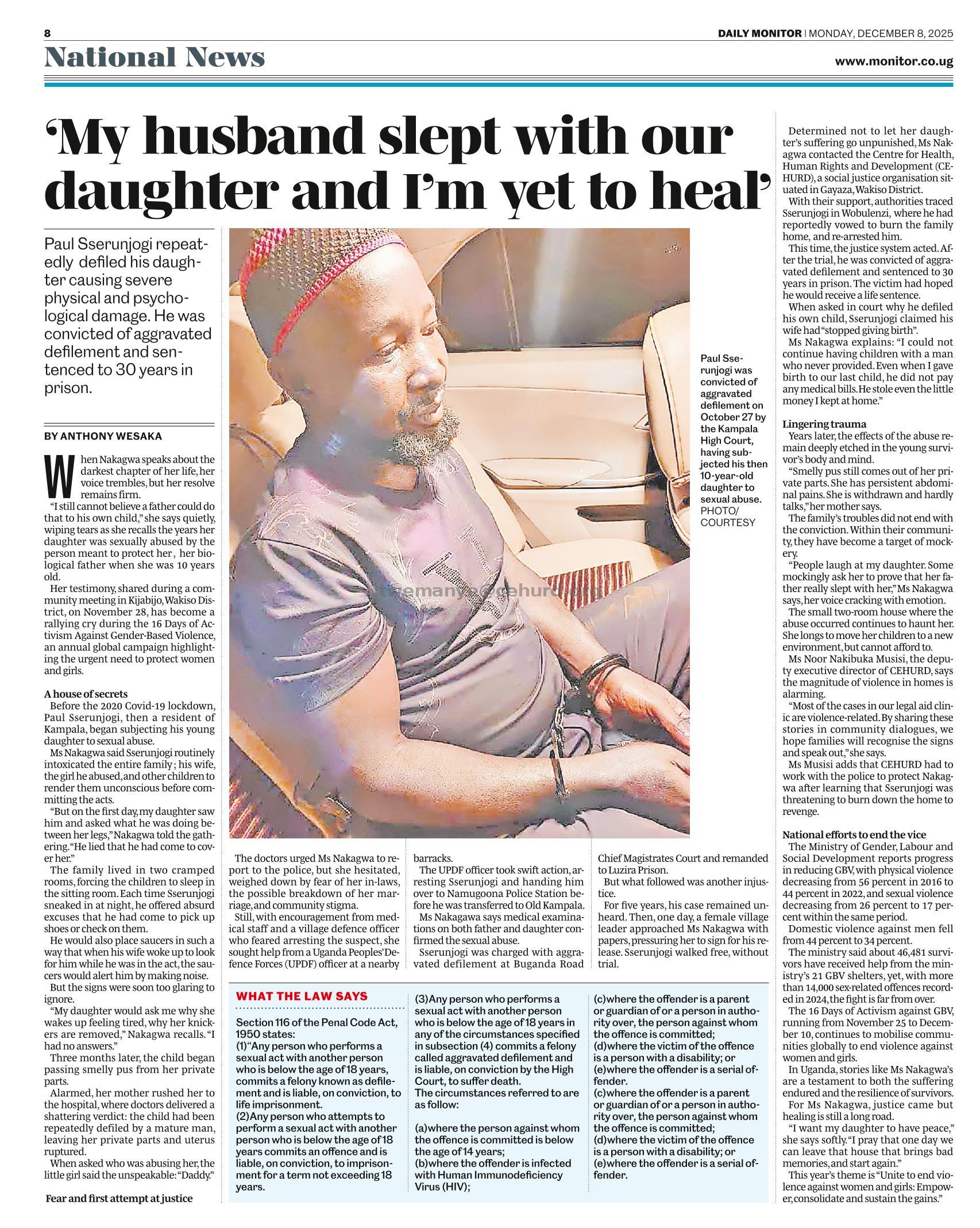
Published in the Daily Monitor on 8th December 2025. (https://www.monitor.co.ug/uganda/news/national/-my-husband-slept-with-our-daughter-and-i-m-yet-to-heal–5291022)
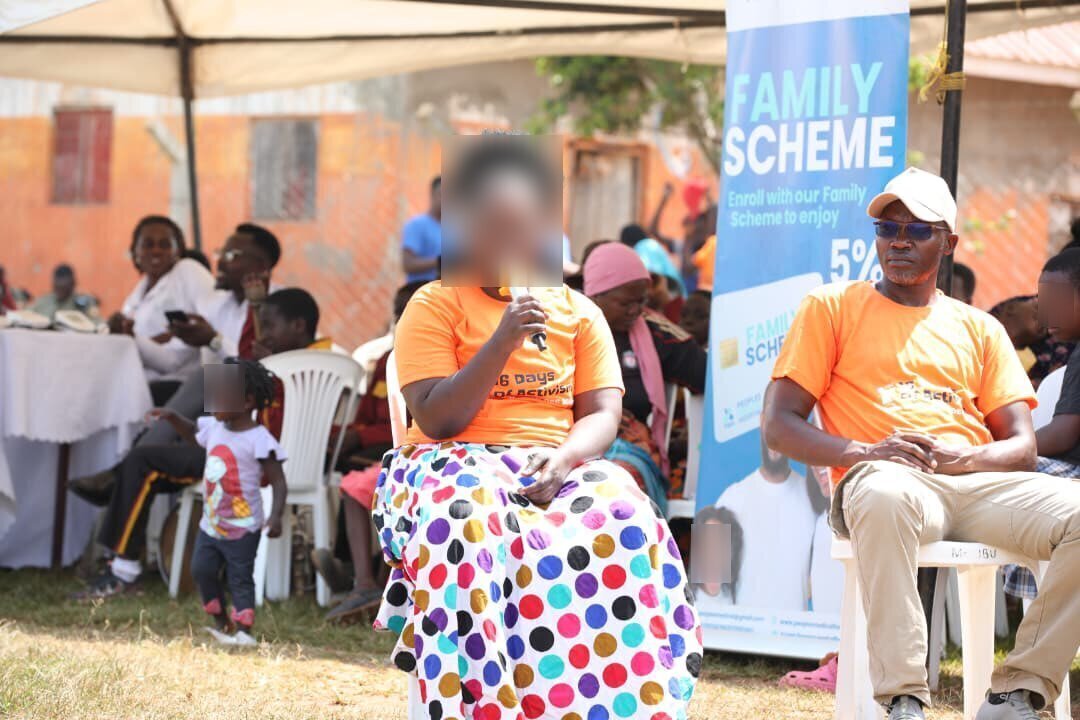
A Story harrowing story of our legal Aid Client
Published in the Daily Monitor on 8th December 2025. (https://www.monitor.co.ug/uganda/news/national/-my-husband-slept-with-our-daughter-and-i-m-yet-to-heal–5291022)
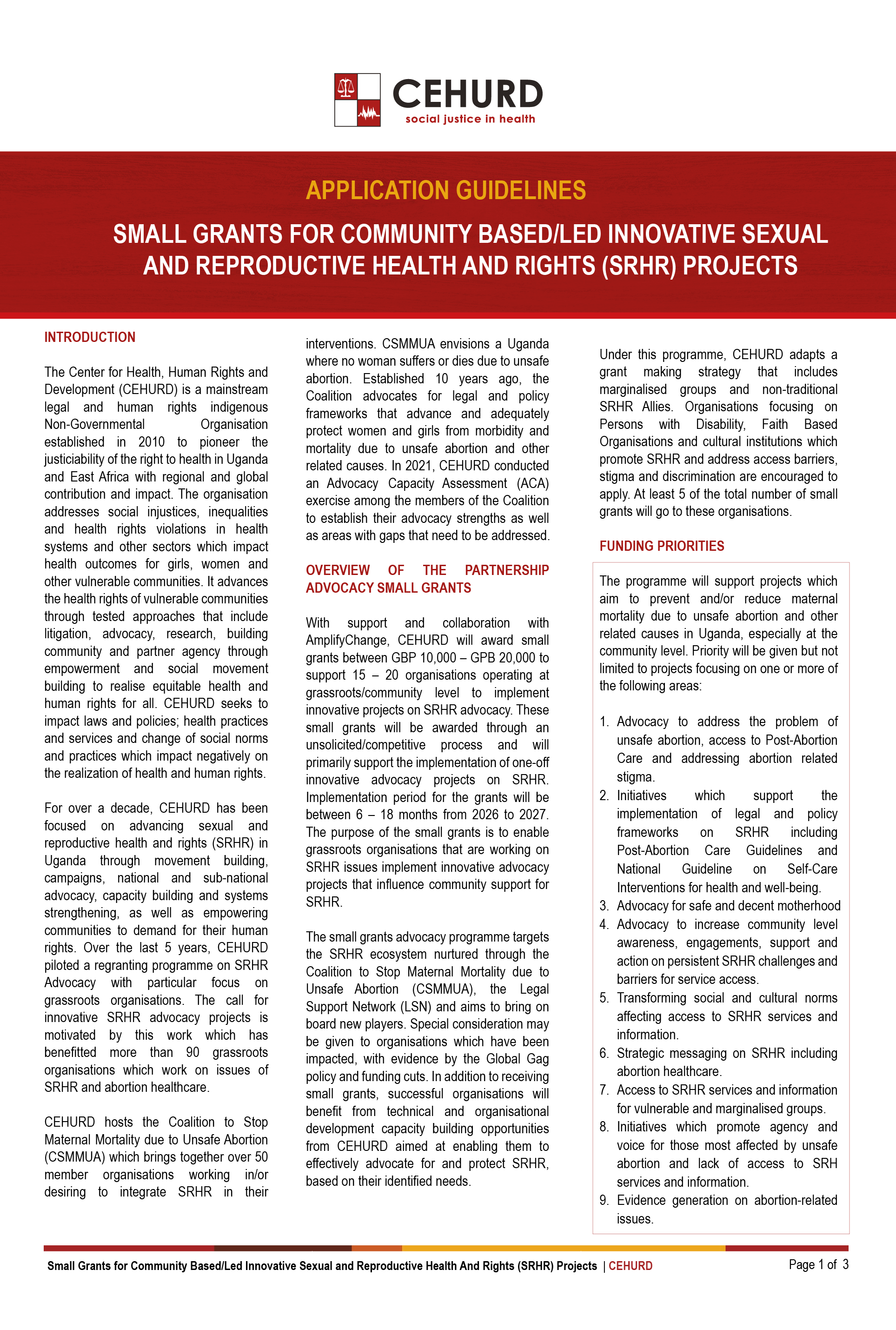
With support and collaboration with Amplify Change, CEHURD will award small grants between GBP 10,000 – GPB 20,000 to support 15 – 20 organisations operating at grassroots/community level to implement innovative projects on SRHR advocacy. These small grants will be awarded through an
unsolicited/competitive process and will primarily support the implementation of one-off
innovative advocacy projects on SRHR.
Implementation period for the grants will be between 6 – 18 months from 2026 to 2027.
Download the Application form and Application Guidelines below;
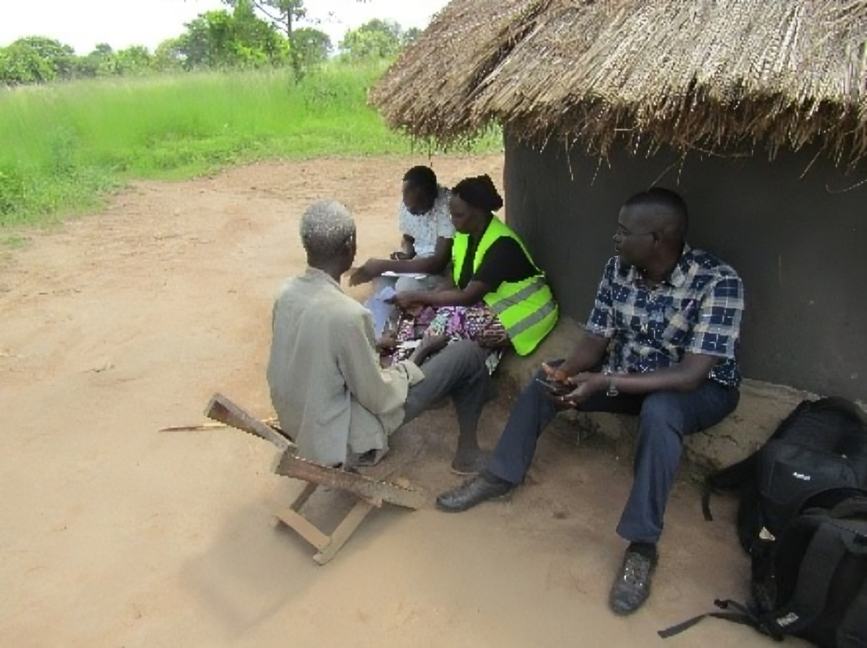
In Owoor Sub-County, an elderly man living with HIV had been battling his condition alone. With little support from his family, he often went days without proper meals and lived in unhygienic conditions. Overwhelmed and discouraged, he eventually stopped taking his antiretroviral medication.
During our routine home visits, we sat with him and his family for honest conversations about care, responsibility, and why staying on treatment matters. Bit by bit, the family stepped up. They began preparing his meals, cleaning his living space, and reminding him to take his medication.
On our latest visit, the change was striking. His health had improved, his energy was back, and his outlook had shifted from despair to hope.
His journey shows how steady follow-up and genuine family involvement can restore dignity and transform the lives of people living with HIV.
Compiled by Andrew Simbo, Executive Director, Keru Women’s Action ORUM-KWAF-Gulu
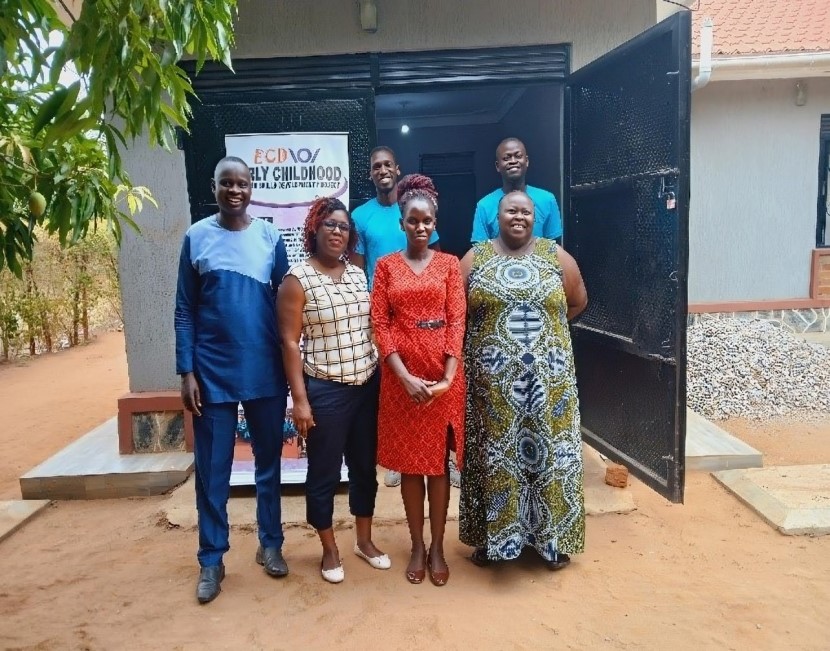
The Early Childhood Development Organisation (ECDO) has been working with the Center for Health, Human Rights and Development (CEHURD) to build stronger community systems, improve programme delivery, and expand access to essential health services. The work focuses on HIV prevention and testing, malaria prevention, TB response, and community referrals – all anchored in the theme: Improving Maternal and Child Health, Malaria, HIV, and TB Prevention in Bardege-Layibi Division, Gulu City.
This partnership is supported through the Global Fund’s health systems strengthening mechanism, implemented by TASO Uganda as the Principal Recipient (PR2) and CEHURD as the Sub-recipient (SR). Through this arrangement, ECDO has received both technical and financial support, especially through mentorship sessions on planning, implementation, financial management, reporting, and running effective community dialogues, referrals, and outreaches.
Between April and September, ECDO organized more than ten community health outreaches with the support of Alokolum HC II, Oitino HC II, and Bardege HC III. These health facilities provided trained staff, testing kits, and essential medicines, allowing successful outreach activities in Katikati, Abuga, St. Daniel, Oitino, and Cuk Lanebi villages.
More than 1,500 people received vital health services right in their communities. Each outreach drew an average of 128 participants, and more than half of all households in the targeted villages took part. That level of turnout shows how community trust in local health services is growing.
A major highlight was the increase in maternal health service uptake. Over 200 women, most of them aged 20 to 24, received antenatal care. Malaria, which accounted for 28 percent of all recorded cases, was tackled head-on through health education and timely treatment.
This progress is the result of many hands working together. The leadership of Bardege-Layibi Division, including the Community Health Officer, Community Development Officer, and Town Clerk, provided steady guidance. Health facilities such as Alokolum HC II, Oitino HC II, and Bardege HC III supplied medical staff and essential supplies. CEHURD’s mentorship, both in person and online, strengthened ECDO’s systems, leaving the organisation better prepared to manage larger projects and deliver sustainable community programmes.
Village Health Teams (VHTs) and Local Council leaders played a huge role in mobilising residents house-to-house, while families across the villages opened their compounds to host the outreach sessions. Because of this collective spirit, entire communities became hubs of learning, care, and support.
Impact Beyond Numbers
The value of these outreaches goes far beyond the statistics. They brought health workers and communities closer, built trust, encouraged accountability, and nurtured a stronger sense of shared responsibility for health. The conversations, education, and follow-up support are already shaping healthier habits and deeper awareness across Bardege-Layibi Division.
ECDO and its partners look forward to growing this work and reaching even more families. Donors, government agencies, and community leaders have a key role to play in keeping these outreach efforts alive. When support continues, access improves, and communities thrive. A healthier, better-informed, and more resilient Northern Uganda is within reach – and it starts with partnerships just like this one.
By Emmanuel Bongomin (ECDO)
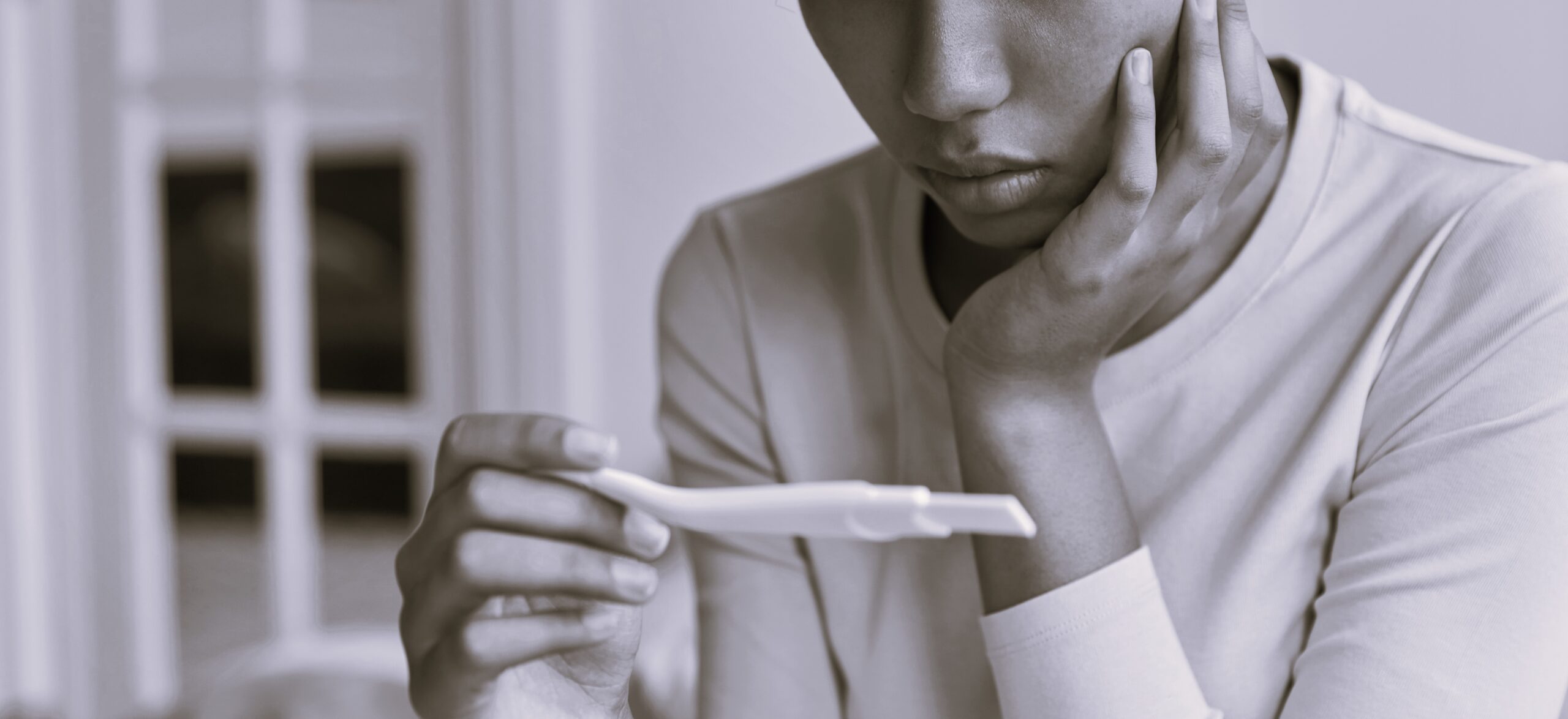
“I was already on HIV treatment. When I found out I was pregnant, I was terrified. I knew I could not continue with the pregnancy, but where could I go safely?”
This is the story of Veronica (real name withheld), a 17-year-old teenager and a mother living with HIV whose immunity is compromised due to poor feeding and no meaningful source of income. Her only option was to terminate the pregnancy.
Stories like this are now becoming common in Uganda but never spoken about. They are whispered in hospital corridors and shared quietly among young women and teenagers. For many, the ending is tragic. Unsafe abortion remains one of the leading causes of maternal deaths resulting from severe complications such as sepsis and haemorrhage, among others.
Uganda records about 43 abortions for every 1,000 women of reproductive age, most of them unsafe. Behind that number are young girls afraid of being expelled from school, mothers already struggling to feed their children, and women living with HIV, TB who know that another pregnancy could compromise their immunity and livelihood.
The dangers are intensified when infectious diseases are part of the picture, because pregnancy weakens a prospective mother’s immune system, and the risk of opportunistic infections rises. And when unsafe abortions are carried out in unsterilized environments, one would be prone to imminent death. Other complications like severe bleeding or anemia further make malaria, one of Uganda’s deadliest illnesses even more dangerous for women.
Unsafe abortion ties into and is woven in the lives of young women in rural areas who pay the heaviest price considering that HIV infection rates are highest in this age category. The suffering is inescapable. Maybe access to safe and legal abortion could save countless lives like Veronica. It would keep women in HIV and TB care, reduce malaria risks, and ease the burden on hospitals that are currently overwhelmed by treating preventable complications.
Uganda has made significant progress in reducing maternal deaths, currently estimated at 189 per 100,000 live births (2022). However, this figure is still far above the SDG 3.1 target of 70 per 100,000 live births. To close this gap, government action is urgently needed to address the major causes of maternal mortality, including unsafe abortion. This requires clear provision of post-abortion care, and the expansion of the legal grounds under which abortion can be accessed.
We ought to remember that numbers tell only part of the story. Behind every number are hidden tragedies – the young woman who never makes it to the hospital in time, the mother whose children are left behind, and the girl forced to abandon her education. The spirit of the abortion law and how it is implemented has an important bearing on maternal health and teenage pregnancy and can influence reduction of the burden on healthcare system. It has the capacity to enable or disable access to safe abortion and body autonomy.
We should seek to expand grounds for safe abortion and access to SRH commodities as well as other related family planning services. The law ought to be a little clearer and unburden healthcare workers from being caught in the grey and retrogressive criminal justice system by allowing duty bearers to implement it in a manner that is tangible, accessible and fair.
Safe abortion is not just a medical service. It is dignity. It is survival. It should be part of our fight against HIV, TB, malaria, and overall preventable maternal deaths. Uganda cannot afford to lose more lives in silence and stigma. We owe our women better!
Compiled by Kitandwe Rhodine is a Health Rights champion and lawyer working with Center for Health, Human Rights and Development (CEHURD); kitandwe@cehurd.org