Download the bid notice for the Installation, Commissioning & Training of the CEHURD Enterprise Resource Planning (ERP) System, including submission requirements, timelines, and bidding instructions.

Download the bid notice for the Installation, Commissioning & Training of the CEHURD Enterprise Resource Planning (ERP) System, including submission requirements, timelines, and bidding instructions.
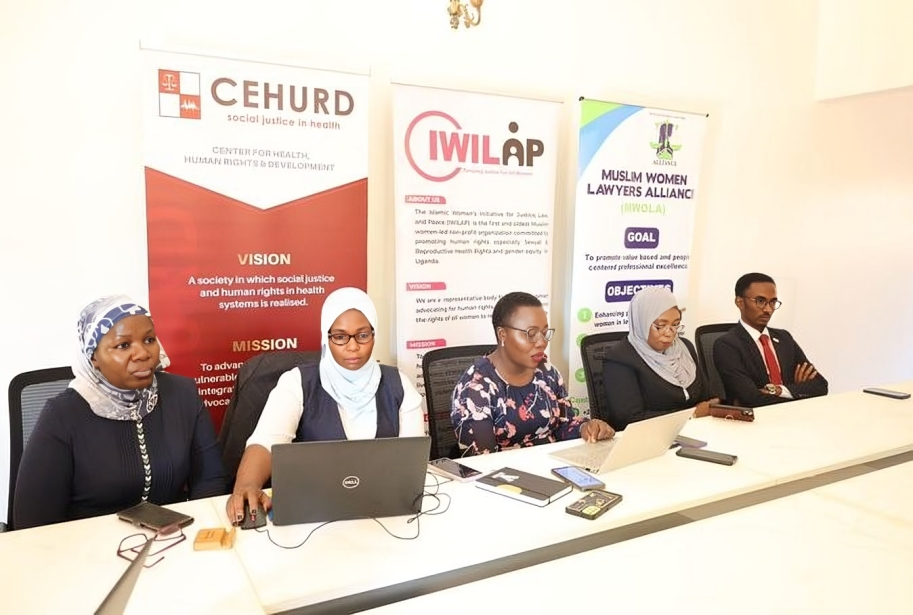
Uganda continues to wrestle with alarmingly high rates of sexual abuse, particularly against young girls. Recent statistics indicate a sharp rise in reported cases, with countless more going unreported due to fear, stigma, and lack of access to justice. The case of a 14-year-old girl allegedly abused by her stepfather highlights the urgent need for a collective response to SGBV.
In response, Center for Health, Human Rights and Development (CEHURD), the Islamic Women’s Initiative for Justice, Law & Peace (IWILAP), the Muslim Women Lawyers Alliance (MWOLA), the Muslim Female Lawyers Network on Abortion, and the Uganda Association of Women Lawyers (FIDA-Uganda), convened a press conference to address this incident on Tuesday, 15th October 2024, offering solidarity and support to the survivor and her family. The coalition is committed to ensuring that the survivor’s voice is amplified and her rights upheld.
Download Press Statement; PRESS STATEMENT ON SEXUAL ABUSE OF 14 YEAR OLD GIRL 2 OCTOBER 2024 Final final (1)
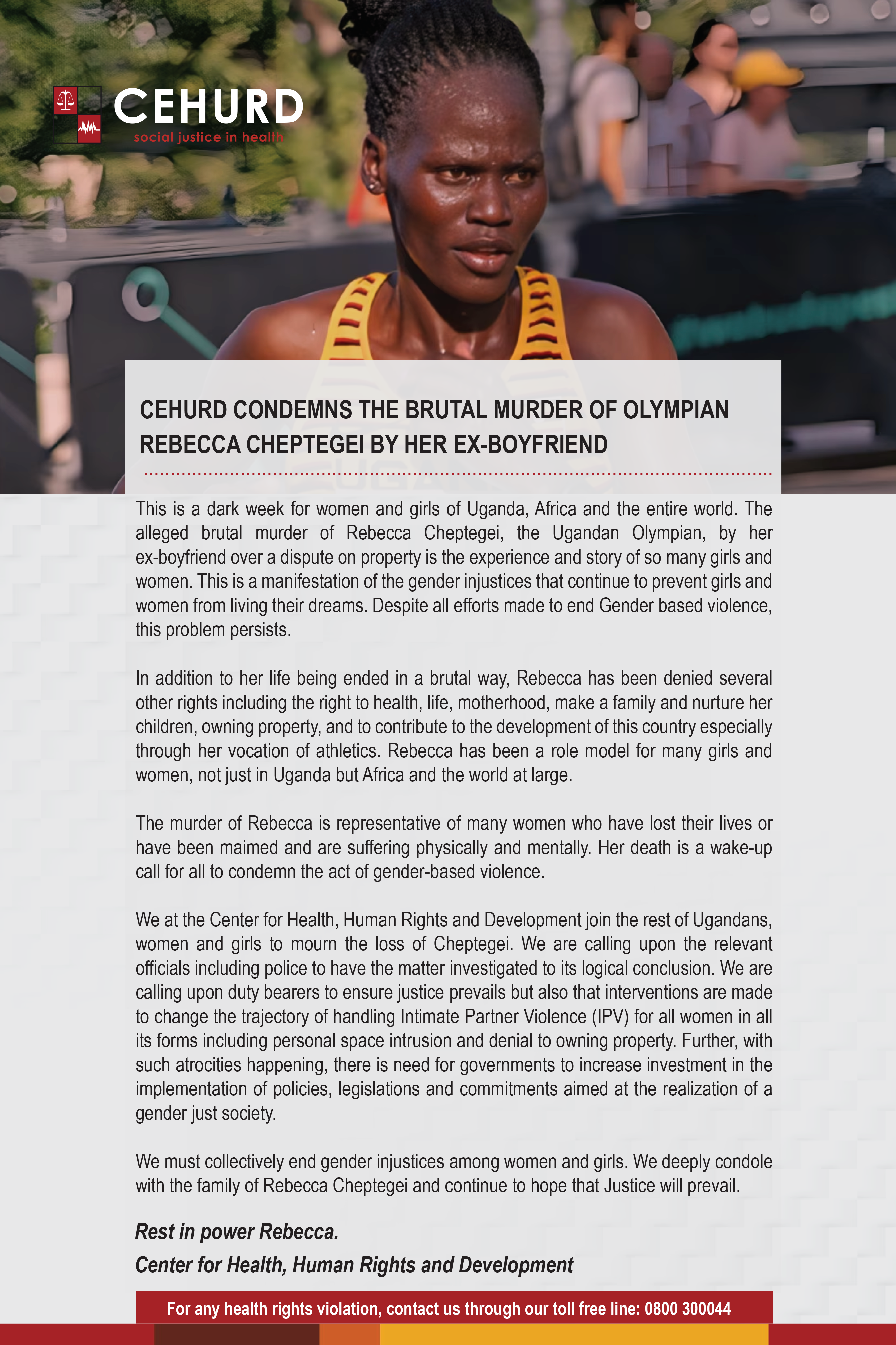
The Center for Health, Human Rights and Development (CEHURD) strongly condemns the brutal murder of Ugandan Olympic athlete Rebecca Cheptegei. Cheptegei, 33, died after being doused in petrol and set on fire by her ex-boyfriend in Kenya;
Read full Statement; >
CEHURD is a Non-Governmental (NGO), not-for-profit indigenous research and advocacy organization established 15 years ago to pioneer the justiciability of the right to health by advancing social justice in health and human rights in Uganda and East Africa and has been implementing its five-year strategic plan (2020 –2024) since January 2020.
The duration of the strategic plan (SP) will come to an end in December 2024. A mid-term review (MTR) was undertaken after 2.5 years of implementation to assess progress and a detailed report is available.
CEHURD plans to engage services of a consultant with expertise in formulation and evaluation of strategic plans with an advocacy focus and who has a good understanding of issues of health, human rights sexual and reproductive health and rights (SRHR) to support the process of developing a new strategic plan and enablers for its implementation. Deadline is July 15th 2024.
Access Call Details > Call for Application for Developing CEHURD SP
Access ToRs > CEHURD’s ToRs Strategic Plan Development
Center for Health, Human Rights and Development (CEHURD) is calling upon universities interested in participating in the 11th Annual National Inter-University Constitutional Law Moot Court Competition to fill »» this form as an expression of interest by Friday, 12th July, 2024 at 5:00 pm (EAT).
We invite different universities with schools/faculties of law in Uganda to participate in the competition scheduled for 24th and 25th October 2024.
The 11th Annual National Inter-University Constitutional Law Moot Court Competition is taking place under the theme,“ Balancing competing priorities in championing Reproductive and Gender Equity in Uganda”.
This year’s moot has been designed to create a fertile environment for thorough discussions on Reproductive and Gender equality, social justice and equity in Uganda through the use of a hypothetical moot problem that students shall use to participate in the moot. The discussions under this theme will focus on examining the role of the formal and informal justice systems in ensuring access to reproductive health care services and enhancing gender justice for all.
Applicants will show the need for the advancement of reproductive health and gender equity through access to information by highlighting the Constitutional rights, referencing international treaties and conventions that Uganda has ratified, emphasizing the obligation to promote and protect reproductive health and gender equality.
Applicants will also focus on examining the policy, legal and regulatory frameworks as well as the structural and procedural bottlenecks to accessing reproductive health care services in Uganda, including the challenges faced by marginalized groups such as young people, rural women, women with disabilities, and adolescents.
The Moot will explore the impact and influence of faith-based narratives, as well as traditional and cultural practices on sexual and reproductive health and rights and gender justice in Uganda, further examining the legal framework for protecting women and girls from harmful traditional and cultural practices, and the role of the formal justice system in addressing these practices.
The Applicants will further examine the need to balance individual rights with the need to protect public health during emergencies as well as assessing whether the measures are appropriate and proportionate. They will raise key health issues in addressing access to comprehensive reproductive healthcare services, including access to information on family planning, safe abortions, and prevention and treatment of sexually transmitted infections for young people.
The students will also break down gender justice by discussing the need to address sexual and gender-based violence, discrimination, and harmful cultural practices that affect girls and young women and marginalized groups in Uganda clearly denoting how that is easier when young people are empowered with information.
Respondents will elucidate further on how religious and cultural beliefs intersect with constitutionally protected reproductive and gender related rights, what legal arguments can be made to ensure access to affordable and comprehensive reproductive health related services, whether the rights of adolescent girls and young women are protected within the current SRHR and gender rights framework of Government, or the system needs an overhaul, and how the government’s commitment to the right to health can be leveraged on to advocate for better facilities to cater for mental health.
The main objective of the Moot is to train students in practical aspects of litigating health and human rights within Uganda’s Courts of Law. This kind of arrangement helps bring out lawyers that understand key constitutional and health issues beyond what they are taught in class. The Moot specifically aspires to train students in legal writing, arguing cases in Court, professional conduct and demeanor while arguing cases and preparation of Court pleadings.
#CEHURDMOOT2024