
Let us join forces to eliminate violence against women and girls in Uganda

By Namakula Ritah

Globally, violence against women and girls specifically intimate partner violence and sexual violence remains a major public and clinical health problem and a violation of women’s human rights which is rooted in and perpetuates gender inequalities. The higher prevalence of violence against women and girls occurs most in low developedΒ  countries such as Uganda. Worldwide, 1 in 3 women experience physical and/or sexual violence in their lifetime, mostly by an intimate partner or someone close to them. In 2021, nearly 1 in 5 women aged 20-24 years were married before turning 18 years. Also, more than 5 women or girls are killed every hour by someone in their family. All this is a stark reminder of the scale of gender inequality and discrimination against women and girls.

In Uganda, there is a concerning normalization of harmful behaviors within intimate relationships, such as women enduring physical abuse and engaging in non-consensual acts under the guise of expressing love. Worse still, it’s almost a taboo for any woman to come up and say they were raped. This leaves many Ugandan women and girls suffering in silence. The Uganda 2016 Demographic and Health Survey (UDHS) found that 58.4% of married women reported ever having experienced emotional, physical, or sexual violence from a spouse, and 39.6% had experienced it within the past year. These findings are not any far different from the 2022 UDHS findings about violence against women and girls.Β 

According to the United Nations, violence against women and girls is defined as “any act of gender-based violence that results in, or is likely to result in, physical, sexual, or mental harm or suffering to women, including threats of such acts, coercion or arbitrary deprivation of liberty, whether occurring in public or in private life.” In-order to prevent and eliminate violence against women and girls around the world, there is a UNITE to End Violence against Women initiative which occurs annually. This initiative was created to support the civil society led campaign around the world. The global theme of this year’s 16 Days of Activism against Gender-based Violence, which runs from 25 November to 10 December 2023, lets β€œUnite! Invest to prevent violence against women and girls”.

In Uganda, various organizations are contributing to this campaign differently through among others engagement of media on issues of violence against women and girls, supporting the GBV survivors, advocating for SRHR movements, community sensitization and more. The question I pause to ask you is β€œHow are you contributing to this year’s global theme of; Unite! Invest to prevent violence against women and girls?” 

I suggest adopting a collaborative multisectoral strategy to effectively eradicate violence against women and girls.

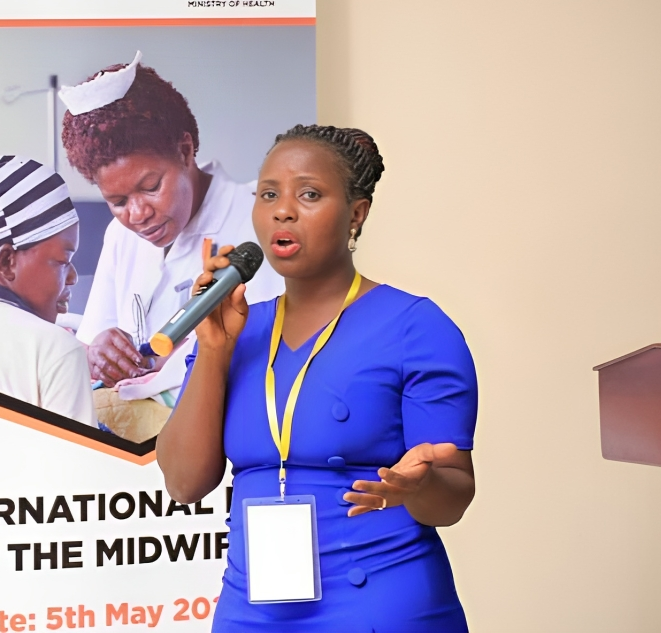
The author is a Registered Midwife and BSc trained midwife working with Mulago Specialised Women and Neonatal Hospital, Kampala

No Woman is a punching bag: Gender Based Violence remains a big threat to Ugandan women and girls

By Lilian Nuwabaine

Recently, while interacting with one of the survivors of Gender Based Violence (GBV), she said β€œMusawo, as woman, it’s okay for my husband to beat me whenever things go wrong at home, even with my swollen eyes after being beaten hard by my husband, I cannot deny him intimacy at any time, whether I am menstruating or not.” She went on to say “In our culture, being subjected to physical discipline by one’s spouse is viewed as a demonstration of care and a form of necessary discipline. Denying my partner intimacy might jeopardize the well-being of my family, I feel compelled to fulfill my marital duties.”

Such statements from a GBV survivor hit me hard as a Midwife and Women’s Health Specialist. I asked myself, β€œDoes she know that as a woman, she hasΒ  rights that need to be respected?.”

The above scenario isn’t any different from the recent research findings from one of the studies which showed that GBV ranks at the top of Ugandans’ priorities among women’s-rights issues that need vital government and societal attention. Whereas most Ugandan citizens detest a husband’s use of physical force to discipline his wife, half report that violence against women and girls is a common occurrence in their communities, both urban and rural. In Uganda, while some of us are confident and know that the police takes GBV cases seriously, the majority still think that women and girls reporting violence will be criticised and that domestic violence is a private matter to be handled within the family. In fact, others say, reporting such GBV cases is a taboo and one can instead be disowned by their own communities.

Worse still, according to the Police crime report of 2016-2021, over 272,737 GBV cases of GBV were recorded including 2,278 homicides cases attributed to intimate partners. The report adds that domestic violence cases accounted for 33% of the female homicide caseload. This automatically shows that government initiatives like community policing programmes and public awareness campaigns about violence against women and girls still have huge gaps as they do not appear to have reduced the number of GBV cases over the six-year period. Amidst all this, the Government of Uganda has stated its commitment to ending GBV as part of the Sustainable Development Goal 5 and integrated its targets into its National Development Plan.

The Sustainable Development Goal 5 (SDG 5) recognizes the importance of addressing violence against women and girls to achieve gender equality and the empowerment of women and girls. Specifically, target 5.2 says β€œTo eliminate all forms of violence against women and girls in the public and private spheres, including trafficking and sexual and other types of exploitation.” This implies we should be moving towards seeing a country like Uganda with zero incidents of violence against women and girls. Honestly, violence against women and girls is preventable.

I therefore recommend that the government of Uganda through its relevant line Ministries and partners intensifies and strengthens the measures put in place to curb down incidents of GBV such as improving the reporting and handling of GBV crimes and training devoted to child and family protection and sexual offences. More efforts should be put in media engagements to promote community sensitization about violence against women and girls, without forgetting to debunk the already existing myths in this area. Everyone needs to know that β€œNo woman is your punching bag.”  

The author is a BSc Nurse and MSN-Midwife and Women’s Health Specialist. She is also a Heroes in Health Award Winner-Midwife of the Year 2021.


Call for Expression of Interest to Conduct an Assessment on the Implementation of the Universal Periodic Review Recommendation on GBV and Health as Made to Uganda During the Review of Uganda’s Human Rights Record

CEHURD wishes to engage a consultant to conduct an assessment on the implementation of the recommendations that were made to and accepted by Uganda.

CEHURD has been involved in the Universal Periodic Review, through which the country’s human rights record is reviewed by other peers.
During the review process, Uganda accepted a number of recommendations aimed at improving Uganda Human Rights record.

Close to two years down the road it is important to asses the progress made in the implementation of recommendations received by the country.

Download Details here; UPR process review – Call for Expression of Interest

Moot Problem and Instructions for the 10th National Inter-University Constitutional Law Moot Court Competition

The Center for Health, Human Rights, and Development (CEHURD) expresses its gratitude to Universities that registered for the 10th National Inter-University Constitutional Law Moot Court Competition. The theme for this year’s competition is β€œAdvancing Reproductive Health and Gender Justice in Uganda”

We are delighted to announce that the Moot problem and Instructions for the 10th Annual CEHURD Moot Court Competition are now available for download.

We extend our best wishes to all participants, wishing you the very best of luck in the competition.

#CEHURDMoot2023


From vision to reality: Two Decades of the Maputo Protocol Enhancing Women’s Lives in Uganda

By Judith Suzan Nakalembe

Twenty years ago, the African Union took a momentous stride towards safeguarding the rights and well-being of women and girls across the continent. In 2003, the Protocol to the African Charter on Human and People’s Rights on the rights of women in Africa (Maputo Protocol) .This landmark instrument was specially designed to address the distinctive challenges encountered by women and girls on the continent, aiming to comprehensively uphold and safeguard their rights. Uganda endorsed the Maputo Protocol on March 22, 2010, signifying the nation’s commitment to champion and foster women’s rights in alignment with the protocol’s principles. The endeavors of the Center for Health Human Rights and Development (CEHURD) in advocating for Sexual and Reproductive Health and Rights (SRHR) in Uganda resonate harmoniously with the principles and goals outlined in the Maputo Protocol.

Article 14: A Catalyst for Change: Article 14 of the Protocol highlights the importance of preserving and advancing women’s reproductive health and rights in Uganda. It emphasizes the need for accessible family planning education, comprehensive health information, and improved healthcare services to reduce maternal mortality rates and protect women’s reproductive rights, including permitting medical abortion in specific circumstance.

  • Β  Pic: Dignity Empowered: A Woman’s Journey to Fulfilling Her Family Planning Needs and Gender Roles.

Article 14 of the Maputo Protocol imposes a significant responsibility on the Ugandan government to enhance healthcare services for pregnant and breastfeeding women, focusing on prenatal, delivery, and post-natal care, aiming to reduce maternal mortality and improve the well-being of both mothers and children. Furthermore, the article underscores the importance of safeguarding women’s reproductive rights in Uganda by permitting medical abortion in specific situations, acknowledging the complexity of women’s circumstances and prioritizing their overall well-being and reproductive autonomy in the country

Tackling Maternal Mortality and Unsafe Abortions

Uganda faces high maternal mortality rates, largely driven by unsafe abortions due to restrictive abortion laws. Despite the Maputo Protocol’s provision allowing safe and legal abortion in specific circumstances like sexual assault, rape, incest, or threats to a woman’s mental or physical health, Uganda’s reservation to this provision results in a legal landscape that forces many women to seek unsafe procedures, contributing to maternal mortality.

Β  Β  Β  Β  Β 


< Pic: Silent Suffering: The Untold Story of a Woman’s Struggle with SRHR Neglect


The Impact and Innovation for Uganda

The Maputo Protocol is a groundbreaking treaty in Uganda. It uniquely links women’s rights with their health, emphasizing the importance of accessible and comprehensive healthcare services, including maternal care and family planning (Article 14(1)). Furthermore, it addresses harmful practices like female genital mutilation and forced sterilization, underscoring the protocol’s commitment to safeguarding women’s health and rights (Article 5).

Advancing Women’s Health in Uganda: A Case Study

CEHURD’s proactive role in championing for Sexual and Reproductive Health and Rights (SRHR) in Uganda via advocacy and legal actions impeccably aligns with the Maputo Protocol’s emphasis on women’s rights and gender parity in Africa. Several salient instances and references underscore the alignment of CEHURD’s work with the protocol’s principles:

  • Advocacy for Policy and Legal Reforms: CEHURD has been at the forefront of advocating for the amendment of Uganda’s stringent abortion laws to harmonize with the Maputo Protocol’s call for access to safe abortion services. The organization has fervently campaigned for amendments to the Penal Code, ensuring that women possess the prerogative to make decisions regarding their reproductive health.
  • Legal Action to Challenge Rights Violations: In 2011, CEHURD instigated a landmark case against the Ugandan government, contesting the absence of maternal health services that led to the demise of a pregnant woman. This legal action mirrors the Maputo Protocol’s emphasis on obtaining access to quality healthcare services and holding entities accountable for rights transgressions.
  • Propagation of Health Services: CEHURD’s advocacy Endeavors have significantly contributed to advancing access to sexual and reproductive health services. For instance, the organization has actively participated in campaigns aimed at augmenting awareness about family planning and maternal health services in underserved communities, aligning harmoniously with the Maputo Protocol’s focus on women’s health rights.
  • Education and Awareness: CEHURD has conducted workshops, webinars and seminars to enlighten communities and policymakers about SRHR. Their “Know Your Rights” workshops empower women by disseminating information about their entitlements, encompassing those linked to reproductive health and gender-based violence, in resonance with the Maputo Protocol’s plea for sexuality education and awareness.
  • Monitoring and Reporting: CEHURD’s annual reports and publications chronicle instances of rights violations and disparities in Uganda’s SRHR policies and practices. These reports contribute to the monitoring and reporting mechanisms recommended by the Maputo Protocol to gauge progress in women’s rights.

In Conclusion

As we commemorate two decades of the Maputo Protocol, itsΒ enduring influence, marking two decades of progress, continues to drive positive changes in women’s rights and healthcare in Africa, with its impact on Uganda’s Sexual and Reproductive Health and Rights policies serving as a testament to its transformative potential.

The writer is an Advocate/Program Officer at the Center for Health Human Rights and Development Uganda (CEHURD).