Business or Human Rights? The case of CEHURD and two others against JARO Hospital

CEHURD, has on several occasions challenged Ugandan electricity service providers and regulators for cutting off power supply in health facilities which often jeopardizes the enjoyment of the right to health. Whereas, hospitals are obliged to clear their electricity bills, the measures against such noncompliance should not be meted on babies in incubators, patients on life support and all other health services that operate on electricity.

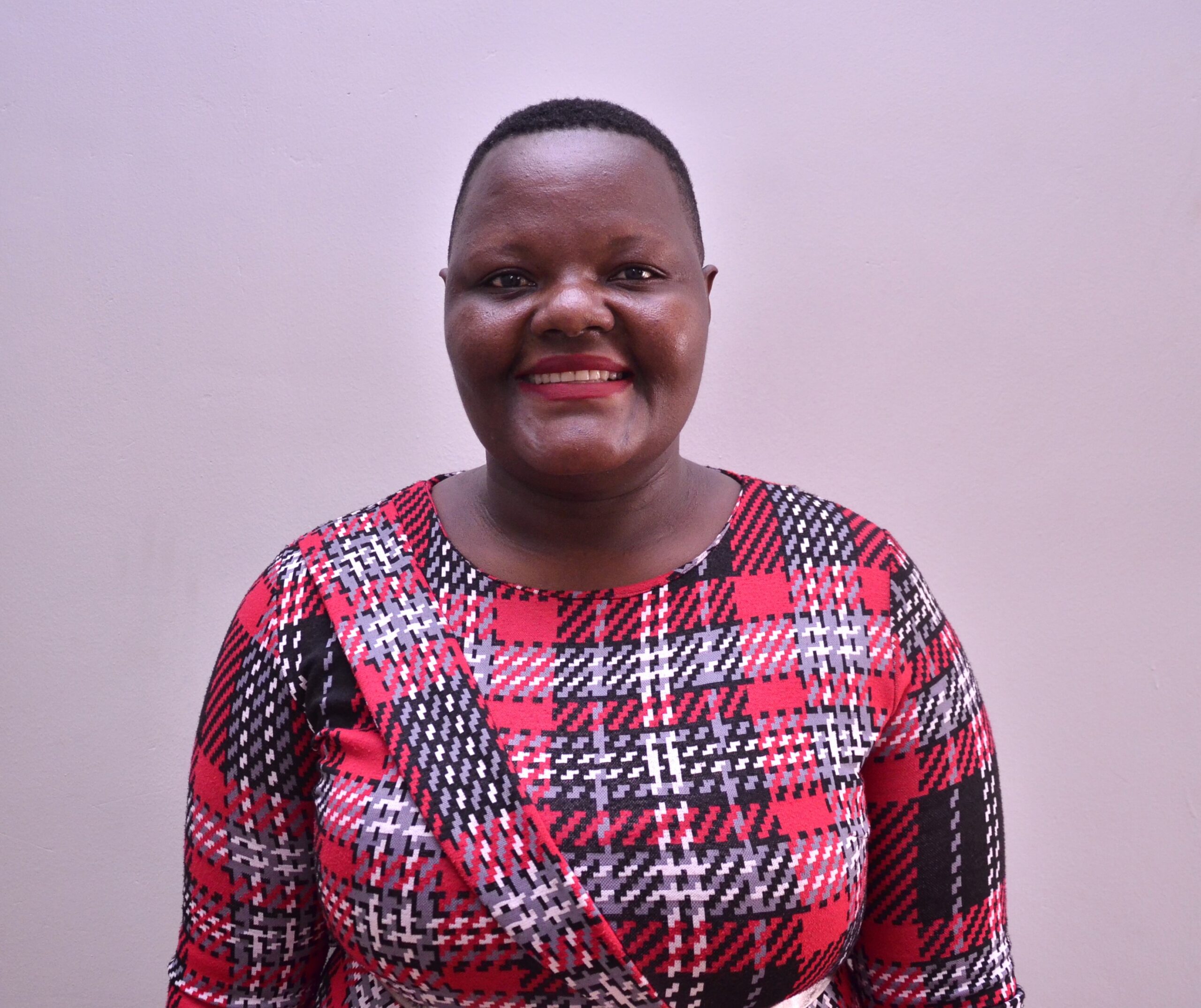
By Seth Nimwesiga

This concept of business or human rights has attracted attention over the recent years alongside capitalism. It recognizes that businesses should be accountable for their actions. That they have a responsibility to respect human rights and to ensure that any risks against human rights arising out of their operations are prevented, addressed or mitigated.

Over the years, CEHURD has documented cases where business owners under the ambit of private health facilities detain patients for failure to pay medical bills. First, Patrick Obiga who in 2016 was involved in an accident and was rushed to International Hospital Kampala for emergency treatment. His family was able to pay twenty million shillings (20 million) of the thirty-eight million shillings charge, leaving a total of eighteen unpaid, and he was detained as a result. Following CEHURD’s interventions, Patrick was let go by the facility.

We assumed at the time that the media attention had sent a message to the facilities, but to our surprise, in 2022 another facility continued the practice that led CEHURD to engage the courts of law.

The High Court of Uganda delivered a landmark judgement against the detention of patients in private health facilities for non-payment of bills. This followed a case filed by Center for Health Human Rights and Development (CEHURD) and two others against Jaro Hospital and its proprietor, for detaining a 14-year-old boy whose parents could not cover, in time, a bill amounting to over 4 million Uganda Shillings after treatment. The decision is significant for several reasons.

First, it reemphasizes the need to protect the right to health as enshrined in international human rights law as well as in the domestic legal framework in Uganda.

Secondly, the ruling upholds the rule of law, it mandates that private healthcare facilities provide crucial essential healthcare services in a way that is both morally and legally compliant. Private hospitals have a duty to provide quality healthcare to patients, but they also have the responsibility to ensure that their business practices keep in line with the provisions of the law. The High Court of Uganda’s ruling flags the detention of patients as neither fair nor reasonable.

Thirdly, the case exposes the rampant concerns around power imbalances existing between companies doing business and individuals enjoying human rights. Patients who seek healthcare services are often vulnerable. Their enjoyment of human rights is often jeopardized by the demands of the health service providers. The case is a timely reminder that private health facilities ought to operate in a manner consistent with the rule of law and the protection of human rights.

In response to the judicial pronouncement, proprietors of private health facilities do, or threaten to demand collateral or indeed a cash deposit from patients before they receive any services. This raises questions of the intersectionality of business, human rights and the role of the state. The judge advises the facilities, in this case to explore alternatives of debt recovery to claim bills due rather than detain patients.

The detention of patients in private hospitals for non-payment of bills, as such, is a violation of human rights. Such false imprisonment in a non-designated detention facility is an actionable wrong which deprives individuals of their right to liberty and violates their dignity as well.

The judgement also demonstrates the role of different state actors, the judiciary in this case, which is a positive development in the area of business and human rights. The judiciary has sent out a strong message to businesses that they must respect human rights and that they will be held accountable for any violations.

However, more needs to be done to ensure that businesses respect human rights. For instance, several cases have sprung up regarding power blackouts in health facilities for governments non-payment of electricity bills. CEHURD, has on several occasions challenged Ugandan electricity service providers and regulators for cutting off power supply in health facilities which often jeopardizes the enjoyment of the right to health. Whereas, hospitals are obliged to clear their electricity bills, the measures against such noncompliance should not be meted on babies in incubators, patients on life support and all other health services that operate on electricity. Another example is a case where CEHURD challenged the failure of the health minister to regulate the cost of treating COVID-19. All this goes to show that beyond profit maximization, health workers swear an oath to save lives which should be prioritized in accordance with the law.

The state has a role to play in setting standards and regulations that promote human rights and hold businesses accountable for their actions. Businesses also need to take proactive steps to respect human rights and to prevent any negative impacts that their operations may have on human rights.

The case and judgment by the High Court of Uganda could not have come at a better time than now when conversations on the health insurance scheme for Ugandans have stalled in parliament. The Judiciary has struck. Both the legislature and executive arms should follow suit in setting the balance clear. The populace needs available, accessible, acceptable and quality healthcare. The capitalists want their money. Where are the answers?

The writer is a Strategic Litigation lawyer at Center for Health, Human Rights and Development (CEHURD).

Consultancy Opportunities at CEHURD

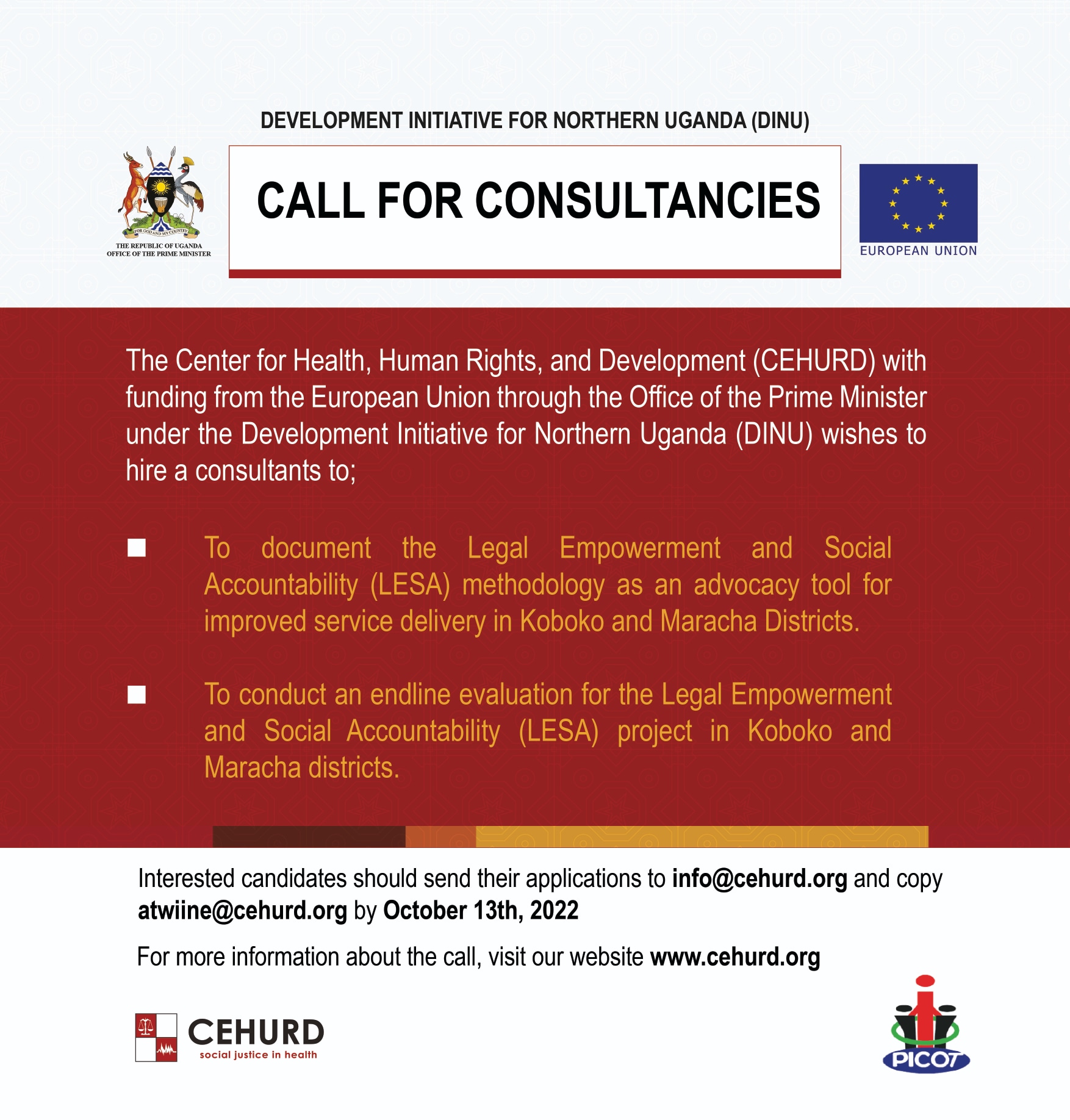
The Center for Health, Human Rights, and Development (CEHURD) with funding from the European Union through the Office of the Prime Minister under the Development Initiative for Northern Uganda (DINU) wishes to hire consultants in relation to the Legal Empowerment and Social Accountability (LESA) project.

CEHURD in partnership with Partners in Community Transformation (PICOT) has been implementing the LESA action since January 2020 in the districts of Koboko and Maracha. The LESA action is an empowerment and advocacy project titled β€œIntegrating Legal Empowerment and Social Accountability for improved local government performance and governance in the districts of Koboko, and Maracha’’.

The consultants will work on the following assignments;

  • Conduct the Endline Evaluation of the Legal Empowerment and Social Accountability (LESA) project. Apply Here
  • Document the Legal Empowerment and Social Accountability (LESA) methodology an advocacy tool to improve social services. Apply Here

Empowering Adolescents and Youths will yield long-term benefits

Adolescents have the highest rate of unintended pregnancies and their unmet need for contraception is much higher. In developing countries, roughly half of the pregnancies among adolescents aged 15-19 are unintended, and half of these result in abortions, the majority of which are unsafe.

BY RODNEY KITANDWE

Sustainable development requires ensuring healthy lives and promoting well-being at all ages. To achieve the Sustainable Development Goals of excellent health and well-being, the world must harness the full potential of all generations.

As a young person, I constantly come across contradictory and perplexing messages about gender and sexuality. With the help of a comprehensive and high-quality curriculum-based sexuality education program, I believe that all children and young people can navigate these messages and develop healthy norms about themselves and relationships that can help them become responsible citizens from an informed point of view. Although most governments have some sort of sexuality education program in place, these programs are frequently ineffective or poorly implemented. The emergence of new resources for putting these approaches into practice, as well as newly emerging research findings about effective approaches to sexual and reproductive health and rights, make this a very advantageous time to advance this fundamental human right.

As we commemorate the international youth day 2022 under the theme Inter-Generational Solidarity: In Preventing Teenage Pregnancies and Child marriages, we must promote access to comprehensive contraceptive care and contraceptive methods as an essential component of women’s health care by enacting policies and taking actions that ensure the availability of affordable and accessible services. There is a need to underpin all advocacy and programming work that ensures sexual and reproductive health and rights for all without discrimination. Fulfilling these rights and empowering adolescents and youths to make timely, informed decisions about their own bodies and their place in the world will yield long-term benefits.

Efforts should be made to increase access to emergency contraception, including the removal of the age restriction for contraception products, and to create over-the-counter access to oral contraceptives with full insurance coverage or cost assistance. Adolescents have the highest rate of unintended pregnancies and their unmet need for contraception is much higher. In developing countries, roughly half of the pregnancies among adolescents aged 15-19 are unintended, and half of these result in abortions, the majority of which are unsafe.

When designing programs for young people, it is critical to consider their reasons for not using contraception despite the fact that they do not want a pregnancy. Infrequent sex, concerns about contraceptive side effects, breastfeeding, or opposition to contraception, believing that its use conflicts with their traditions and religious directives are examples of such reasons. In this context, contraception information and education are required, as are efforts to understand and address myths and misconceptions. The revised International Technical Guidance on Sexuality Education establishes key concepts and learning objectives for use in school and community-based sexuality education that are scientifically accurate, comprehensive, age and developmentally appropriate, and based on human rights and gender equality.

The writer is an intern in the Strategic Litigation programme at the Center for Health, Human Rights and Development (CEHURD.

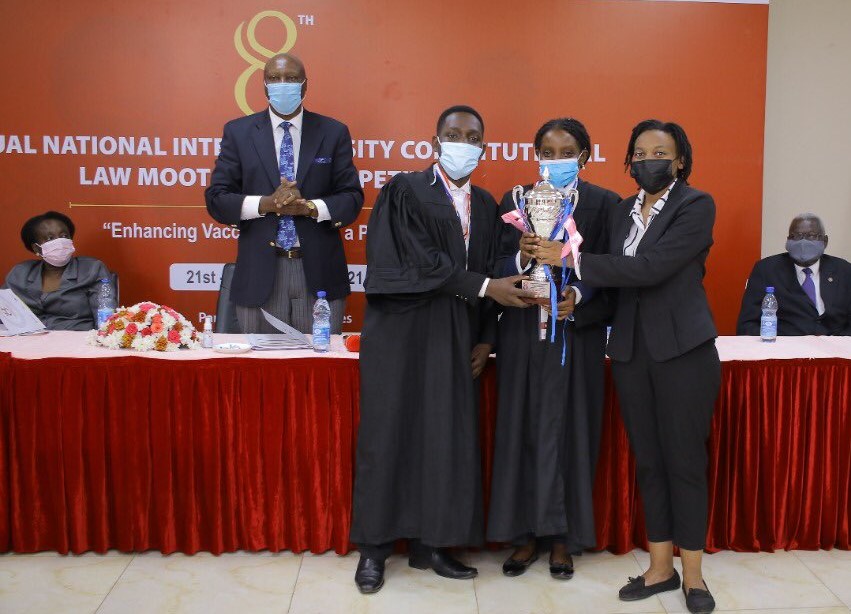
Call for Participation in the 9th Annual National Inter-University Constitutional Law Moot Court Competition

Center for Health, Human Rights and Development (CEHURD) invites different universities with schools/faculties of law in Uganda to participate in the 9th Annual National Inter-University Constitutional Law Moot Court Competition. The moot is scheduled to take place on 3rd – 4th  November 2022.

The 9th Annual National Inter-University Constitutional Law Moot Court Competition is taking place under the theme, “Gender Discrimination: The Plight of Pregnant Girls in School”. Uganda has experienced an ever-growing number of teenage pregnancies exacerbated by the outbreak of COVID-19 and the lockdown that ensued. Many teenagers have been forced out of school while others have dropped out due to the stigma and discrimination they have faced. Their freedom from non-discrimination, as much as their right to education has therefore been violated. The moot has been designed to enable students to analyse the revised guidelines developed by the Ministry of Education and Sports for the prevention and management of teenage pregnancy in school settings in Uganda, and assess their legal impact on the right to Education through the use of a hypothetical moot problem that students shall use to participate in the moot.

The main objective of the Moot is to train students in practical aspects of litigating health and human rights within Uganda’s Courts of Law. This kind of arrangement helps bring out lawyers that understand key constitutional and health issues beyond what they are taught in class. The Moot specifically aspires to train students in legal writing, arguing cases in Court, professional conduct and demeanor while arguing cases and preparation of Court pleadings.

We call upon universities that are interested in participating to fill this form as an expression of interest to participate by Friday, 19th August, 2022 at 5:00 pm.

#CEHURDMOOT22  #KeepingPregnantGirlsInSchoolUg

Peter Eceru

East African Community: Why integration of sexual and reproductive health is key

By Peter Eceru – Programme Coordinator, Advocacy – CEHURD

Currently, the East African Legislative Assembly is undertaking regional consultations on the Sexual and Reproductive Health Bill, 2021 in the all-members states. The Bill is premised on Article 118 of the treaty for the establishment of the East African Community which provides for cooperation in health and promotes the management of health delivery systems and better planning mechanisms to enhance the efficiency of health care services. The East African Community treaty also seeks to harmonise national health policies and regulations in order to achieve quality health care in partner states. The treaty also looks at cooperation in the development of specialised health training, health research, reproductive health, pharmaceutical products and preventive medicines.

The Bill further seeks to strengthen the mechanism that facilitates attainment by the Community of the goal to ensure universal access to sexual and reproductive health care services by 2030. These services include family planning, information and education, and the integration of reproductive health into national strategies and programmes. This goal is enshrined in the EAC Integrated Reproductive Maternal, New-born Child and Adolescent Health Policy Guidelines 2016-2030, and the EAC Sexual and Reproductive Health Rights Strategic Plan.

The Bill recognises the obligation of Partner States under several international, continental and Community frameworks, to respect, protect and fulfil the right to health. They do this by facilitating, providing, and promoting the highest attainable standard of health and providing measures toward the full realisation of the right to health. Bill will strengthen the mechanism to facilitate the attainment of the Community goal of ensuring universal access to sexual and reproductive health care services, including family planning, information and education.

The Reproductive, Maternal, Newborn, Child and Adolescent Health indicators in the East African Community member states are worse than the average in the rest of Africa. High maternal and mortality rates for children under five, high unmet need for contraceptives and adolescent fertility rates demonstrate a need for collective action across the community to respond to the sexual and reproductive health challenges. In 2020, 39,000 children in East Africa were born with HIV infections that could have been easily prevented. During the same period, 62,000 mothers died from childbirth complications that could have been easily addressed. Two hundred million girls and women are estimated to have undergone genital mutilation. Additionally, cervical cancer remains a leading cause of cancer-related deaths in African women, where the estimated rate of deaths is 94 women per 100,000. Currently, 19 million women in East Africa cannot access modern contraception and a further 2.5 million are at risk of death due to complications from unsafe abortions. The Covid-19 pandemic led to a very big increase in violence against women and girls all over the East African Community putting the future of millions of women and children in jeopardy.

Indicators across the different countries in the region vary in terms of severity. For example, South Sudan has the highest maternal mortality rate within the Community with 1,150 deaths per 100,000 women who give birth, while Rwanda has the lowest at 248 deaths per 100,000 women giving birth. These variations demonstrate the need for collaborative health systems planning and how this would benefit the region in dealing with high mortality rates within the East African Community Member states. Various countries have over time developed best practices that can be shared across the Community. In Uganda, a weekly maternal death surveillance enables the ministry to follow up on maternal deaths and investigate the causes. This enables timely response.

To strengthen regional Health Information Management Systems, it is critical to have a regional framework to guide this. The collection of data on for example contraceptive use, sexual and reproductive health and the wider reproductive, adolescent maternal newborn remains uncoordinated across the Community. In Uganda, this information is collected through the Uganda Demographic Health Survey and the Health Information Management Systems. In the case of partner states, different information is collected among partner states and this information is collected along different time periods. This makes it difficult to utilise the information for the purpose of regional planning and collective decision-making. Sound and reliable data is the foundation for decision-making across all health system building blocks and is essential for health system policy formulation and implementation, governance and regulation, health research, human resource development, service delivery and financing.

The consultations on this Bill are therefore a very important process in strengthening regional integration and specific emphasis on the promotion of sexual and reproductive health in the EAC partner states.

A version of this article was first published in the Daily Monitor Newspaper on 6th July 2022.