PRESS STATEMENT
FOR IMMEDIATE RELEASE:
WEDNESDAY 19TH AUGUST 2020
JUDICIAL ENDORSEMENT OF MATERNAL HEALTH RIGHTS IN UGANDA
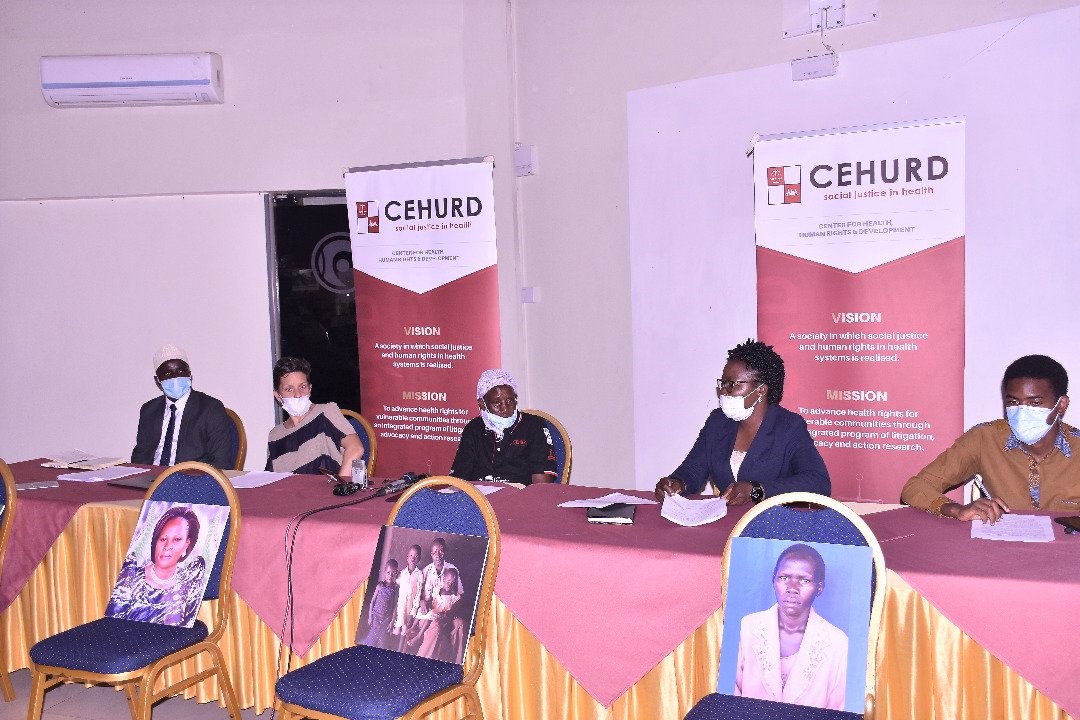
Kampala – Uganda. Today, Center for Health, Human Rights and Development (CEHURD), Prof. Ben Twinomugisha, Rhoda Kukiriza and Inziku Valente with joy welcome the long awaited judgement from the Constitutional Court of Uganda in the case of CEHURD, Prof. Ben Twinomugisha, Rhoda Kukiriza and Inziku Valente vs. Attorney General [Constitutional Petition No. 16 of 2011]. The Constitutional Court agreed with our submissions and all judges accepted all the grounds of the petition. Through this judgement, the right to maternal health care (and the right to health broadly) has been granted a place in Uganda’s Constitution. The judgment recognizes basic maternal health care services and emergency obstetric care.
This suit, filed in 2011, sought to challenge Government’s omission to adequately provide basic maternal health services and commodities in public health facilities as contravening the right to health, rights of women, right to life and freedom from cruel, inhuman and degrading treatment. The suit is premised on the wrongful deaths of the late Anguko Jennifer who died on 10th December 2010 in Arua Referral Hospital and the late Sylvia Nalubowa who died on 19th August 2010 in Mityana District Hospital. Both women died during child birth when they needed caesarean sections but failed to access the commodities and human resource required to obtain the same.
Today a panel of 5 (five) judges from the Constitutional Court of Uganda including Mr. Justice Alfonse Owiny Dollo DCJ, Mr. Justice Kenneth Kakuru JCC, Mr. Justice F.M.S Egonda Ntende JCC, Mr. Justice Barishaki Cheborion JCC and Mr. Justice Christopher Madrama JCC have upheld the maternal health rights of women and went ahead to declare and order that;
In his lead judgement Mr. Justice Barishaki Cheborion JCC found that “I have no doubt that the government has made attempts to address the omissions by putting in place policies, programs as reflected in the respondents submissions however for the right to maternal health to be realised, subsequent implementation of all the above mentioned policies and programs, their extension and evaluation has to be done which to a large extent has not been the case. Adverse effects on maternal health impact negatively on society’s wellbeing”
He also found that “The deaths of Ms Anguko Jennifer at Arua Regional Referral Hospital and Ms Sylvia Nalubowa at Mityana District Hospital were a result of non-availability of basic maternal health services and negligence of Health Workers. The actions caused utmost pain, degrading and cruel treatment of the deceased for the period they spent in the said hospitals fighting for their lives with no hope of survival until they died. This also caused untold suffering and loss to their families”
He also found that “Women suffer a lot due to shortages or short comings in the delivery of maternal health care services caused by stock-outs of maternal health care packages, drugs, professional negligence. Limited budgetary provisions to the health sector all of which deprive them of opportunity to safely deliver babies. Preventable deaths of pregnant women at Government hospitals deprive Women of the right to enjoy and realize their sexual reproductive rights”
We appreciate the judiciary for protecting, promoting and fulfilling the rights of women especially concerning their maternal function, indeed the power of the judicial pen has come to light in this case. Thank You
For more information contact: info@cehurd.org and copy in wasswa@cehurd.org or call 0788-882809.
The Center for Health, Human Rights and Development (CEHURD) convenes the Annual National Inter-University Constitutional Law Moot Court Competitions. Since 2014, the moot court competition has seen more than ten (10) law schools in Uganda participate. The moot court competition is geared towards inculcating a better understanding of the Justiciability of the Right to Health and other human rights guaranteed by the Constitution of the Republic of Uganda, 1995 and recognized in several international instruments.
It also aims at aiding law students to improve their public speaking skills and give them an experience of the litigation process in Uganda. The CEHURD moot has built a cohort of young lawyers who appreciate the right to health and its Justiciability within the confines of Uganda’s legal system.
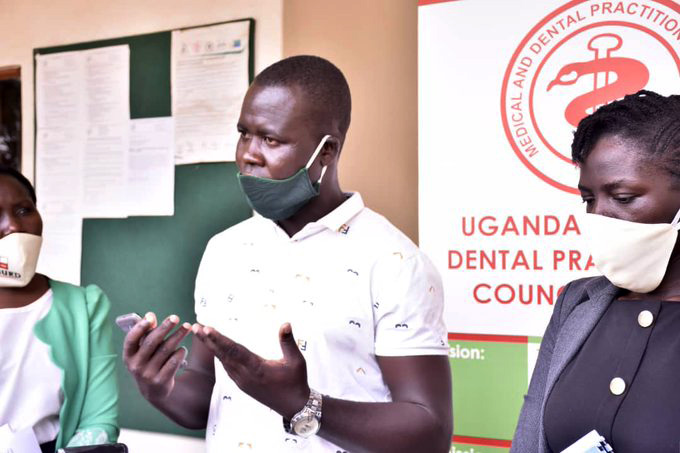
By Faith Nabunya
“My wife was left unattended in the postnatal ward for close to five hours until I paid Shs205,000 to have blood brought to Kibuli Musilm Hospital for her diffusion. Without any medical records, they told me to take my wife to either Mulago hospital ICU if I still needed her alive. For the three days I was in Kibuli hospital, I never got anyone to explain the state of my wife even during transfer to Case hospital. I was never given her medical records. It’s only at Case Hospital that I was told that my wife is anaemic due to over bleeding and she had suffered from liver damage. Justice should be served for my wife and it should be a lesson that all women deserve good health care,” Mr Rafaile Omony shares what happened to his now deceased wife.
On July 2nd, 2020, The Center for Health, Human Rights and Development filed a complaint with the Uganda Medical and Dental Practitioners’ Council (UMDPC) against Kibuli Muslim Hospital, challenging the violation of medical professional ethics, and human rights of Mr Omony. Omony’s wife, Scovia Mary Alupo, died on October 27th, 2018 after undergoing a cesarean section, following which she bled to death.
Uganda suffers a persistently high maternal mortality ratio (MMR) currently at 336 per 100,000 live births which translates into 16 women dying every day during childbirth majorly because of lack of basic maternal health commodities like gloves, syringes, blood, medicines etc, which enable women to give birth safely. This is worsened by low political will to equip and sufficiently fund healthcare facilities, which sees two midwives working in more that 30 expectant mothers at a go.
“Women die everyday due to severe bleeding while giving birth. Blood is an essential life saving commodity that can’t be replaced and so should be freely given to those who critically need it. Health facilities should be held accountable for any life lost due to failure to pay for blood. This is unacceptable and we need UMDPC to exercise its mandate of general supervision and disciplinary control over medical practice to uphold health and human rights”, Ms Edith Sifuna shares.
Dr. Katumba Ssentongo, the Registrar at UMDPC says that their role as UMDPC is to supervise and exercise discipline action to all dental and medical practice in Uganda. In two (2) weeks time after reviewing the complaint (CEHURD & Omony), Kibuli hospital will be notified through an official letter from the council to get their defence.
Ms Alupo has become one of these tragic statistics and we cannot leave her death unaccounted for. CEHURD has therefore petitioned UMDPC seeking that Kibuli Hospital and the concerned health care workers be investigated and found culpable for the professional misconduct exhibited. CEHURD equally intends to bring these human rights violations to the attention of the courts of judicature, seeking compensation for the family of Ms Alupo. “ We want UMDPC to take action against its members that violate the medical profession ethics fulfilling their mandate of monitoring and regulating the practice of medicine and dentistry as per the Uganda medical and dental practitioners’ Act” Ms Ruth Ajalo, a lawyer representing CEHURD adds.
The writer is a Communications Officer at Center for Health, Human Rights and Development.