Dark days befall health Rights advocates in Uganda

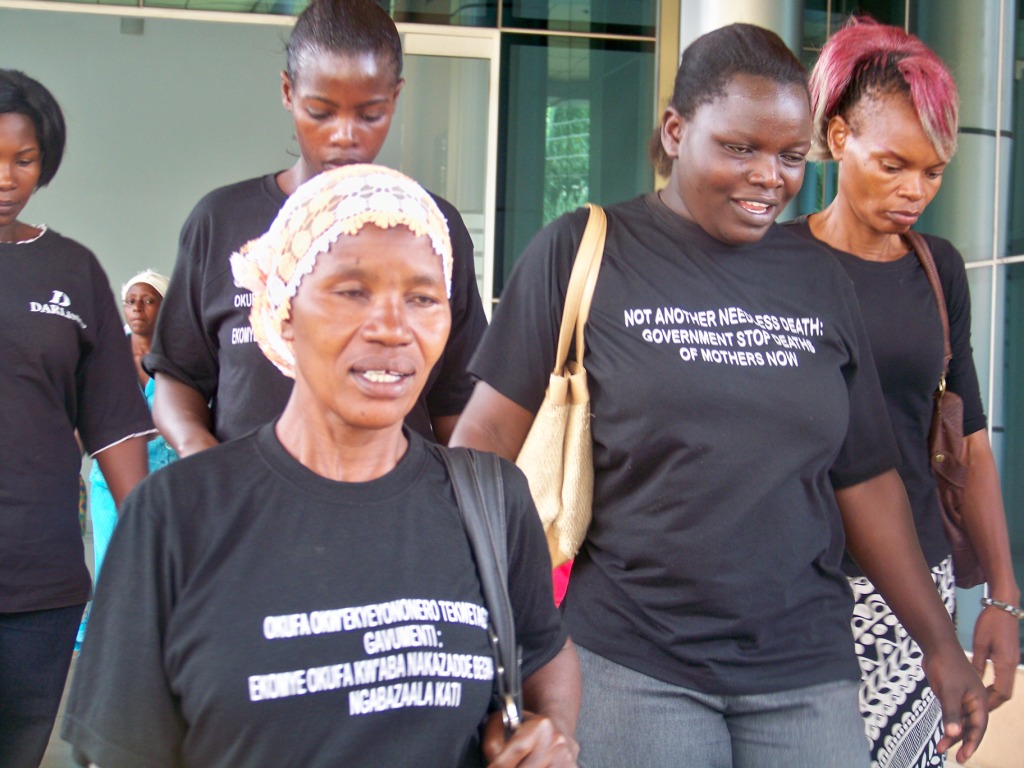
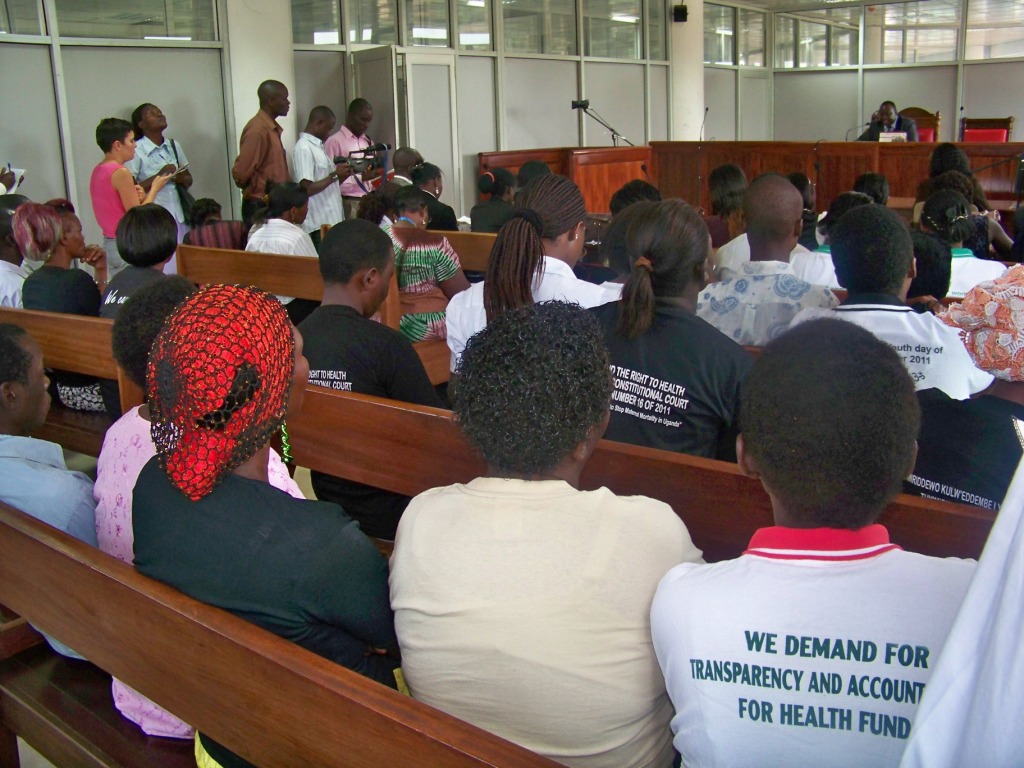
On Tuesday 5th Β June, 2012, Health rights activists filled the constitutional court to get news of a declaration they had sought from Court to interpret Acts and Omissions done by government health workers in Public health facilities as a violation of their rights to life and health respectively.

Their bid to secure a declaration against violation of reproductive health rights was frustrated as it dawned on them that court could not listen to their grievances as it called them “political questions” which should be left to the Executive and the legislature.

“This Court has no power to determine or enforce its jurisdiction on matters that require analysis of the health sector government policies, make a review of some and let on, their implementation. If this court determines the issues raised in the petition it will be substituting its discretion for that of the Executive granted to it by law.” the Judgement reads.

Angry activists walk out of court
Every opinion outside court was freely expressed

Advocates Reject Constitutional Court’s Ruling that it has no Competence to Address the Crisis of Preventable Maternal Mortality in Uganda: Appeal to Supreme Court Planned

(June 5 2012) Advocates have sharply criticised the ruling by Constitutional Court on whether or not the Court has standing to hear Petition Number 16 of 2011, a landmark case on preventable maternal mortality, the rights of women, the right to health and the right to life.

Justices ruled that the case, Petition Number 16 of 2011, must be dismissed, they believe that they have no competency to hear a case regarding realization and protection of these human rights.

β€œWe are deeply disappointed that Constitutional Court has ruled that it has no standing to address a life and death issue affecting all Ugandans. We feel this is a grave mistake,” said Nakibuuka Noor Musisi of CEHURD and the Coalition to Stop Maternal Mortality. β€œThis ruling means the Court wants the status quo to continue. They are standing in the way of constructive solutions to a crisis.”

β€œWe did not receive the ruling we sought today. However, we are confident that in the near future, the Judiciary will realize its role in addressing the crisis of preventable maternal mortality in this country. We will not be deterred,” said Lillian Mworeko of the International Community of Women Living with HIV/AIDS East Africa. The advocates called for an appeal of the ruling to the Supreme Court. The ruling was in response to a preliminary objection raised by government on 26th October 2011.

The Petition was filed on 3rd March 2011, highlighting the cases of Sylvia Nalubowa and Jennifer Anguko, both of whom died unnecessarily in childbirth. It seeks a declaration that non-provision of essential maternal health commodities and services in government health facilities leading to the death of expectant mothers is an infringement on their rights to life and health.

While this case has delayed, many more preventable maternal deaths continue uncheckedβ€”Cecilia Nambozo, Nanteza Irene, Sanyu Kassaga and Sarah Nalukwago and many more. These people died as a result of failed maternal health care system in Uganda.
80% of maternal deaths are caused by severe bleeding, infections, unsafe abortion, high blood pressure and obstructed labor. Lack of access to life-saving HIV treatment is another major contributor to maternal deathsβ€”and results in high rates of mother to child transmission of HIV.

In Uganda, untreated HIV contributes to about one in four maternal deathsβ€”and triple-combination HIV treatment for all pregnant women would substantially reduce maternal mortality (See: Trends in Maternal Mortality, 1990-2008. WHO, UNICEF, UNFPA and the World Bank. 2010). Petition Number 16 of 2011 argues if the government does not provide essential medical commodities and health services to pregnant mothers, it is a violation of the Constitutional rights of Ugandans, including the right to health, and the rights of women.

WHO will set generics apart from counterfeits

ByΒ Vineeta Pandey

World Health Organisation (WHO) has adopted a resolution to clearly define counterfeit medical products (CMP) so as to set them apart from genuine generic drugs.

The resolution follows intense lobbying by India at the World Health Assembly (WHA) last week and is seen as a major diplomatic win. The country has worked through back-channel ways at the inter-governmental level for almost two years to pressurise the international organisation.

This also means WHO will limit its role to public health issues and not get into the debate of intellectual property rights (IPR) raised by multi-national companies to block generic drugs from India and other countries from getting into international markets.
Generic drug shipments from India have often been seized at European Union ports on charges of infringing IPR and therefore qualifying as counterfaeit or spurious products.

Sources said innovator pharma companies have used multiple routes, including raising IPR issue with WHO through its arm International Medical Products Anti-Counterfeiting Taskforce, to stop generic drug consignments from India.
In 2009, for instance, a Brazil-bound consignment from India was stopped at Amsterdam.

β€œThe authorities applied definition of CMP for these generic drugs as the history of such drugs showed patents in EU. Hence, they termed it as infringement of their IPR and seized them,” said a Union health and family welfare ministry official.

Such seizures forced India and some other countries to aggressively take up the matter at WHA. Expressing concern over the involvement of WHO’s Western Pacific Regional Organisation in the enforcement activities relating to combating CMPs, India strongly argued that WHO was mixing up issues of public health and private IPR in the context of defining counterfeit drugs.

The Indian delegation, backed by Brazil, Thailand and other BRICS and SEARO nations, sought to limit WHO’s role only to public health and said it should concentrate on affordability and accessibility of drugs rather than be engaged in IPR enforcement issues.

WHO now appears to have put in place a new mechanism with the consensus of all member states to clearly define CMP as β€œsubstandard, spurious, falsely-labelled, falsified” drugs to bring uniformity for better global acceptance of these definitions without interrupting the supply of genuine generic medical products in the world.

India is now pressurising WHO to give more funds to strengthen the national regulatory authority for drugs.

Source:Β http://www.dnaindia.com/money/report_who-will-set-generics-apart-from-counterfeits_1697759