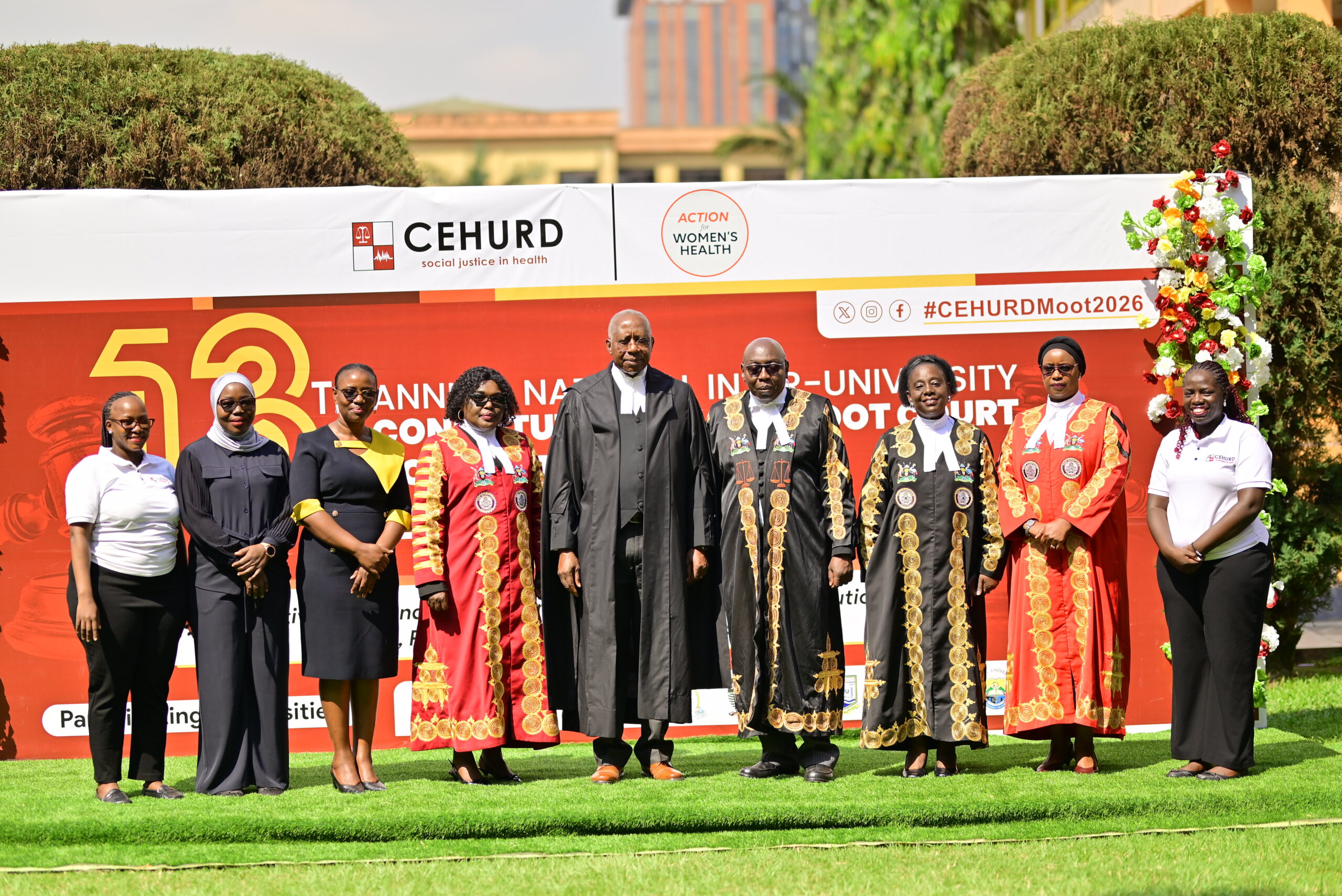
Lessons on courtroom advocacy, reproductive health rights and the experience of serving as a clerk at the 13th Annual National Inter-University Constitutional Law Moot Court Competition.
I did not argue a case or submit a memorial during the 13th Annual National Inter-University Constitutional Law Moot Court Competition. My role was different. I served as a clerk, sitting beside the judges and facing counsel as they presented their arguments. From this position, I witnessed a different dimension of the moot, one that offered valuable lessons on courtroom procedure, constitutional rights and reproductive justice.
On paper, my responsibilities were straightforward: announcing the case file and number, keeping time, and maintaining courtroom decorum. Yet, the court clerk plays an important role in ensuring that proceedings run smoothly. During the moot, my voice opened each session and helped set the pace for the proceedings. The experience demanded attentiveness, discipline and composure, even as the arguments raised questions that extended beyond the courtroom.
The theme of this year’s competition, Reproductive and Gender Justice in Uganda: Navigating Constitutional Rights, Public Interest and Social Values, was far from an abstract academic exercise. The competing teams were tasked with examining a pressing constitutional question: whether the State of Ngetta’s failure to provide essential reproductive health services, including contraceptives, to young women violated constitutional protections relating to the right to health.
As a young woman sitting at the clerk’s table, maintaining a composed and impartial demeanour while counsel debated these issues required considerable discipline. Yet, the arguments brought into focus societal realities that demand serious attention.
Access to contraceptives and comprehensive, accurate reproductive health information is a matter of health, dignity and informed choice. Young girls do not experience unintended pregnancies simply because they know too much. Rather, limited access to accurate, age-appropriate information about their sexual and reproductive health and rights can leave them ill-equipped to make informed decisions about their lives and health.
Withholding essential information in the name of culture or social values does not eliminate young people’s sexual and reproductive health needs. Instead, it risks limiting their ability to make informed decisions and protect their health.
Watching counsel navigate the tensions between public interest, constitutional rights and social values revealed why reproductive justice remains a contested subject. Legal and policy questions surrounding access to reproductive health services are often shaped by deeply held religious and cultural beliefs, making it necessary to examine how these beliefs interact with constitutional protections.
From the clerk’s table, however, the human implications were difficult to overlook. When a girl cannot access contraceptives or even basic reproductive health information, her health, education, dignity and future opportunities may be put at risk.
This is why CEHURD’s choice of theme was significant. By bringing these questions into the courtroom, the competition challenged law students and aspiring legal practitioners to examine access to reproductive health services through the lens of constitutional rights and justice, rather than treating it as a subject to be avoided or left unexamined.
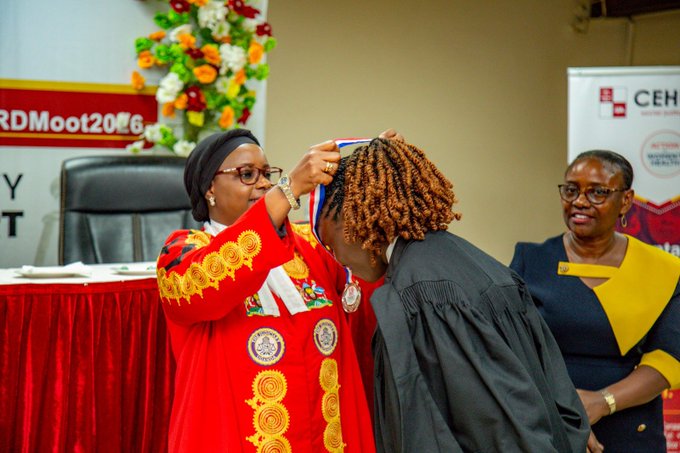
Serving as a clerk at the 13th Annual National Inter-University Constitutional Law Moot Court Competition, was a valuable learning experience. Although I did not leave with a competitor’s trophy, I was honoured to receive a Certificate of Appreciation in recognition of my role as a moot court clerk.
More importantly, I left with greater confidence, a deeper understanding of the right to health and practical experience in facilitating courtroom proceedings. The experience taught me that meaningful engagement with justice does not happen only through the arguments presented by counsel. It also involves the discipline, preparation and impartiality that allow those arguments to be heard.
For me, the moot was a reminder that questions of reproductive justice are not confined to legal texts or courtroom debates. They concern real people, their choices, their dignity and their access to essential health services. As I continue my journey in the legal profession, these are lessons I will carry with me.
The writer is a Clerkship Student in the Strategic Litigation Department at the Center for Health, Human Rights and Development (CEHURD).
The discourse on reproductive and gender justice in Uganda extends beyond courtroom litigation to encompass broader questions of individual autonomy, human dignity, equality, non-discrimination, healthcare access and State responsibility. At its core, the debate concerns the relationship between constitutional rights, public interest and the social, cultural and moral values that shape Ugandan society. The central constitutional challenge is therefore not merely to determine whether particular reproductive decisions are legally permissible, but also to establish the conditions under which individuals may exercise their rights meaningfully, safely and with dignity.
Reproductive justice is best understood as a multidimensional concept that extends beyond the formal recognition of reproductive autonomy. It includes the ability to make informed reproductive decisions, access appropriate and affordable healthcare, obtain accurate information, and live free from coercion, discrimination and gender-based violence. It also requires consideration of the socioeconomic conditions in which reproductive choices are made. Poverty, geographical disparities in healthcare provision, limited educational opportunities, inadequate infrastructure, gender inequality and social stigma may significantly restrict the practical enjoyment of legally recognised rights.
Uganda’s Constitution provides an important normative framework for addressing these concerns. Guarantees relating to human dignity, equality, personal liberty, freedom from discrimination and the protection of fundamental rights impose obligations not only on courts but also on Parliament, the Executive, healthcare institutions, educational institutions, law enforcement agencies, employers and other public and private actors. Constitutionalism must therefore be understood as an institutional obligation reflected in the treatment of patients, the protection of survivors of sexual violence, the inclusion of pregnant students, the protection of pregnant workers and the accessibility of public healthcare services.
A meaningful conception of gender justice further requires a distinction between formal and substantive equality. A formally neutral rule may produce unequal outcomes where individuals occupy different social and economic positions. Pregnancy, childbirth, caregiving responsibilities, disability, poverty and exposure to gender-based violence may create forms of disadvantage that identical treatment fails to address. Substantive equality consequently requires an examination of the distribution of power and resources: who controls reproductive decisions, who has access to economic and medical resources, whose experiences are recognised by law, and who bears the consequences of reproductive choices.
This analysis must also engage with the relationship between individual rights and cultural or religious values. Family, religion, tradition and community remain significant features of Ugandan social life. Constitutional democracy should therefore accommodate legitimate moral and cultural pluralism. Nevertheless, cultural or religious beliefs cannot provide an unrestricted justification for discrimination, coercion, violence or the denial of human dignity. Respect for social values must coexist with a minimum constitutional threshold of equality, autonomy and fundamental freedoms applicable to all persons.
The State’s responsibility extends beyond enacting legislation or developing judicial doctrine. Rights acquire practical meaning through effective implementation, including investment in healthcare infrastructure, reproductive health education, legal aid, professional training, public awareness, institutional oversight and accessible mechanisms of redress. Particular attention must be given to adolescents, women with disabilities, survivors of sexual and gender-based violence, persons living in poverty, and rural or underserved communities, whose formally recognised rights may be constrained by distance, cost, stigma, dependence or institutional discrimination. An intersectional approach is therefore essential to identifying how multiple forms of disadvantage interact.
Reproductive and gender justice should consequently be regarded as a shared constitutional project. Courts remain vital forums for interpreting rights and holding institutions accountable, but Parliament, the Executive, healthcare providers, schools, workplaces, families, religious institutions, traditional leaders and civil society also shape the conditions in which rights are exercised.
The moot court is therefore not the conclusion of the constitutional conversation, but an entry point into a broader examination of how legal principles operate in hospitals, schools, homes, workplaces, police stations, communities and public institutions.
Ultimately, the legitimacy of Ugandan constitutionalism depends not only on the sophistication of judicial reasoning or the existence of rights in constitutional texts, but also on whether individuals experience dignity, equality, autonomy, security and access to justice in their everyday lives. Reproductive and gender justice requires enforceable rights, accountable institutions, enabling social conditions and a constitutional culture committed to substantive equality and human dignity. The constitutional contest is therefore not confined to the courtroom; it is resolved through the everyday decisions that determine whether rights become meaningful realities.
The writer is a Lawyer and Locum in the Strategic Litigation Programme at the Centre for Health, Human Rights and Development (CEHURD).
For 13 years, CEHURD has convened the Annual National Inter-University Constitutional Law Moot Court Competition, bringing together law students from across the country to argue cases involving constitutionally guaranteed rights and examine how these rights are protected, upheld or violated by the State. Each year, the moot presents a different dilemma, often reflecting the realities faced by women and girls, including circumstances that, in the most tragic cases, claim their lives.
Watching the 13th edition of the Moot Court Competition as a former participant in the 12th edition was exciting, enlightening and, at the same time, a relief. It was comforting to sit on the other side without experiencing the pressure, sleepless nights, endless research and anxiety that came with being a mooter. The advocacy, confidence, and legal reasoning on display showed that the culture of mooting continues to grow.
However, the competition also exposed a familiar challenge, many students appeared to view the moot primarily as an opportunity to win rather than as a learning experience.
For some students, failing to advance to the next round affected their morale and interest in the competition, diminishing its learning value and purpose. Personally, when I was a mooter, I was largely focused on the competition itself: getting the authorities right, defending our arguments, responding to questions from the bench and, ultimately, trying to win. I did not always take time to reflect on the human realities behind the facts beyond what was necessary to build our case.
After undertaking my internship at CEHURD, I now understand that the facts presented in moot problems are not merely hypothetical situations created to test legal reasoning. They often mirror the lived realities of women, girls and other vulnerable people whose rights have been violated. Behind what appears to be a fictional problem may lie a very real injustice.
Every year, students have the opportunity to argue before experienced judicial officers from Uganda’s Courts of Judicature. This exposure helps them sharpen their legal research, develop written and oral advocacy skills, think on their feet and defend a position under pressure.It also challenges them to work as a team, manage time, engage critically with legal authorities and, perhaps most importantly, find their voices as young advocates.
That is part of what makes the CEHURD Moot so important. It does not simply develop better mooters, it has the potential to shape young lawyers who understand that constitutional law is ultimately about people and the protection of their rights. Moreover, the moot gives students from different universities an opportunity to meet, network and learn from one another.
The 13th Annual National Inter-University Constitutional Law Moot Court Competition was undoubtedly a success. I extend my heartfelt gratitude to CEHURD for continuing to create this space and invest in the next generation of lawyers. Having experienced the moot first as a participant and later as an observer, I have come to appreciate that its lessons extend far beyond the competition itself and remain with participants long after it ends.
The writer is an Intern at the Centre for Health, Human Rights and Development (CEHURD) and was named Best Oralist at CEHURD’s 12th Annual National Inter-University Constitutional Law Moot Court Competition held in 2025.
From a community perspective, one of the most rewarding aspects of the 13th Annual National Inter-University Constitutional Law Moot Court Competition was seeing young people unpack real problems affecting people’s access to health services.
What stood out was not simply the competition itself or the desire among participating universities to emerge as winners or demonstrate a strong command of English. It was the way young people were able to take everyday challenges faced by communities and examine them through the provisions of the law.
Across the country, communities continue to grapple with challenges in accessing essential health services. For some people, a health facility may be several kilometres away. For others, the journey is made more difficult by poor roads, limited transport and the cost of getting there. Even after making the difficult journey, people may find that the service they need is unavailable, requiring them to travel even further.
These may sound like ordinary community complaints. But what happens when young people begin to ask; What does the law say about this? What responsibility does the government have? What rights are affected when a person cannot access the health service they need simply because the facility is too far away or the road is impassable?
This is where the moot competition became much more than a legal contest.
Universities from across the country participated, bringing different ideas, perspectives, research, interpretations and experiences. Through debate, legal submissions and the comparison of arguments, the students were not simply seeking to win a competition. In many ways, they were examining problems that communities regularly face.
A community member may simply say, “The health centre is too far.” Another may say, “The road becomes impassable when it rains.” A mother may explain the difficulty of travelling long distances to seek antenatal care or have her child immunised. A young person may speak about the challenges of accessing services that respond to their particular needs.
The young lawyers, however, are challenged to ask another question: What does this mean from a rights and legal perspective?
That shift in perspective is important.
Viewed through the AAAQ framework of availability, accessibility, acceptability and quality, the CEHURD Moot gave university students an opportunity to examine everyday experiences beyond the immediate problem. Distance to a health facility becomes a question of accessibility. Poor roads raise questions about whether people can practically reach essential services. Gaps in health services raise questions about availability and quality. Whether services respond appropriately to people’s needs also raises questions of acceptability.
Community experiences therefore become a starting point for examining whether existing systems are delivering what the law and public health commitments require.
The moot demonstrated the value of creating spaces where young people can connect what they learn in law school with what people experience in their communities. It is one thing to understand constitutional provisions in a classroom. It is another to apply those provisions to the circumstances of a mother who cannot reach a health facility, a young person who struggles to access services, or a family that cannot afford the cost of travelling to the nearest facility.
This approach also challenges the idea that legal advocacy belongs only in courtrooms. Sometimes, advocacy begins by asking the right questions. The 2026 moot problem reflected real-life experiences.
Why is a health facility so far from the people it is intended to serve? What happens when a road prevents someone from reaching care? Who is responsible for ensuring that public services are accessible? What mechanisms exist for communities to demand better services? And what does the Constitution say about all this?
One of the justices on the panel encouraged students to avoid arguing from emotion and instead base their submissions on the law and evidence. Yet, from the perspective of a social worker, I found something deeply rewarding in seeing these young lawyers bring an understanding of human experience and emotion to their interpretation of the law. It reminded me that behind every legal provision is a person, a family or a community whose lived reality gives meaning to the law.
For a social worker and community health practitioner, these are not merely legal questions, they are community questions as well. The participation of Universities from different parts of the country also brought an important dimension to the discussion. Students brought different interpretations and perspectives, demonstrating that community problems can be understood from multiple angles. Through research, arguments, and debate, they demonstrated how legal knowledge can be used to examine social realities rather than remain confined to academic texts.
At its heart, the moot experience demonstrated something simple: the law becomes more meaningful when it connects with people’s lived realities.
For communities, the hope is that the energy, curiosity and legal understanding demonstrated by the students will extend beyond the moot courtroom into more concrete conversations about improving health services.
The writer heads the Community Empowerment Programme at the Centre for Health, Human Rights and Development (CEHURD).
Reflections from the 13th CEHURD National Inter-University Constitutional Law Moot Court Competition, 2026
By Nakibuuka Noor Musisi
A courtroom is more than a place where lawyers cite provisions of the law and judges pronounce decisions. It is a space where competing interpretations of rights are tested, facts acquire legal meaning, and the quality of advocacy can determine whether a constitutional promise becomes meaningful in people’s lives.
This was one of the central lessons from the 13th CEHURD Annual National Inter-University Constitutional Law Moot Court Competition, held from 24th to 25th September 2026 under the theme “Reproductive and Gender Justice in Uganda: Navigating Constitutional Rights, Public Interest and Social Values.”
At one level, the moot was a competition among university law students, at another, it was a practical exercise in understanding what it means to use the law as an instrument of justice.
The legal questions placed before the mooters were closely connected to realities that reproductive justice must confront: adolescent access to contraception and health services, emergency healthcare, maternal health, poverty, geographical barriers to healthcare, parental consent, government accountability, public resources, stigma and the consequences of delayed or inadequate care.
These are not merely questions of legal interpretation; they are questions about whether constitutional rights can be meaningfully enjoyed by people whose social and economic circumstances may make access to those rights difficult.
When constitutional rights meet lived realities
Reproductive justice requires us to look beyond whether a right exists on paper and ask whether people can actually enjoy it.
A constitutional provision may recognise equality, dignity, health, life, privacy or freedom from discrimination. Yet for a young person living far from a health facility, without the resources to travel, facing stigma or navigating requirements that may limit access to services, the existence of a constitutional right does not automatically translate into access.
This is where constitutional law becomes particularly important.
The law must grapple with the relationship between individual rights and broader questions of public interest, culture, social values and state responsibility. It must ask difficult questions about autonomy, parental responsibility, access to healthcare, equality and accountability.
The CEHURD moot competition provided students with an opportunity to confront these questions not simply as academic propositions, but as advocates before the bench.
And that is an important distinction. A constitutional rights framework is meaningful only when lawyers can connect legal principles to the realities of the people whose rights are before the court.
Advocacy is more than knowing the law
One of the clearest lessons from the preliminary rounds was that effective advocacy is not measured by the number of authorities a lawyer can cite. It is measured by whether the argument is clear, coherent, legally grounded and persuasive.
His Worship Ivan Busulwa reminded the mooters to ensure that an argument is firmly established before moving to another. His Worship Osauro John Pauls emphasised that “lawyering is about persuasion.” Statutory provisions may remain static, but it is the lawyer’s task to persuade the audience about how those provisions apply to the facts before the court.
Her Worship Kambedha Lydia emphasised that a strong mooter must organise arguments clearly, support each point with the right authorities, respond confidently to questions, concede where appropriate and acknowledge gaps honestly.
Her Worship Ariokot Esther Joyce reinforced the same message: lawyering is not about who cites the most laws, but about who is able to persuade the court and argue the case clearly.
These reflections extend well beyond mooting. They are a reminder that a lawyer may have an excellent legal proposition, but if that proposition is buried under unnecessary authorities, poorly structured submissions or an inability to respond to the court, its persuasive force may be lost.
This is particularly important in public interest litigation, where lawyers often must translate people’s lived experiences into constitutional arguments without losing the human reality behind the case.
The advocate therefore, one must not only know the law but must also know how to make the law speak to the facts.
The courtroom is not an examination hall
Perhaps one of the most important lessons from the competition was the distinction between demonstrating knowledge and practising law.
In an examination, a student may be rewarded for reproducing a well-developed legal argument. In court, the advocate must listen, respond and engage.
The lawyer must understand the question being asked, identify the real issue and take the court directly to it. The lawyer must also be prepared to adjust the argument when challenged.
The judges repeatedly encouraged the mooters to be direct, organised and confident; to present only the facts and authorities relevant to the issue; to respond to the opponent’s arguments; and to remain respectful and open minded.
This is an important lesson for legal education; knowing what the law says is necessary, but it is not enough. Future lawyers must also learn how to use the law.
From academic papers to courtroom advocacy
The final round brought these lessons into sharper focus. The final bench comprised Hon. Rtd. Justice Stephen Martin Egonda Ntende, Hon. Justice Catherine Bamugemereire, Hon. Justice Geoffrey Wilfred Kiryabwire, Hon. Justice Eva K. Luswata and Hon. Justice Aisha Naluzze Batala.
Their participation provided students with an opportunity to receive practical reflections from experienced members of the superior courts.
Justice Geoffrey Wilfred Kiryabwire offered a memorable analogy: “The only way you can win a game is by scoring more goals than the other side.” His message was that lawyers should not concentrate on “dribbling” through unnecessary complexity. They should focus on advancing their case.
He also cautioned that submissions should not sound like academic papers.
This distinction matters; academic writing allows space for extensive discussion and multiple authorities. Courtroom advocacy requires the lawyer to identify what matters to the determination of the case and present it with precision.
Justice Kiryabwire also highlighted the value of exposing law students to actual court proceedings. He noted that a university had, for the first time, requested to attend a criminal session at the Court of Appeal and that the students subsequently interacted with the judges. Such experiences help bridge the gap between the classroom and the justice system.
Justice Eva K. Luswata encouraged the mooters to break their submissions into clear points and avoid reading extensively from long prepared texts. The lawyer must engage with the court rather than simply read to it.
Lady Justice Aisha Naluzze Batala reminded the mooters that when stating a ground of appeal, the advocate should engage with it immediately. Her observation that access to contraceptives for minors should be considered alongside cultural and societal values also reflected the broader complexity of reproductive justice.
These are not simply techniques for winning a moot, they are habits that shape professional identity.
The human being behind the legal argument
This year’s moot accorded students with another lesson; effective advocacy requires listening.
A lawyer who listens to the court can understand the concern behind a question. A lawyer who listens to opposing counsel can identify the real point of disagreement. A lawyer who listens to the facts can appreciate the human consequences that the legal argument must address.
In reproductive justice litigation, this is particularly important because the law often intersects with experiences that cannot be reduced to legal provisions.
A constitutional question about access to contraception may involve age, autonomy, parental responsibility, culture, poverty and health-system capacity.
A case concerning maternal healthcare may involve not only the right to life or health, but also distance, referral systems, emergency response, staffing, financing and accountability.
A case concerning unsafe abortion may require an understanding of how stigma, poverty, limited access to services and the legal environment can interact in ways that affect people’s lives.
The lawyer must therefore see the whole picture while maintaining legal discipline.
This is also where the principle of public interest becomes important. The lawyer is not simply arguing for a legal proposition; the argument may have implications for people beyond the immediate parties. A constitutional decision can shape institutional practice, public policy and access to services.
Reproductive justice requires more than winning a case.
The moot also raises a broader question about the purpose of public interest litigation and whether the objective of such moots and litigations is just to win a case.
A judgment can resolve the dispute before the court, but reproductive justice asks a wider question: what happens after the judgment? Does the decision change institutional practice? Does it improve access to healthcare? Does it remove discriminatory barriers? Does it strengthen accountability? Does it reach the people whose experiences gave rise to the litigation? Does it change how institutions understand their constitutional obligations?
These questions remind us that litigation is one component of a broader justice process.
For organisations like CEHURD working at the intersection of law, health and human rights, the courtroom is one part of advocacy. Research, community engagement, strategic litigation, policy advocacy, public education and institutional accountability all contribute to transforming rights from constitutional promises into lived realities.
The moot’s focus on reproductive and gender justice reminds future lawyers that their work may extend beyond the courtroom. They may be called upon to understand the systems that produce inequality and to use the law to challenge those systems.
The moot therefore provides a useful reminder that the lawyer’s role is not simply to win an argument. It is to use the law responsibly in pursuit of justice.
The deeper lesson: law must remain connected to people
The most significant lesson of the CEHURD moot may therefore be found beyond the competition itself.
The theme of reproductive and gender justice required the mooters to navigate the relationship between constitutional rights, public interest and social values. But the advocacy lessons from the judges provided another layer: justice is not achieved simply by knowing the right provisions. It requires the ability to connect law to facts, clarity, courage to acknowledge weaknesses in an argument, discipline to distinguish what is relevant from what is merely interesting, respect for the court and the capacity to persuade without losing sight of the people whose rights are at stake.
For reproductive justice advocates, this is particularly significant. The people whose rights are litigated are not constitutional hypotheticals. They are adolescents seeking information and services, women seeking safe and timely maternal healthcare, families navigating poverty and health system barriers, and communities whose social and cultural realities shape how rights are experienced. Therefore, the law must remain connected to those realities.
The moment of truth
After two days of research, preparation and rigorous oral advocacy, the competition reached its conclusion.
Islamic University in Uganda Females Campus emerged as the winner of the 13th Annual National Inter-University Constitutional Law Moot Court Competition, with Uganda Pentecostal University, Fort Portal Campus, as first runners-up.
Katimbo Alison Faith was recognised as Best Oralist.
Uganda Christian University, Mukono received the award for Best Memorial, while Islamic University in Uganda, Kampala received Second-Best Memorial.
These awards recognise different dimensions of legal advocacy.
Oral advocacy requires clarity, responsiveness, confidence and persuasion. Written advocacy requires research, analysis, structure and precision. Together, they represent important skills for any lawyer.
But the value of the moot cannot be measured only through the final results.
The participating law schools, students, coordinators, clerks and judges collectively created a learning environment in which students could test their knowledge, receive practical feedback and experience the demands of courtroom advocacy.
The competition therefore ended with winners, but the learning continues.
Beyond the moot
The 13th CEHURD National Inter-University Constitutional Law Moot Court Competition was, on the surface, a competition. But its deeper value lies in the professional formation it offers.
It teaches future lawyers that advocacy is not about demonstrating how much law they know. It is about identifying the real issue, understanding the facts, using the right authorities, responding to the court and persuading through a clear and lawful argument. It also demonstrates why spaces that bring together constitutional law, reproductive justice and practical advocacy matter.
The next generation of lawyers will inherit difficult questions about autonomy, equality, health, dignity, gender, culture, public resources and state accountability. Their effectiveness will depend not only on what they learned in law school, but on how they learned to use the law in service of people.
The lessons from the moot are therefore worth carrying beyond the competition and into the courtroom.
The Moot may have ended with a trophy, but its most important outcomes are likely to be seen much later- in the confidence of young advocates, the quality of their submissions, their ability to listen and respond, and their willingness to use the law to advance reproductive justice.
Know your facts. Get to the substance. Speak to the court. And make every submission count.
That is the art of advocacy.
The writer is the Deputy Executive Director at the Centre for Health, Human Rights and Development (CEHURD).