Effect of Intellectual Property Rights on access to medicines

By Prima Kwagala

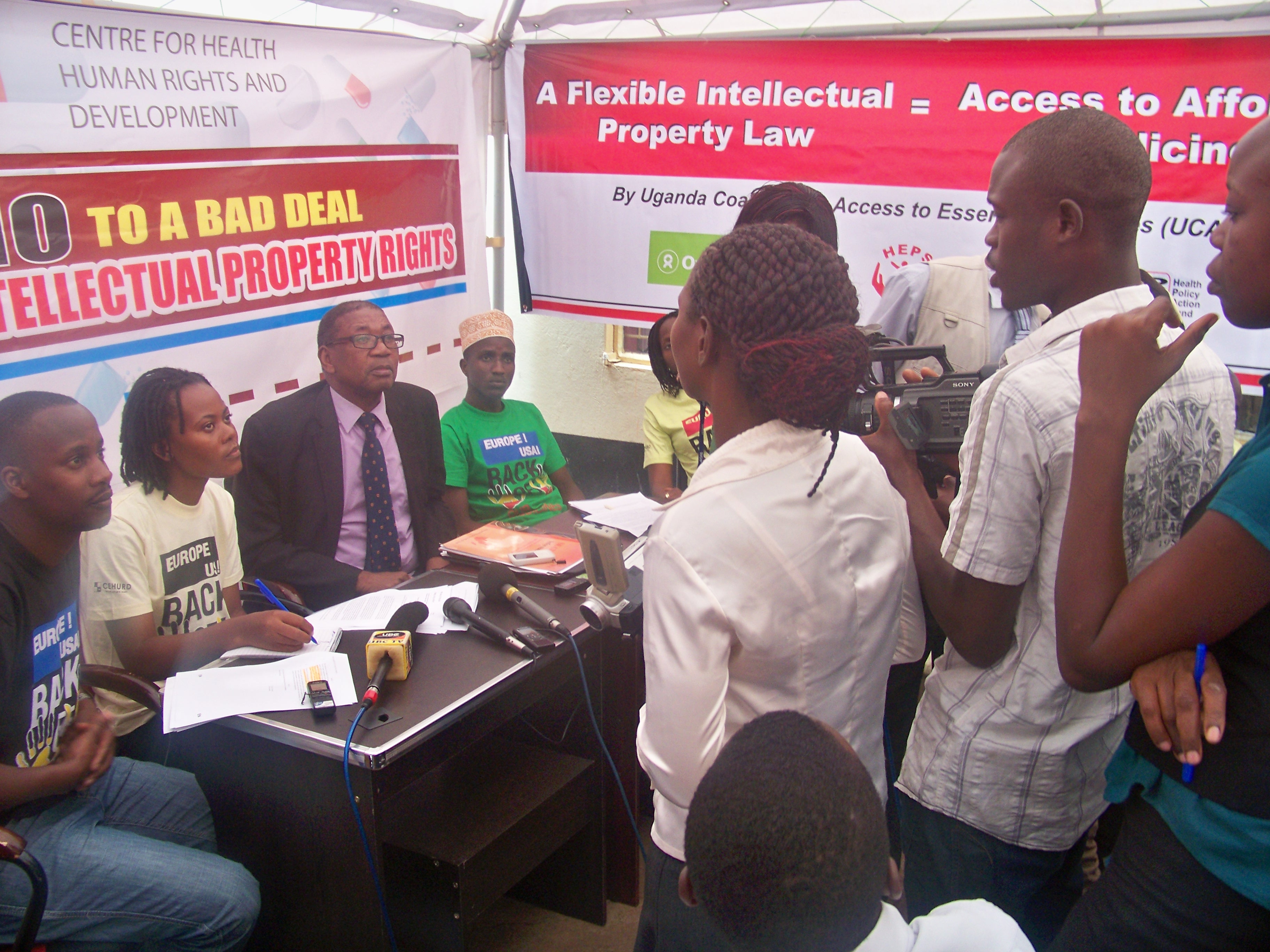
Media, CSOs and Community members during a Press Conference at CEHURD
Media, CSOs and Community members during a Press Conference at CEHURD offices in Kamwokya

A visit to a drug shop will shock you if you ask for a certain drug and the pharmacist in turn asks, “do you want the cheap duplicates from India or the original from Switzerland.”   Question remains, who sets the price of medicines in Uganda? Why are there different kinds of medicines to cure one illness?

According to the medicines index in Uganda (National Drug Authority), 80% of medicines in Uganda are imported from countries like India, China, Germany and Switzerland with only 20% produced by local industries for the local population

Who should we hold accountable for drug prices? Why should a particular drug have two or several prices? The answer is simple. When someone or an industry invests in research of a particular disease and discovers a drug to cure it, a government gives them monopoly rights (Patents) to market the drug. These rights are meant to last 20 years according to international trade rules. This gives the product owner mandate to determine the price of the drug so as to recover the expenses they incurred in researching on the drug.

These rights are under what is termed as ‘intellectual property rights’. If not regulated, these rights are selfishly abused by the owners through setting very high prices at the expense of the poor populations who fail to raise funds for such essential medicines.

International trade rules have however been put in place by the World Trade Organization (WTO) to ensure that poor nations can benefit from the innovations of rich countries which have the resources to invest in research and development of drugs. An example of these rules came in 1994 as the World Trade Organization’s Trade Related Aspects of Intellectual Property (TRIPS) Agreement.’

This agreement was interpreted by a council of ministers meeting at DOHA in November 2001 [Doha Declaration (2001)] to the effect that the TRIPS Agreement ‘can and should be interpreted
and implemented in a manner supportive of WTO members’ right to protect public health and, in particular, to promote access to medicines for all.

As a result of this agreement and subsequent declaration at Doha, countries party to the World trade Organisation have put in place laws and policies to ensure access to medicines for all. This is because the agreement allowed developing countries to manipulate or make use of intellectual property rights of drug companies to build their capacity to produce drugs for their populations until 2004.

These flexibilities in the WTO -TRIPS Agreement have been beneficial because in 2000, the price of a first line drug of HIV/AIDS cost $12000 (at least UGX 30,000,000) per person per year. Due to our poor situation, people in Uganda considered HIV/AIDS a death sentence.

When the International trade rules came into place as interpreted by the council of ministers at DOHA in 2001, India put in place industries to reverse engineer these drugs and produced them at a much cheaper price. Today the price of first line drugs for HIV/AIDS is less than $67 (UGX. 167,500) per person per year!

The beauty of making proper use of the flexibility to copy versions of ‘brand name’ or ‘originator’ drugs to make ‘generic’ versions of the very same kinds of medicines is what is causing the differences in pricing of medicines. The ‘brand name’ or ‘originator’ drug is expensive because it is inclusive of research costs and the ‘generic’ or copy version from India is not fake but does not include research costs of the first innovator! Thus the difference in pricing

The government of Uganda needs to understand the dynamics of drug pricing by utilising all the flexibilities and to put in place a legal and policy frame work that promotes access to medicines. This is because progressive realization of the right to health entails that governments not only put in place structures for service provision, but also ensure that there is affordable, reliable and accessible services for the populace.

It is everyone’s right to claim access to medicines in Uganda.

Saving the Youth: Sexual Reproductive Health Literacy Training Training on SRH

By Serunjogi Francis, Communications Officer

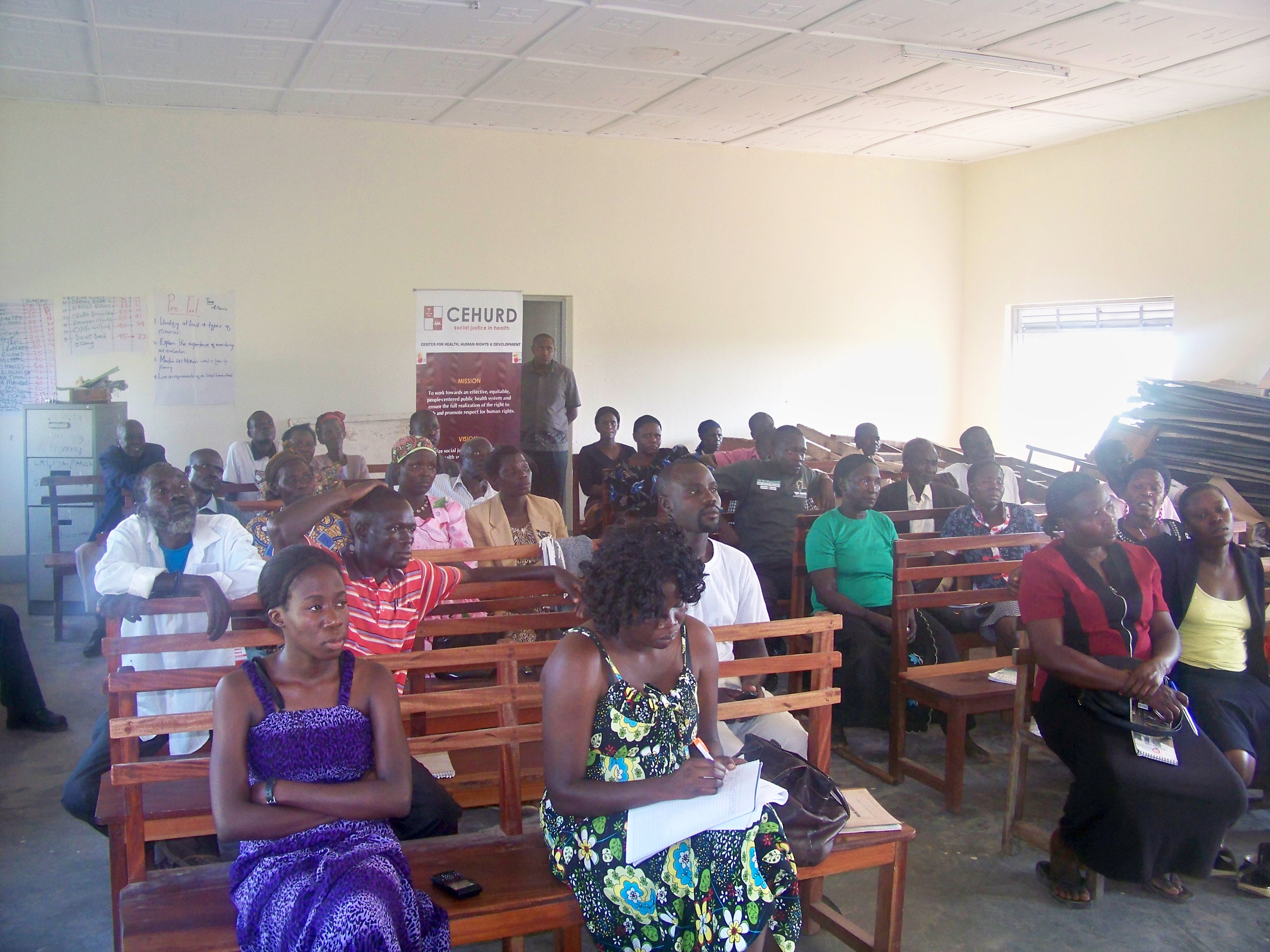
Participants in the Sexual Reproductive Health training during the life cycle mapping

According to the Uganda demographic survey, 26.4% of the girls between the ages of 15 and 19 are sexually active and can readily give birth. On the other hand, 16 million girls under the age of 16 years give birth each year worldwide (United Nations Populations fund). A community intervention recommended that if the girl child is to be protected, early sexual reproductive health literacy training should be done.

This should be complemented with creation of awareness on contraception use, accessibility and availability of reproduction health services. This will save these young people from getting “unwanted” pregnancies, and will also avail them with basic knowledge about HIV AIDS and other STIs. Creating awareness through sensitization programs is highly recommendable.

Interventions can include, making out reaches to education institutions by different stake holders to talk to students about sexual reproductive health and can create more impact if parents and teachers are involved. On the other hand, having students in closed sessions with health practitioners make it easier for them to open.

On 6th June 2013 the Center for Health Human Rights and Development (CEHURD) organized a Health Literacy Program in the Districts of Kiboga and Kyankwanzi. The aim of the training was to facilitate community participation in improving sexual reproductive health (SRH) for the youth of Mulagi, Wattuba and Gayaza sub-counties using the Participatory Reflection Action (PRA) processes.

The programme was carried out in Buyimbaazi Senior secondary school and aimed at improving youth knowledge in SRH and to strengthen relations with health workers and the health system in general by engineering discussions on youth friendly services.

The training included technical and vocational schools which enabled to reach out to youth that are not in secondary schools for reasons such as dropping out of school due to early teenage pregnancy.

According to Nantaba Juliana, the programme Officer, Community Empowerment Programme at CEHURD, “Health literacy refers to people’s ability to obtain, interpret and understand basic health information and health services and to use such information and services in ways that promote their health.”

The Health Literacy program gives an all-inclusive approach to SRH with the perspective that the boy child too has a role to play. This draws away from the common Health Literacy on SRH that is only focused to the girl child.

Generally it is important to mobilize the wider communities to join efforts to meet the sexual reproductive health needs of the youth. Emphasis should be put on both girls and boys.

5 die daily as Jinja hospital runs out of blood

blood-transfusionWritten by TREVOR S BALEKE, An acute shortage of blood has hit Jinja Regional referral hospital. There is no single blood unit available to give patients in critical condition, hospital managers say.

The Observer has established that on average, 12 patients are referred to Mulago hospital daily for blood transfusions. Dr Micheal Osinde, the hospital director, said in an interview last Thursday that at least five children die every day in the children’s ward due to the blood shortage. The casualty ward and pregnant mothers are also affected.

“This is the worst the blood shortage there has ever been. And because this is a regional referral hospital, we receive patients from about 10 districts,” he said.

According to him, it costs $80 to process one unit of blood. Jinja regional referral hospital needs at least 70 units of blood in a crisis-free week.

“We do not just get blood from a donor and transfuse it into the body of a recipient. It has to be processed first,” he said.

“We don’t have a single pint of blood for all the groups in the laboratory,” he said.

Asked what could have caused the shortage, Dr Osinde pinned it on funding gaps in the ministry. He said the Uganda Blood Transfusion Service had run short of money to collect, process and store blood by last December.
Source: http://www.observer.ug/index.php?option=com_content&view=article&id=25522:5-die-daily-as-jinja-hospital-runs-out-of-blood&catid=34:news&Itemid=114


Civil Society Petitions EU Delegation Over LDC TRIPS Extension

FOR IMMEDIATE RELEASE

23rd  May, 2013

1WIPO-615x461Uganda, Kampala – Civil Society Organisations (CSOs) working on issues of trade, intellectual property, access to medicines, food & Seed in Uganda have issued a letter to the World Trade Organization’s (WTO) Council Chair as well as Developed country Missions in Uganda to express their disapproval of the manner in which the negotiations for the request to extend the time within which Least Developed Countries (LDCs) can enforce Trade Related Aspects of Intellectual Property (TRIPS).

On November 2012, Haiti (the then chair of LDCs at the TRIPS Council) submitted a request on behalf of all LDCs to the WTO TRIPS Council for an extension of the LDC transition period until a Member ceases to be a LDC. This request has received overwhelming support from developed countries like Norway, academics from around the world, 5 representatives of the US Senate, and civil society groups from developed, developing and least developed countries..

It is infuriating to note, however, that over the past few months, the WTO has been chairing informal meetings between developed countries and least developed countries where LDCs have been pressed to agree to a shorter term of 5 – 7.5 years and the inclusion of a provision to not roll back their current intellectual property laws without admitting groups that support them to the meetings.

The Director of the Centre for Health, Human Rights and Development, Mulumba Moses, has expressed dissatisfaction at these developments, “This is unacceptable as the TRIPS Agreement states that upon a duly motivated request, the TRIPS council shall grant an extension. LDCs to which Uganda is categorised are justified in seeking an unlimited extension for so long as they are so classified because the suggested 5-7 years will not give us adequate time to overcome capacity constraints to develop a viable and competitive technological base.”

It should also be noted that almost 90% of drugs in Uganda are imported, the majority of which are generic versions from India. India, like Uganda, is a party to the Agreement on Trade Related Aspects of Intellectual Property Rights (TRIPS). As per requirements under TRIPS, India grants product patents for drugs and pharmaceuticals while Uganda does not. This has impacted the accessibility and affordability of cheap lifesaving drugs as Uganda does not have the capacity to provide drugs for its entire population.

Mr, Joshua Wamboga from The Aids Support Organisation (TASO) notes, “The ability to access cheap medicines on the market will be curtailed and the fight against HIV/AIDS in Uganda may be lost if expansive trade laws are adopted without improving the incomes of Ugandans.”.

The next TRIPS Council meeting will be held on 10-11 June, 2013 but United States, European Union, and Australia are currently in informal meetings aggressively trying to pressure LDCs to keep in place the “no roll-back” provision that prevents LDCs from changing their existing laws, even if they were adopted from the colonial era or new laws that have proven bad for development.

CREATIVITY: The Next Generation Solution For Life Saving Medicines In Uganda

The celebration of World Intellectual Property day to day, provides us with an opportunity to reflect on the importance of intellectual property (IP) in the lives of ordinary Ugandans. Indeed flexible intellectual property laws and policies have increasingly become relevant in today’s discussions on access to essential commodities which are critical in an economy such as ours.

As this year’s theme [Creativity: The Next Generation] suggests, we need to highlight the importance of intellectual property policy, legal and institutional frameworks in ensuring an environment for creativity while at the same time addressing the potential of intellectual property to enhance the quality of the daily lives of the people of Uganda today and the generations to come.

The World Intellectual property day also offers us a chance to reflect on the opportunities provided by Articles 7 and 8 of the World Trade Organization’s Trade Related Aspects of Intellectual Property (TRIPS) Agreement. Article 7 of this Agreement provides that the protection and enforcement of intellectual property rights SHOULD contribute to the promotion of technological innovation and to the transfer and dissemination of technology in a manner conducive to social and economic welfare. On the other hand, Article 8 gives the countries liberty to adopt measures necessary to protect public health and nutrition, and to promote the public interest in sectors of vital importance to their socio-economic and technological development while formulating or amending their laws and regulations. This position was also re-affirmed in the 2001 Declaration at Doha that “the TRIPS Agreement DOES NOT and SHOULD NOT prevent Members from taking measures to protect public health.”

See full statement hereMEDICINES