Reduce maternal mortality and morbidity; Adopt best practices in safe motherhood during and post COVD-19

Finalise and pass the National Health Insurance Scheme Bill into law that recognises the unique maternal functions of women by ensuring their ability to access affordable quality maternal health care services from both public and private health facilities.

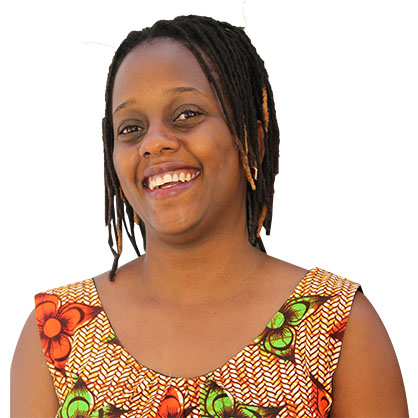
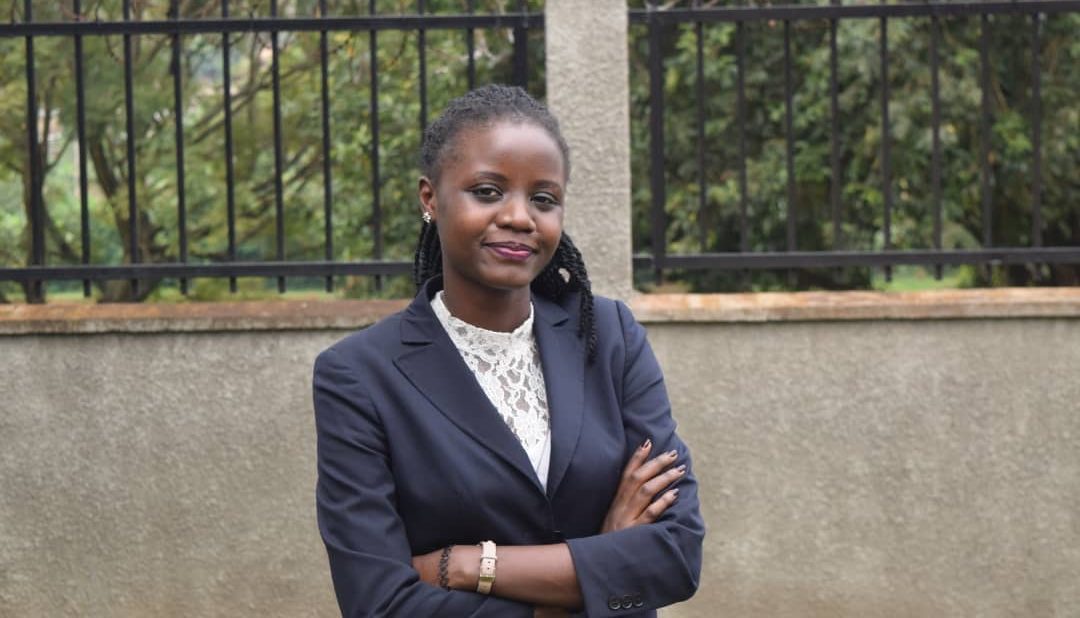
Esther Dhafa, Programme Officer – Campaigns, Partnerships and Networks Programme, CEHURD


Every year, Uganda commemorates the Safe Motherhood day 17th October.The Center for Health Human Rights and Development (CEHURD) joined the country to commemorate this day by calling upon the Government of Uganda to actualise the declarations in the landmark case, Constitutional petition No. 16/2011. This can happen through enhancing and promoting best practices of safe motherhood during and post COVID-19 TO reduce maternal mortality and morbidity. By doing this, we can realise the β€œEvery Woman Every Child” Global Health Strategy Commitments (EWEC) His Excellency the President of the Republic of Uganda made on 15th May 2016 . 

Uganda’s EWEC commitments include among others; ensuring that comprehensive Emergency Obstetric and Newborn Care (EmONC) services in hospitals increase from 70 per cent to 100 per cent and in health centers from 17 per cent to 50 per cent. It also includes ensuring that basic EmONC services are available in all health centers; ensuring that skilled providers are available in hard to reach/hard to serve areas; and reducing the unmet need for family planning from 40% to 20%; increasing focused Antenatal Care 4th visit from 42 per cent to 75 per cent, with special emphasis on prevention of mother-to-child transmission (PMTCT) and treatment of HIV to ensure elimination.

Small steps towards safe motherhood

We do commend the government for the great efforts in reducing the high rates of maternal mortality from 438/100,000 live births in 2011 to an estimated 336/100,000 live births in 2016 (per the Uganda Demographic Health Survey 2016). However, we also note the little progress being made as a country in addressing health related issues that continue to kill women in Uganda  helplessly during childbirth.  As a best practice therefore, maternal health care services should be available, accessible, acceptable and of good quality in order to enhance safe motherhood. 

Over the years and for this specific year,  CEHURD continues to work tirelessly to ensure that women and girls are able to access affordable maternal health care services. This has been done  through a number of approaches including strategic litigation, research, evidence based advocacy and  collective voicing to amplify the need for better health care and service packages countrywide. With these approaches, coupled with government efforts and adoption of best safe motherhood practices, Uganda will be able to reduce  maternal deaths caused due to preventable health causes. These causes include haemorrhage (blood loss), unsafe abortion, hypertension, embolism, sepsis, and other direct causes like complications of anaesthesia and  caesarian sections, and postnatal depression suicide.

As we continue to commemorate Safe Motherhood, CEHURD remembers all the mothers that have died while giving birth. Unfortunately, an estimate of 6,000 women die annually in Uganda as a result of pregnancy related complications making it about 16 women dying per day (UDHS 2016). This means that today 16 women have died, tomorrow 16 will die and 16 more will die the following day which is very unacceptable. With such scary statistics therefore, Government’s obligation to promote safe motherhood becomes important, to ensure that no woman, or baby dies or is harmed by pregnancy or childbirth. This begins with the assurance of basic safety living for all expectant  girls or women in our society. 

Landmark judgment for maternal health

The Justices of the Supreme Court of Uganda in CEHURD, Prof Ben Twinomugisha, Rhoda Kukiriza, and Inziku Valente Vs Attorney General (Constitution Petition/\ 16/2011) finally made a nine-year long journey of collective voicing and persistence worthwhile. The justices set a precedent on maternal health care in Uganda to the joy of various civil society organisations under the Coalition to Stop Maternal Mortality in Uganda (CSMMU), development partners, grassroot women and well-wishers who were have been pushing for better maternal health care. Court declared among others that the Government’s omission to adequately provide basic maternal health care services and emergency obstetric care in public health facilities violates the rights to health, life, rights of women, subjects women to inhuman and degrading treatment. The Court also stated that this is inconsistent with and in contravention of Articles 8A, 22, 33, 39 and 45 read together with objectives XIV and XX of the National Objectives and Directive Principles of state policy of the Constitution. 

Rhoda Kukiriza and CEHURD staff celebrate the positive judgment on Petition 16. CEHURD PHOTO/Jacqueline Twemanye

This suit was filed in 2011 seeking to challenge the Government’s omission to adequately provide basic maternal health services and commodities in public health facilities as contravening the right to health, rights of women, and right to life and freedom from cruel, inhuman and degrading treatment. It’s premised on the wrongful deaths of the late Anguko Jennifer who died on 10th December 2010 in Arua Referral Hospital and the late Sylvia Nalubowa who died on 19th August 2010 in Mityana District hospital. Both women died during childbirth when they needed caesarian sections but failed to access the commodities and human resources required to obtain the same.

Call to action

We thus call upon the Government of Uganda to fulfill its statutory obligation by;

  • Providing basic maternal health care services to  women in Uganda which include among others prenatal care services, skilled medical officers in health facilities, and provision of Emergency Obstetric Care and postpartum care. 
  • Investing in family planning, antenatal care, safe delivery, newborn care & Post-natal care, and Emergency obstetric care which are the key pillars of Safe Motherhood. 
  • Prioritizing basic maternity care, primary health care and equity for all women to enable them fully enjoy and fulfil their natural maternal functions which is a fundamental human right (Art 33 of the Constitution).
  • Finalise and pass the National Health Insurance Scheme Bill into law that recognises the unique maternal functions of women by ensuring their ability to access affordable quality maternal health care services from both public and private health facilities.

Lastly, informed and effective advocacy is the starting point for bringing about change. We thus call upon all stakeholders to join us in sensitizing the women including the youth and adolescents about safe motherhood and their right to receive and impart accurate sexual reproductive health information and empower them to make informed decisions to be able to keep and stay healthy since a healthy population is able to efficiently contribute to sustainable development. Safe motherhood values the girl child and implies the availability, acceptability, and easy access to health care for women’s prenatal, birth, postpartum, family planning and gynecological needs. 

Let us adopt a multisectoral approach to SRHR and Safe motherhood, for better health and healthy lives.

EVERY WOMAN DESERVES TO BE AND FEEL SAFE AS A MOTHER OR MOTHER TO BE.

Citizens win landmark case for safe childbirths

Uganda’s health funding as a share of
the national budget has shrunk, while
defense spending has skyrocketed
from $260-million to $717-million

Read more about CEHURD’s landmark Constitutional Petition 16 judgement that has featured in Africa’s leading independent newspaper The ContinentMail & Guardian newspaper on Page 34 & 35.

Impact Of COVID-19 On Children

By Gloria Laker A programme officer at Center for Health, Human Rights and Development (CEHURD)

The COVID-19 pandemic has highlighted grave weaknesses in many countries’ protections for children, including inadequate health care and social protection systems, and the lack of emergency plans for large-scale school shutdowns. The choices which the Ugandan government makes now are crucial, not only to mitigate the worst harm of the pandemic, but also to benefit children over the long term.

Children are not the face of the COVID 19 pandemic since the majority of the affected and infected are the elderly but they risk being among its biggest victims. While they have thankfully been largely spared from the direct health effects of COVID-19 – at least to date – the crisis is having a profound effect on their wellbeing. The United Nations Children’s Emergency Fund (UNICEF) reports that all children, of all ages, and in all countries, are being affected, in particular by the socio-economic impacts and, in some cases, by mitigation measures that may inadvertently do more harm than good. This is a universal crisis and for some children, the impact will be lifelong.

For most children, home represents a source of security and safety but for a few children the opposite is tragically the case. Violence by caregivers is the most common form of violence experienced by children. Children are also often witnessing to domestic violence in a home, the rates of which are thought to have increased in many countries, as detailed in the policy brief of the UN on the impact of COVID-19 on women. [1]Such acts of violence are more likely to occur while families are confined at home and experiencing intense stress and anxiety. UNICEF reports that over 60 percent of all children worldwide live in countries where a full or partial lockdown is in place.

Spaces that can be accessed by children to report abuses have been closed. Lockdowns tragically also present an opportunity for child abusers to harm children. Being innocent and vulnerable, children rarely are in a position to report such heinous acts. social work and related legal and protective services for children are being suspended or scaled back at this time of increased need, children no longer have the same access to teachers to report incidents at home, -. Children’s reliance on online platforms for distance learning as stipulated by various schools and the government has also increased their risk of exposure to inappropriate content and online perpetrators that can have the opportunity to negatively groom children. Growing access to digitalization may magnify children’s vulnerability to harm. Children may become susceptible to all kinds of sexual content in the media.

In Uganda, just like in most countries, 95% of sexual abuse happens to a child by a person the child knows or has a familial relationship to. Due to the lock down, children are put in the confined space where the abusers have easy access to them far away from the prying eyes of the teachers and other support staff in schools. There is also likely going to be an increase of teenage pregnancies since children are at home and most are found idling at trading centers with no work to do to keep their minds busy.. Furthermore, the economic impact of COVID-19 in some communities may contribute to school dropouts since many parents will not afford to return their children to school after the lock-down, this may lead to increase in child marriages and also teenage pregnancy and child abuse.

Some of the devastating effects of COVID 19  may affect particularly vulnerable children who may become  susceptible to trafficking  and other exploitation, including sexual exploitation, forced begging, selling goods on the streets, and other child labor. Older children may drop out of school to try to support younger siblings.

Maud de Boer-Buquicchio, Special Rapporteur on the sale and sexual exploitation of children, and Najat Maalla M’jid, Special Representative on violence against children, issued the appeal, emphasising that parents, caregivers, service providers and law enforcement officials all need extra support to minimize the heightened risks to youngsters. This calls for recommendations like the following;

Governments should ensure that adequately staffed and equipped child protection services and law enforcement are available and accessible to all children.  This includes toll-free 24-hours hotlines, free texting services, remote psychological and social services and mobile shelters for minors.  

We should all make significant efforts to support frontline operators in the child protection services, neighborhood and community watchdogs and law enforcement”, the experts said, and equally, empower children to respond to the crisis through peer-to-peer initiatives. Governments should recognize SRHR services as essential in times of crisis, and remove barriers to access. This can be done through, for example, allowing remote access to contraception and abortion services via telemedicine and by allowing pharmacies to provide services. 

Supply chains should prioritise SRH products. This should include contraception and menstrual health items, which are central to girls’ health and autonomy, and a key strategy in addressing child marriage.  Adolescent girls should have access to relevant information about how to prevent and respond to the pandemic in ways they can understand, including in relation to regular hand washing and positive hygiene behaviours, including menstrual hygiene. Community sensitisation should continue as part of distance learning to ensure that parents, leaders and other community members are aware of the importance of education especially for the girl child.  Adolescent girls (and boys) should continue to have access to comprehensive sexual education (CSE), SRHR information and referrals to services as part of distance learning while schools are closed. 

Education and other support workers should receive training to ensure that they have the knowledge and skills needed to recognise and prevent violence against children, and the risk of child marriage, through safe referral practices and protection services.

 When schools reopen, pregnant girls, married girls and young mothers should be fully supported to return to education. This might involve flexible learning, catch-up courses and accelerated learning opportunities. It may also involve checking school enrolment lists by heads of schools to identify and follow up with those girls who have not returned to school.

A version of this article was originally published in theΒ Daily Monitor.