My Experience Litigating Sexual and Reproductive Health and Rights Related Cases

β€œWhere, after all, do universal human rights begin? In small places, close to home – so close and so small that they cannot be seen on any maps of the world. Such are the places where every man, woman and child seeks equal justice, equal opportunity, and equal dignity without discrimination. Unless these rights have meaning there, they have little meaning anywhere.”

Eleanor Roosevelt

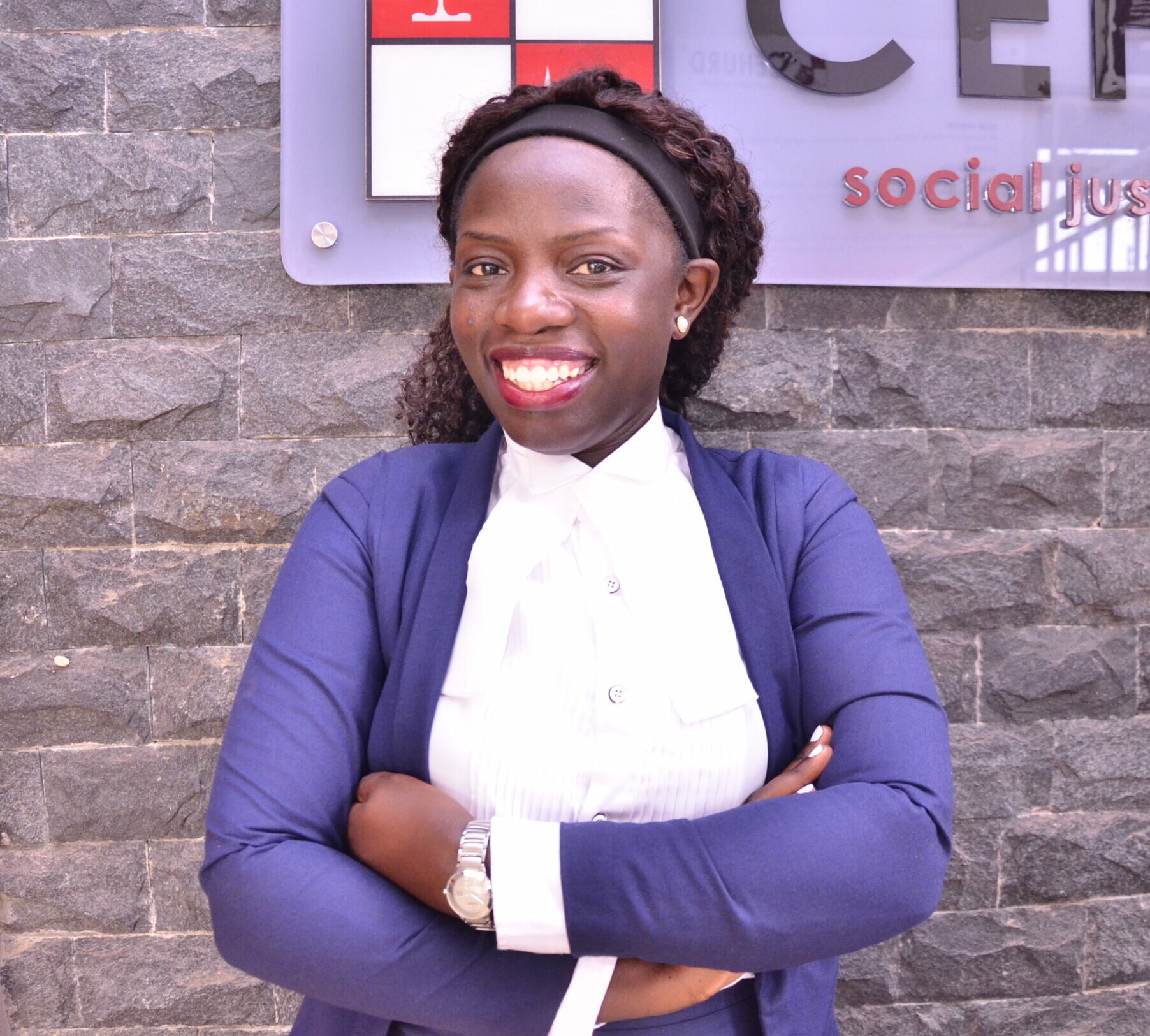
By Ruth Ajalo | Lawyer

Before joining the Center for Health, Human Rights and Development (CEHURD), I had basic information
about the right to health. This basic information was gained while pursuing the health and the law course
unit in my fourth year at Makerere University Law School. Learning the right to health was exciting and it
set a spark within me that I desired to carry forward in my career. This did not materialise immediately after Law School but when I eventually joined CEHURD, I was excited and looked forward to learning more about the right to health and this unique area of legal practice.


At CEHURD, I have learnt, unlearnt and I continue to learn each day about the right to health and the
intersectionality of health and human rights. I can confirm that there is a lot of knowledge and exposure that the right to health brings to light. CEHURD, among other things, provides legal support to victims and survivors of sexual violence and health rights violations. It also litigates strategic cases aimed at addressing systemic gaps and bottlenecks within the provision of health services in the country. 


CEHURD prepares, nurtures, and gives you a platform to shine and build your career. As a legal
practitioner, last year, I had the unique opportunity of litigating a landmark Sexual and Reproductive Health Rights case before a bench of five justices of the Constitutional Court. This is a dream come true for any young lawyer.


My experience in handling and litigating SRHR cases has been an emotional rollercoaster; it has been easy, hard, tasking, draining both physically and emotionally at times but above all, fulfilling. It is exciting to secure a win for a client and a win for the transformation in the provision of health services in the country.
Litigating SRHR cases is unique because this is not something you do without learning, unlearning,
understanding and preparing. Your mind is trained to creatively pick out the rights issues in the case and
articulate them sufficiently in a manner that reflects preparation and in-depth knowledge of the issues at
hand. Furthermore, the external lawyers we work with on some of our cases have to be oriented on the
unique aspects of the right to health and why it matters before they delve into the gist of the cases. This
calls for thorough research, preparation which continuously builds one’s mastery in the area of Health and Sexual and Reproductive health.


When a person calls the CEHURD toll-free line or walks into the office seeking help, that person is either
seeking information or is seeking for support. They are usually hurting or have suffered some form of loss
and need redress and or some form of support. Regardless of the circumstances and the facts of the case,
as lawyers we are expected to be non-judgmental, good listeners and provide the most appropriate
professional support. During the client-advocate meeting, when the client breaks down and starts to cry, the counsel must wear another hat of a counsellor and have to exercise empathy towards them. This requires that the lawyer for a moment, abandons the legal path and the knowledge acquired in Law School to concentrate on helping a client recompose through provision of Psychological first aid. This requires that for a moment, you abandon the legal package and knowledge you walked into the meeting with, and take on a new mantle of a counsellor.

We walk the journey with our clients, we counsel them, we exercise empathy, we hand-hold, we manage expectations and above all, we keep an open mind as we handle these cases. It is important to note this process also takes on an emotional toll on the lawyer and calls for selfcare. The emotional toll is largely because lawyers by training are not counsellors but in country with limited professional counsellors, any lawyer will by default provide; counselling to their clients especially when engaged in SRHR.


This type of work is not void of challenges such as the heart-breaking experiences of the clients, and being misunderstood by the public because of the nature of the work done, among others. Sexual and
Reproductive Health is a largely contested arena. Listening to clients’ experiences can get emotionally
draining because their experiences are in most cases very painful and nobody deserves to go through such grueling experiences. Furthermore, the clients are not conversant with the litigation progress and despite an effort to explain to them and manage expectations, they get burnt out and experience litigation fatigue.


Litigating human rights will certainly be difficult for any client especially if they are facing stigma,
discrimination, abuse, and isolation among others because of the delay in the disposal of their cases. 
To respond to these challenges, CEHURD has invested in the provision of psychosocial support to the
legal team that handles these cases, general staff wellness and welfare to enhance the continuity of
litigation. We also share and learn amongst ourselves in the Strategic Litigation Programme with the view
of bettering ourselves. We also hold annual clients’ meetings where clients are invited for interactions and
update meetings about their cases, clients share amongst themselves and learn from each other and we
also receive feedback which we find useful for improving our service delivery.


As mentioned, we are sometimes misunderstood by the public but choose top stick to our calling trudge on nonetheless, undeterred and ever so ready to defend and stand for our clients’ rights and for system
change. 
Justice for our clients comes in many forms; arrest of an accused person, sentencing (imprisonment) of an
accused person, an apology from the health worker, an explanation offered for what went wrong, an
admission of wrongdoing from the health facility or health worker among others. It is these small wins and seeing systemic changes in the provision of Health that is the power below my wings and that keeps me waking up every day to provide legal support.


Despite all the hurdles and challenges encountered, the work is fulfilling. Fulfilment is in the fact that you
helped a person and they didn’t pay you for that service; that you utilised your legal knowledge to address a human rights violation and get justice for your client. Fulfilment is the phone call from a grateful client highlighting his or her gratitude β€œmwebale nyo, tusimye byona bye mwakola” –” thank you very much, we appreciate everything you do for us”. Some clients call us to update us on the progress of their daughters who suffered violence to indicate that our interventions built the girl’s confidence, she returned to school and she passed her Primary Leaving Examinations (PLE). 


To all human rights defenders, your work is not in vain; a step-by-step effort, a multi-sectoral approach, and perseverance will go a long way in realising a just society; a society in which people are free from sexual violence, free from health rights violations and all other violations around us. Let us persevere and keep the flame burning because society and the world at large still need us. 


β€œHelping one person might not change the world, but it could change the world for one person” – Anonymous.
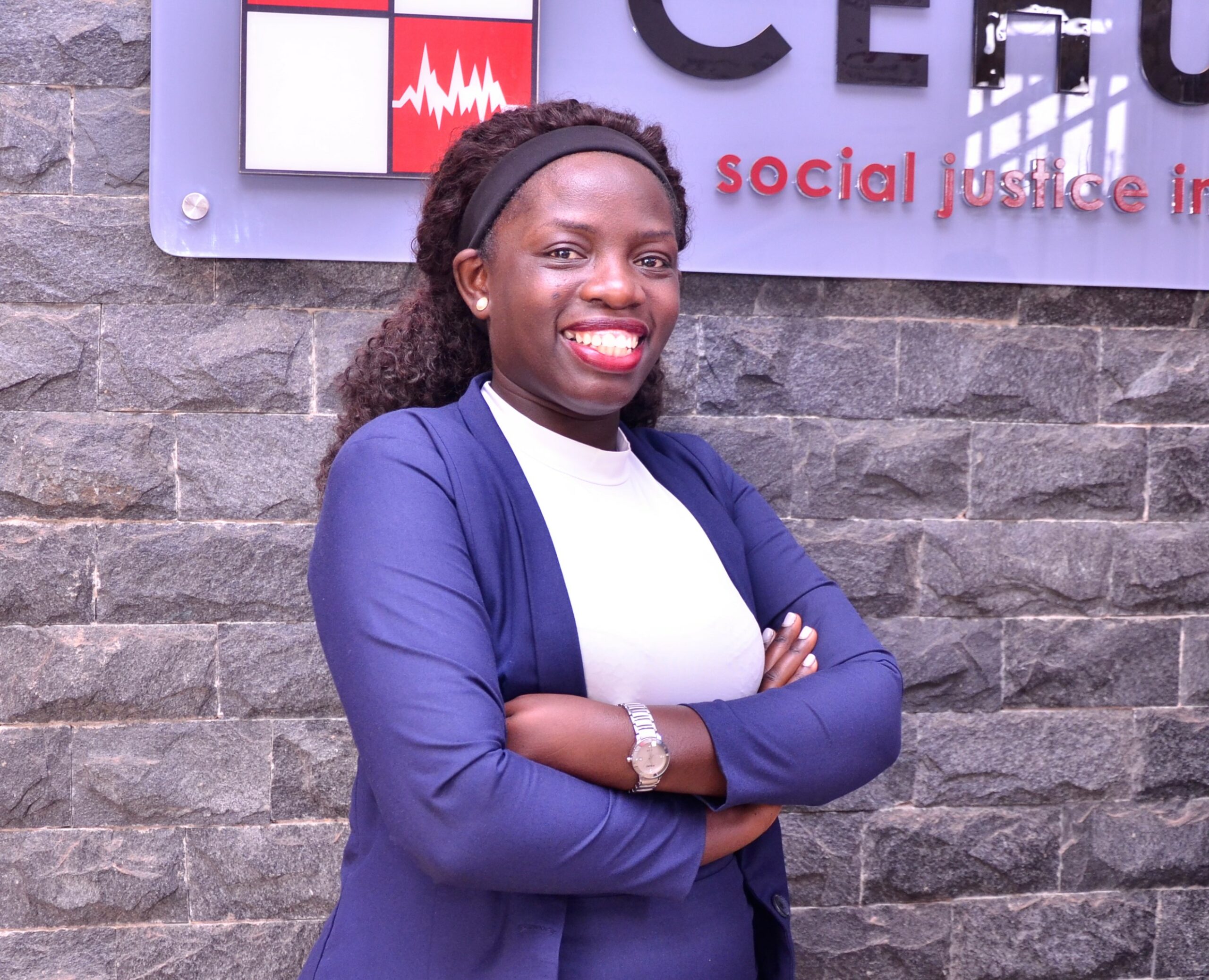
The writer is a Programme Officer in the Strategic Litigation Programme at the Center for Health, Human Rights and Development (CEHURD).

The deteriorating state of Health care In Kalangala District

Β 

Β By Nakibuuka Noor Musisi

Uganda will join the world to celebrate World Tourism Day in September this year. The celebrations will take place at the islands. The state of health care however is worrying. With lack of a District Hospital, many lives are lost on boats trying to reach nearby hospitals of Entebbe and Masaka Districts. The question of how then such an event will be successfully celebrated remain unanswered.

Kalangala has eighty four (84) Islands and only 64 have people with a population estimate of over 54293 (census report 2014). It’s one of the country’s tourist attractions and becomes densely populated during the festive season. β€œIf you want to come and rest here, you must book by November otherwise after November you can’t get where to stay. It’s usually packed but we lack a hospital to cater for health needs of such a population” Ssekaddu Francis, Kalangala District forum of people Living with HIV/AIDS Network.

I traversed Kagonya village in Lulamba Parish, Bufumbira sub county, Kalangala District, the nearest village to Kalangala Health Center IV, which is located on Bugala Island. The village is approximately 2km away from the hospital (on water). It has approximately three hundred thirteen (313) households with up to One hundred and thirty nine (139) children ages 0-7 years.

No health facility is located on this island and the nearest school about 3km away, a primary school that runs up to primary five. At this site I was eager to know how the community accesses health care. It’s unbelievable. A person needs up to three hundred thousand shillings (300,000/-) to access health care. Broken down, about one hundred thousandΒ  to one hundred fifty thousand shillings (100,000-150,000/=) for boat and engine hire, and about one hundred thousand shillings (100,000/=) for fuel and fifty thousand (50,000/=) for hiring a person to sail the boat.

At the time of this visit, the islands major activity of fishing was at the stand still as authorities were fighting illegal methods of fishing. What this means is that a person could hardly earn or spend the above amount of money to access health care leaving the disadvantaged poor with no access at all. While Kagonya is nearer to the health Center IV, questions on how then people for instance expectant mothers reach Masaka or Entebbe for services become worrying. We were told that many die in the boats or within the facilities as means of transport are being prepared to take them, while others fail to raise the required transport fees to access care.

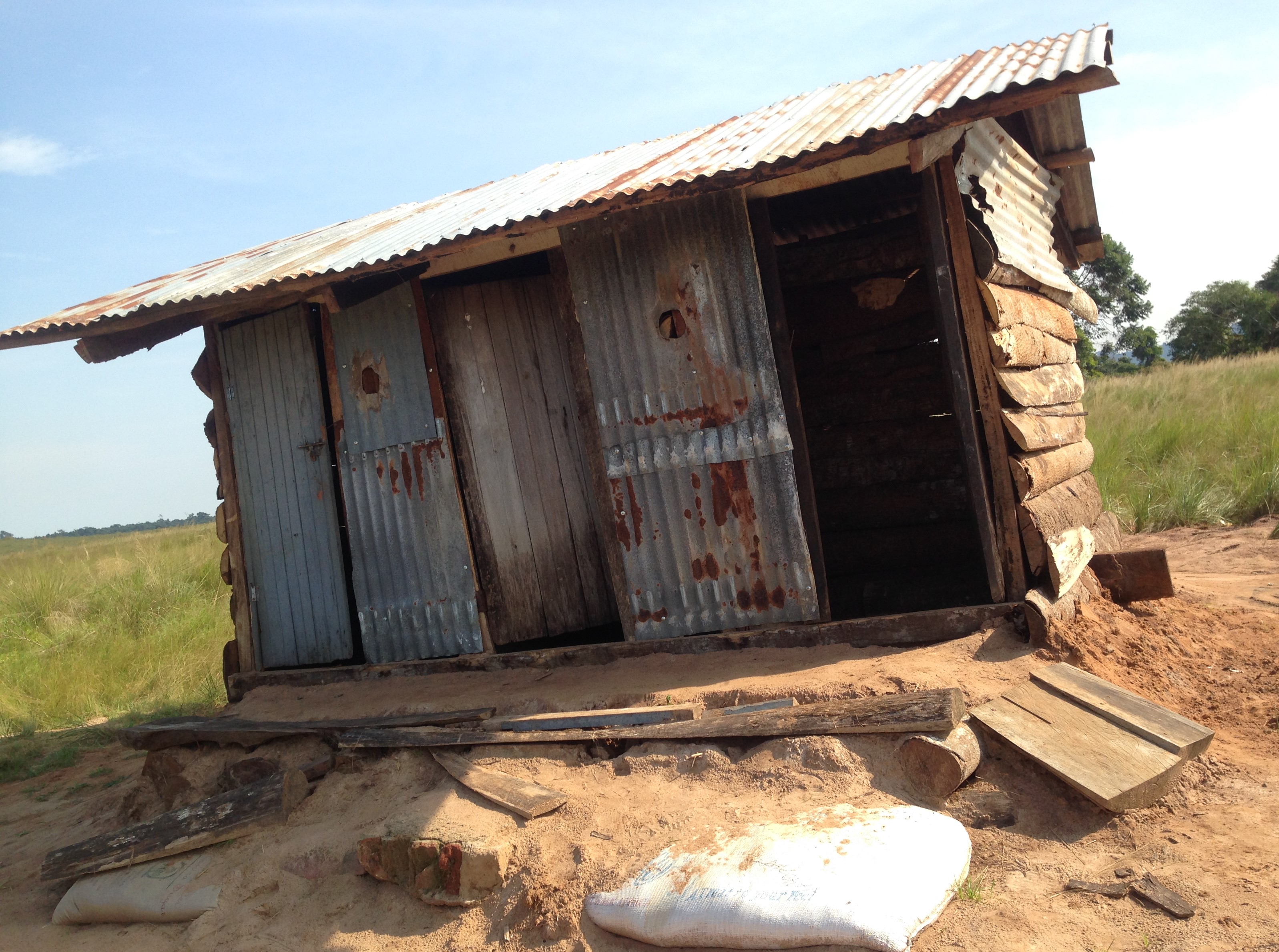
Most worrying the village is served by one toilet with houses in a very poor state. Asked why this one toilet, one resident responded that β€œwe are proud of our toilet. This is the best we can have, at least we have one” Resident of Kagonya Village.

During the meeting conducted by Action Aid Uganda in partnership with CEHURD on the state of health care in Kalangala, residents thought that advocating for a district hospital was among the best options. These, while citing the names of people that had died while trying to access care including their district planner, were quick to mention that Kalangala looks like a less populated place but this is the opposite. They noted that at least legislation concerning marine should be changed to give preference to the district.

β€œWhen the night falls we are cut off. We cannot take any patients to the nearby facilities of Entebbe and Masaka because ferries, boats etc are not allowed to move at night. We have been promised a district hospital by the president and the Minister of Health but this has not matured yet. With the hospital we will solve health care problems here” Kizito Henry, Kalangala District forum of people living with HIV/AIDS Network.

Indeed without a district hospital one is not sure of his state of health while at the islands. While motor boats may be present, questions on who fuels them to the main land, time of sailing, the boat payments to the sailorΒ  come into play. Even when these are availed, one still wonders whether in the neighboring districts of Entebbe and Masaka services will be availed on time. Communities narrated that this also calls for either renting a house or staying in hospital with questions of feeding the sick, washing etc which may seem simple when near a health facility but very difficult when one has no home near the facility.

It’s the state’s obligation to ensure that health care is accessed by all. Even when the Constitution does not expressly provide for the right to health in the substantive bill of rights but only muted from the national objective and directive principles of state policy, the country has signed a number of regional and international legislations that advance the realization of this right. The state thus needs to prioritize Kalangala Islands and provide a well-equipped and staffed Hospital to the District to boost health care accessibility there.


CEHURD’s blend of programs excites partner.

Β By Nakibuuka Noor Musisi

Over the years, CEHURD has grown into an organization that stands out to use the law to advance the realization of the right to health in Uganda and East Africa. Like any growing organization, CEHURD has taken steps to become what it is now.

Today, the organization is known as one that reaches out to the communities, undertakes research, litigates and advocates for the enjoyment of the right to health. CEHURD’s blend of its programs ; Strategic Litigation, Community Empowerment and Research, Documentation and Advocacy excited one of its long time partners.

Roxana Bonnell has been CEHURD’s development partner for years. She worked with Open Society Institute’s Public Health Program at the time CEHURD was being formed. She facilitated some of the first funding to CEHURD and worked with staff to think through the first Strategic Plan in 2011, an experience that we still hold so dearly.

β€œI am in Uganda to offer whatever assistance I can to another young organization thinking through their first Strategic Plan, I am not here at CEHURD for a formal visit but rather to say hello to my friends” she noted on her visit to CEHURD offices on 27/7/17

She has a strong belief that not all lawyers will think about and do what CEHURD does. Most times lawyers think about practicing law in mainstream courts and relevant tribunals but CEHURD’s uniqueness lies with allowing lawyers speak to people in a β€œcommon ways” that are impactful to their live, ways that aim at sensitizing and empowering the communities, she added.

While speaking with the team about CEHURD’s work since 2011, she was excited and inspired with the strategies employed by the organization. β€œI am so excited for the fact that you the lawyers empower communities- this is important. The three programmatic approach is very unique and it’s rare to find an organization with a bigger percentage of lawyers doing what you do. This is impactful, it has been such an honor to be considered a CEHURD friend” she explained.

Roxana still works for the Open Society Foundation, as well as a consultant to several other social justice funders. She discussed with the team the new trends in access to medicine, noting the important role CEHURD has played for years in access to medicines advocacy in East Africa. She explained that OSF has broadened its support around access to medicines to include efforts that look at how innovation is prioritized and conducted. To ensure access to the medicines we need, we will need to change the current system and shift decision making power around medicines, away from transnational pharmaceutical industries back to governments. She believes that when governments acting for the public good have the powers to prioritize medicines, do clinical trials, and help regulate prices we will see a change in accessing affordable medicines for our countries.

Roxana is one among the friends of CEHURD that has come back to us after years. She was so impressed with CEHURD’s growth and work, she strongly advised us to find opportunities to publish and tell our story to the broader global social justice community.

CREATIVITY: The Next Generation Solution For Life Saving Medicines In Uganda

The celebration of World Intellectual Property day to day, provides us with an opportunity to reflect on the importance of intellectual property (IP) in the lives of ordinary Ugandans. Indeed flexible intellectual property laws and policies have increasingly become relevant in today’s discussions on access to essential commodities which are critical in an economy such as ours.

As this year’s theme [Creativity: The Next Generation] suggests, we need to highlight the importance of intellectual property policy, legal and institutional frameworks in ensuring an environment for creativity while at the same time addressing the potential of intellectual property to enhance the quality of the daily lives of the people of Uganda today and the generations to come.

The World Intellectual property day also offers us a chance to reflect on the opportunities provided by Articles 7 and 8 of the World Trade Organization’s Trade Related Aspects of Intellectual Property (TRIPS) Agreement. Article 7 of this Agreement provides that the protection and enforcement of intellectual property rights SHOULD contribute to the promotion of technological innovation and to the transfer and dissemination of technology in a manner conducive to social and economic welfare. On the other hand, Article 8 gives the countries liberty to adopt measures necessary to protect public health and nutrition, and to promote the public interest in sectors of vital importance to their socio-economic and technological development while formulating or amending their laws and regulations. This position was also re-affirmed in the 2001 Declaration at Doha that β€œthe TRIPS Agreement DOES NOT and SHOULD NOT prevent Members from taking measures to protect public health.”

See full statement hereMEDICINES

Application process for 2013 fellowships now open

CEHURD (Center for Health, Human Rights and Development) invites journalists to apply for the 2013 intellectual property and human rights reporting fellowships. The fellowship is a one-year mentoring and capacity-building program for Ugandan journalists to report on issues cutting across intellectual property and human rights.

Purpose of the Fellowship Program

The CEHURD IP and Human Rights Media Fellowship Program aims to enhance the capacity of journalists in the mainstream media to appreciate the links between IP protection and social welfare, and the implications of the on going developments in the protection of IP rights at the different levels, and their implications for public health, access to educational materials, the right to food, and other human rights.

In 2013, the fellowship program will focus on:

  • The on going commercial law reform processes in Uganda and the East African region;
  • The on going dialogue around a possible extension to the transition period granted to LDCs to comply with the TRIPS Agreement; and
  • Alternative models for balancing the rights of IP owners and users, taking the case of the Creative Commons licenses and how it works for journalists and other information users;

Methodology

Successful applicants will attend a- two-day residential orientation training, and will be supported to identify and undertake follow-up activities. Selected candidates will be paired with a supervisor at the media house they are attached to, and linked with experts in the fields of IP and human rights who will provide technical guidance to the candidate to investigate story ideas they identify. The successful candidates will also participate in field visits to key organizations involved in IP work. The follow-up activities will not require full time work and will be supported through small grants.

Eligibility

Interested applicants should:

  • be journalists working with or attached to mainstream mass media in Uganda, including national (or East Africa level) newspapers, radio, or television;
  • commit to be available for the training, field trips and other follow-up activities between February 2013- December 2013;
  • Journalists reporting on policy issues (e.g. covering Parliament), and those with editing roles will have added advantage.

Application process

Interested candidates should express their interest in writing to CEHURD by email to info@cehurd.orgΒ with a copy to Primah on kwagala@cehurd.org

Applications should be sent by

Thursday 28th February 2013 and should be accompanied by the following:

  • A personal CV clearly showing qualifications, expertise and experience
  • brief information on the institution that they are attached to; their employment status and position; and any work they have done themselves related to trade, health, education or agriculture;
  • Confirmation that they are available for both the training workshop and the follow-up work.
  • Endorsement by the immediate supervisor/editor

Successful candidates will be notified byΒ Thursday 7th March 2013. For details of this call please check here